Emergencies in Phuket move fast because rain, humidity, power faults, AC breakdowns, guest problems, and water leaks can damage a property within hours. A serious manager takes expert action by classifying the emergency, protecting people first, dispatching trusted technicians, and updating the owner with proof. The experienced solution is a clear emergency system built around Round-the-Clock Communication, spending rules, contractor networks, tropical weather planning, and guest support.
Emergency Owner Tip: Property emergencies in Phuket need fast local action, clear updates, and trusted repair support. See how our property management services help Phuket property managers protect homes with emergency response, inspections, maintenance, and owner reporting.
How Phuket Property Managers Handle Emergencies?
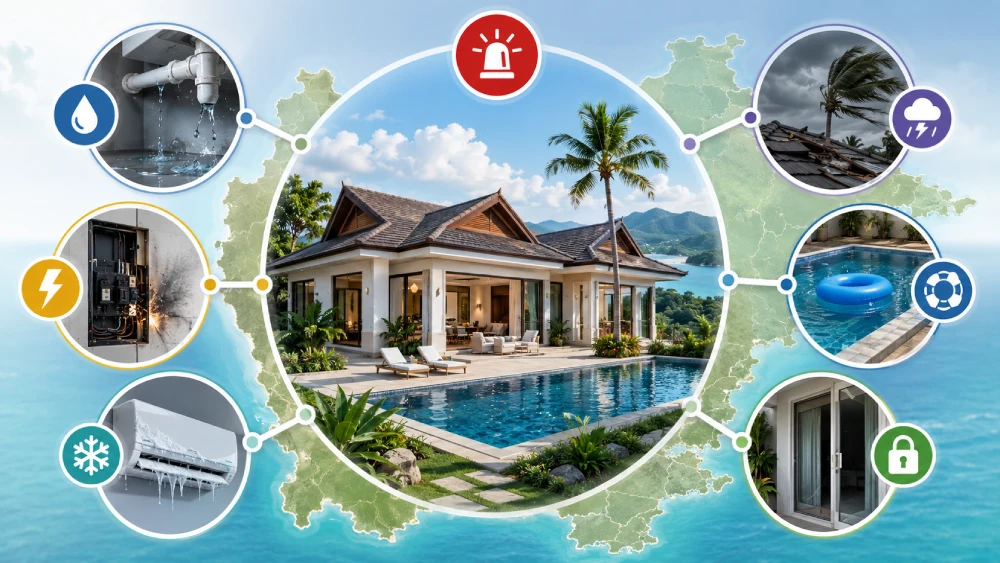
Phuket property emergencies need a structured response, not panic. Managers first identify the issue, protect people, stop further damage, and decide whether owner approval is needed. Owners using reliable property management services should expect fast action, clear records, and preventive follow-up.
| Emergency Type | Immediate Risk | Manager Action |
| Water leak or flooding | Walls, floors, furniture, wiring | Shut off water, isolate source, call plumber |
| Electrical fault | Fire, shock, appliance damage | Secure area, call qualified electrician |
| AC failure | Guest discomfort, humidity, mould risk | Check basics, dispatch AC technician |
| Storm damage | Roof leaks, blocked drains, unsafe trees | Secure property, inspect exterior, remove hazards |
| Guest lockout | Safety issue, poor guest experience | Use backup access and verify identity |
| Pool hazard | Injury, chemical imbalance, unsafe deck | Stop use, call pool team, document issue |
| Security incident | Theft, forced entry, lost access | Secure doors, check evidence, contact security |
| Medical issue | Guest or tenant safety | Guide support, contact local help when needed |
Emergency Priority Map for Phuket Homes
The first job is classification. A water leak, power fault, guest lockout, broken AC, pool problem, and security incident all need different action. Managers should not treat every message as the same level of urgency.
The second job is containment. Active water, unsafe wiring, broken locks, sharp glass, slippery pool decks, and storm debris must be controlled before repairs begin. This protects people and reduces property loss.
The third job is documentation. Owners need photos, timing, cause, action taken, cost, vendor details, and prevention notes. A proper emergency process should connect with property management standards for Phuket homes.
Round-the-Clock Communication Saves Time
Emergency communication must work across guests, owners, tenants, technicians, and local staff. A manager needs a direct emergency phone line, instant messaging, and clear escalation rules. Delayed replies can turn a small repair into major damage.
First alerts must classify the emergency
The first alert should be short and factual. It should say what happened, where it happened, whether people are safe, and what action has already started. Owners should not receive vague messages that create more confusion.
A proper first update may explain that water has been shut off, a technician has been called, and photos are being collected. It should also say whether approval is needed. This matters for owners with remote villa management needs in Phuket.
Managers should separate urgent, important, and routine issues. Active leaks, exposed wiring, broken locks, guest injuries, and flooding need immediate action. Cosmetic damage, minor fittings, and non-safety issues can wait for normal approval.
Guest updates protect safety and reviews
Guests need calm updates during emergencies. They should know what is happening, what areas to avoid, and when help is expected. Clear updates reduce panic and stop guests from attempting unsafe fixes.
For short-term stays, emergency handling affects reviews. No water, no power, broken AC, lockouts, and pool problems can quickly damage guest confidence. This is why airbnb management phuket needs a strong emergency communication process.
Managers also filter minor panic from real emergencies. They solve local issues without pulling the owner into every small message. Serious cost, safety, legal, or insurance matters still move to owner approval.
Pre-Set Budget Limits Stop Delays
Emergency spending rules must be agreed before problems appear. Owners cannot always approve instantly from another country or time zone. Pre-set limits let managers act fast while still protecting owner control.
Urgent spending needs clear rules
A management agreement should define what the manager can spend without waiting. Active leaks, broken locks, electrical danger, blocked toilets, guest lockouts, and safety hazards often need instant action. Owners can learn why this matters from a Phuket property contract management guide.
Spending limits should be separated by emergency type. A small plumbing repair may be approved automatically, while a roof replacement needs owner review. This avoids both reckless spending and damaging delays.
The rule should also include communication timing. A manager may act first in a true emergency, then send photos and receipts immediately after. This creates speed without losing transparency.
Receipts and photos protect owners
Every emergency cost needs evidence. Owners should receive invoices, photos, payment records, technician notes, and completion proof. Without proof, repair spending becomes a trust problem.
Photos should show the problem before repair and after completion. Water stains, broken locks, damaged wiring, blocked drains, pool problems, or storm debris should be recorded clearly. This also helps if insurance or guest damage claims become relevant.
A final cost summary should be simple. It should show what happened, who repaired it, what it cost, and whether more work is needed. Strong records reduce property management risk factors in Phuket.
Trusted Contractor Networks Decide Speed
Emergency speed depends on local access to qualified people. A manager without reliable contractors will lose time searching for help. Phuket properties need plumbers, electricians, AC technicians, locksmiths, roofers, pool teams, cleaners, gardeners, and pest control contacts.
Water, electrical, AC, and lock failures
Water emergencies come first because they spread fast. Managers shut off valves, isolate pumps, move furniture, call plumbers, and arrange drying or cleaning. This supports stronger rental home protection planning in Phuket.
Electrical problems require qualified handling. Burning smells, sparking sockets, breaker trips, unsafe appliances, and water near outlets should never be handled casually. The manager must secure the area and call the right technician.
AC breakdowns are urgent in Phuket. Heat and humidity affect sleep, guest comfort, indoor air quality, and mould risk. Managers check simple causes first, then send an AC team when the issue cannot be solved safely.
Vendor access must stay controlled
Emergency access still needs security. Managers should control keys, smart lock codes, gate remotes, staff entry, contractor timing, and guest privacy. Fast repair should not mean careless access.
Vendor work should be checked before closing the job. The manager should confirm the repair, test the system, collect receipts, and take completion photos. This is especially important for villas that need villa inspection phuket after urgent work.
Area-based vendor planning is also important. Bang Tao, Rawai, Cherng Talay, Thalang, Patong, and rural villa zones can have different access times. Good managers use local backup contacts, not one generic emergency number.
Tropical Weather Preparedness Matters
Phuket weather creates emergency pressure before the first call arrives. Heavy rain, humidity, blocked drains, roof leaks, fallen branches, and power disruption can affect any rental home. Preparation is stronger than reaction.
Storm checks before and after heavy rain
Before heavy rain, managers should secure loose furniture, umbrellas, cushions, garden items, pool equipment, and balcony objects. They should also check gutters, drains, rooflines, outdoor lights, and water flow. These steps reduce damage before storms expose weak points.
After storms, exterior inspections matter. Managers check roofs, ceilings, terraces, gates, windows, drains, retaining walls, pool decks, and garden hazards. The goal is to find damage while it is still manageable.
Storm preparation should also cover power issues. Backup lights, emergency contacts, guest updates, and safe-zone instructions help reduce confusion. This is part of property emergency planning in Phuket.
Empty villas still need monitoring
Vacant villas are not safe just because nobody is staying there. Leaks, mould, pests, pool failure, garden overgrowth, broken locks, and power trips can happen quietly. Slow rental periods should not mean weak property care.
Managers should schedule vacancy checks. They should inspect water, power, ventilation, drains, pool systems, doors, windows, garden areas, and signs of intrusion. This is especially important for owners researching villa rental management finding information.
Vacant homes also need humidity control. Rooms should be aired, AC systems checked, bathrooms inspected, and soft furnishings monitored. Phuket’s climate can damage a quiet property without any guest involvement.
Guest Relocation and Medical Support
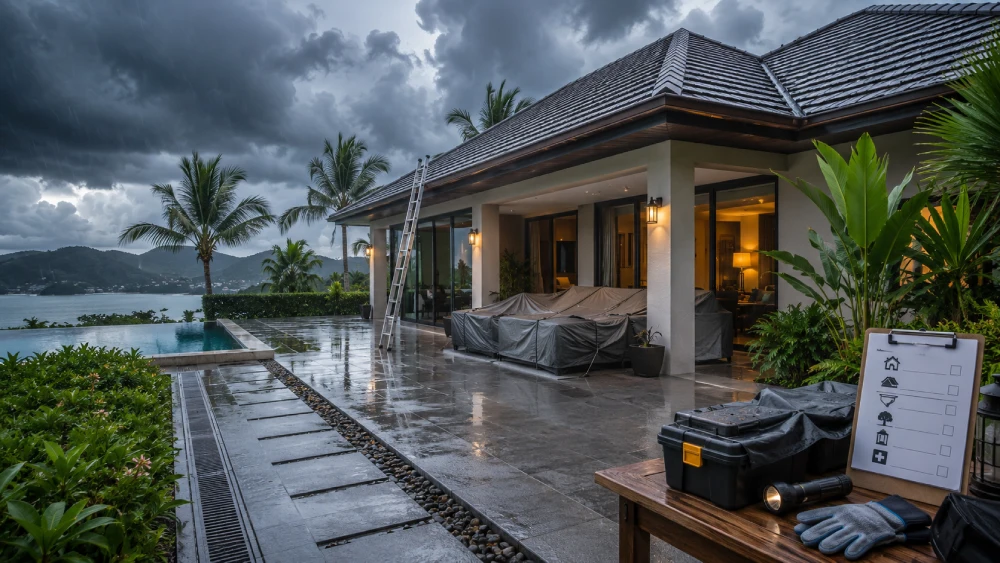
Some emergencies make a property unsafe or unsuitable for guests. Severe flooding, electrical danger, major AC failure, broken access, storm damage, or medical incidents need more than repair coordination. Managers must protect people before protecting bookings.
Unsafe stays need fast backup plans
Guest relocation is needed when the property cannot be used safely. A manager may arrange temporary accommodation, another unit, emergency cleaning, or a partial stay adjustment. The owner should be told why the decision was necessary.
Medical support also needs calm handling. Managers can guide guests to local clinics, hospitals, emergency contacts, or police support when needed. They should not pretend to be doctors, but they should know how to guide guests locally.
Short-term villas need this process written in advance. Guests expect support when something serious happens. This connects closely with a Phuket short-term villa management system.
Incidents need calm local handling
Guest incidents can include falls, pool injuries, lockouts, noise conflicts, lost items, damaged furniture, or unsafe appliances. Managers need to handle the scene, collect facts, and reduce conflict. This protects the guest and the owner.
For condos, coordination may involve security or the juristic office. Owners with units should understand the Phuket condo tenant workflow because building access and shared-area rules affect emergencies. Larger portfolios may also need Condo Management.
For houses, access and security are often more direct. Detached homes may need locksmiths, guards, utility checks, and garden hazard removal. Owners can compare this with Houses for Management.
Final Reports Prevent Repeat Emergencies
The emergency does not end when the repair is complete. The manager should explain the cause, cost, repair quality, and next prevention step. This turns an incident into a stronger management system.
Risk logs turn emergencies into prevention
A risk log should record repeated leaks, AC issues, electrical faults, pest activity, pool pump problems, roof leaks, lock failures, and guest damage. Patterns matter because repeat emergencies often reveal neglected maintenance. Owners should not pay again and again for the same avoidable issue.
Preventive action should follow every serious incident. After a leak, check plumbing and cabinets. After storm damage, inspect roof, drains, garden trees, and outdoor fittings.
The final report should be practical. It should recommend AC servicing, gutter cleaning, lock checks, pest control, roof repairs, pool equipment servicing, or guest-rule changes. This is how emergency response becomes guest-ready villa preparation overview and long-term protection.
Match Emergency Plans to Property Type
Different property types need different emergency planning. Villas, condos, apartments, and houses do not share the same access, systems, risks, or building rules. A strong manager adjusts the response plan to the property.
Villas, condos, houses, and apartments
Villas need pool, garden, roof, gate, staff, and outdoor hazard planning. They are exposed to more weather and usually have more systems to fail. This connects with Phuket villa ownership risk planning.
Apartments need faster internal-system checks. AC leaks, plumbing issues, electrical faults, access cards, lifts, and neighbouring-unit complaints can escalate quickly. Owners can compare this with apartment property management concept in Phuket.
Mixed portfolios need consistent reporting. A manager should use the same incident structure across villas, homes, condos, and apartments. This gives owners one clear way to review emergencies, costs, and prevention steps.
Frequently Asked Questions
What should owners receive after an emergency?
Owners should receive photos, cause notes, vendor details, repair cost, receipts, payment proof, completion images, and prevention advice. The report should explain what happened and what was done. It should also show whether further work is needed.
When can a manager spend without approval?
This depends on the management agreement. Active leaks, broken locks, electrical danger, flooding, and guest safety risks often need pre-approved emergency spending. Larger repairs should still require owner approval when immediate safety is not at risk.
Why is AC failure treated as urgent in Phuket?
AC failure affects comfort, sleep, humidity, and indoor air quality. In Phuket, a broken AC can also increase dampness and mould risk. Managers should check basic causes quickly and dispatch technicians when needed.
How do managers handle pool emergencies?
They stop guest use first if the pool is unsafe. Then they call the pool team to check chemicals, pumps, filters, tiles, lights, and slippery surfaces. The owner should receive photos, cause notes, and repair proof.
How do managers protect vacant properties?
They schedule checks for leaks, power, ventilation, pool systems, gardens, locks, windows, pests, and storm damage. Vacant homes still deteriorate in Phuket’s climate. Regular monitoring helps catch hidden issues before they become expensive.