Common area maintenance fees can change the real cost of owning a condominium or villa in a luxury Phuket development. The advertised rate may look simple, but buyers often miss the calculation basis, sinking-fund position, unpaid owner balances, future repairs, and private expenses excluded from the fee.
A high charge does not guarantee strong maintenance, while a low charge may leave the development underfunded. Before buying, calculate the fee for the exact property and compare it with the budget, reserve, services, and visible condition of the shared facilities. The documents matter more than the headline rate.
Quick Check: Before accepting annual charges, choose luxury condominium management services in Phuket that clearly separate common-area fees, sinking-fund contributions, private-unit expenses, and additional management charges.
Common Area Maintenance Fees in Phuket
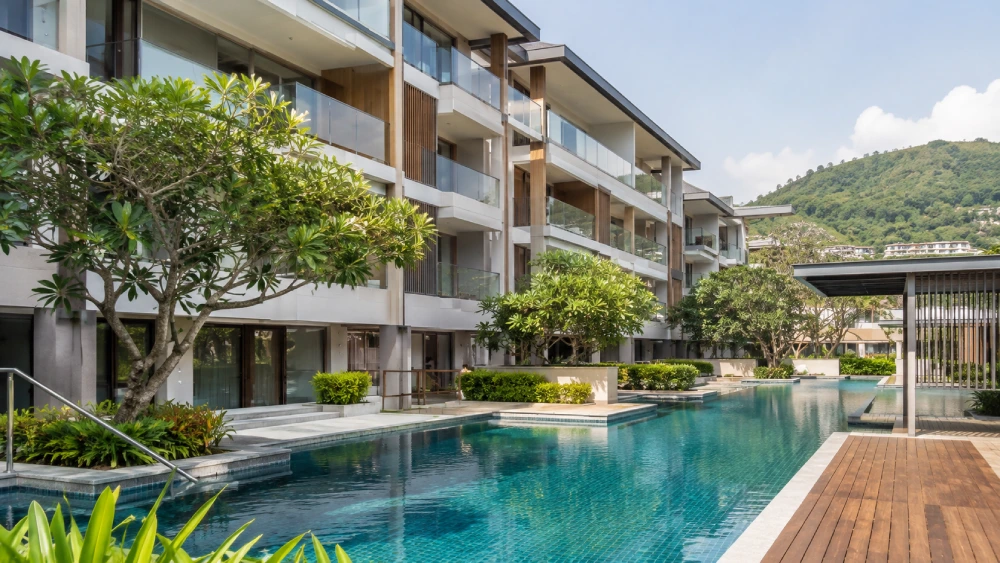
Common area maintenance fees pay for shared services, infrastructure, facilities, and administration. The exact rate and calculation method depend on the development, registered rules, property type, ownership ratio, and approved annual budget.
Verified Phuket Project Fee Examples
| Phuket development | Recurring CAM rate | Sinking-fund rate | Important limitation |
| The Title V | 55 THB per sqm monthly | 600 THB per sqm | Project-specific published rate |
| Ashiyana Heights | 60 THB per sqm monthly | 700 THB per sqm | Project-specific published rate |
| AYANA Heights | 60 THB per sqm monthly | 800 THB per sqm | Project-specific published rate |
These examples show why buyers should not treat one broad online range as the standard for every luxury Phuket property. Even developments with similar recurring charges can require different reserve contributions.
The strongest starting point is the development’s current fee schedule, registered rules, operating budget, financial statements, meeting minutes, and sinking-fund balance.
The division explained in Phuket condo management inclusions is central to this review. Buyers need to separate juristic-office responsibilities, shared facilities, private-unit costs, sinking funds, and any separately appointed property manager.
What Common Area Fees May Cover
The precise scope must come from the development’s own budget. Common costs may include:
- Gated security and CCTV
- Common electricity and water
- Shared swimming pools
- Fitness rooms and reception areas
- Lifts and fire-safety systems
- Common landscaping
- Estate roads and drainage
- Lobby and corridor cleaning
- Waste collection
- Juristic-office administration
- Common-property insurance
- Maintenance of shared equipment
A development with large pools, extensive gardens, lifts, staffed reception, private roads, and round-the-clock security will normally have a different cost structure from a smaller project with limited shared facilities.
Ask how shared pool maintenance controls are budgeted. The common fee may cover a development pool, but it does not automatically cover a private pool attached to an individual villa.
The same distinction applies to cleaning. Common-area cleaning standards may cover lobbies, corridors, clubhouses, and shared bathrooms, while housekeeping inside a private residence remains a separate expense.
Shared gardens may be funded through CAM, but private lawns and villa landscaping may require a separate package. Review the budget against the actual shared landscaping maintenance being delivered.
Security and gate staffing should also be defined. A charge for estate access is different from optional development access staffing connected to late guest arrivals or private rental operations.
What Common Area Fees Usually Exclude
Owners should not assume that CAM pays every property-related expense. Private costs may include:
- Electricity and water inside the residence
- Private air-conditioning servicing
- Internal repairs and appliances
- Private pool maintenance
- Private garden care
- Interior pest treatment
- Housekeeping inside the residence
- Rental marketing and booking management
- Guest support
- Private insurance
- Furniture replacement
The discussion of luxury villa management inclusions in Phuket helps separate estate-level obligations from inspections, staffing, repairs, housekeeping, utilities, and reporting for one villa.
Owners using private villa maintenance planning should expect those services to sit outside the development CAM unless the contract states otherwise.
A standalone house within a managed estate may also need private house expense tracking for internal bills, repairs, contractors, and services that do not benefit the wider development.
CAM Fees Versus Sinking Funds
A recurring CAM budget and a sinking fund serve different purposes.
| Expense category | Recurring CAM fee | Sinking fund |
| Main purpose | Daily and annual operations | Major future work |
| Typical spending | Security, cleaning, utilities, routine upkeep | Replacement, repainting, structural or capital work |
| Payment timing | Monthly, quarterly, annual, or in advance | At transfer or when approved under project rules |
| Main document | Approved operating budget | Reserve account and expenditure history |
| Main risk | Service reduction or operating deficit | Insufficient funds for major repairs |
| Core question | What does this year’s fee cover? | How much remains after past withdrawals? |
A one-time sinking-fund contribution does not prove that the development has enough money for future work. Buyers should check the current balance, previous withdrawals, approved capital projects, and expected replenishment.
Common Area Fees: Cost Calculations
A buyer should be able to reproduce the quoted charge using the development’s official formula. The calculation must identify the applicable area, ownership ratio, rate, payment period, and any advance amount due at transfer.
Confirm the Exact Calculation Basis
For a condominium, common expenses may be divided according to the registered ownership share or the benefit provided to the unit under the registered regulations.
Ask whether the calculation includes:
- Internal floor area
- Balcony area
- Storage areas
- Parking ownership
- Registered ownership share
- A benefit-based adjustment
- Any commercial-unit weighting
For a villa development, the fee may be:
- Fixed per villa
- Based on plot size
- Based on villa type
- Divided through an estate ownership ratio
- Connected to a specific service package
Request a written calculation for the exact property. A quoted rate without the measurement basis is incomplete.
The Phuket apartment management responsibility boundaries are useful where building administration and a private unit manager both collect or process payments. The owner needs to know which party controls each recurring cost.
Use a Reproducible Calculation Sheet
| Calculation field | Information to obtain |
| Registered property area or share | Exact figure from the title or development rules |
| CAM rate | Current approved rate |
| Billing period | Monthly, quarterly, annual, or another period |
| Advance payment | Number of months or years required |
| Sinking-fund rate | Separate reserve contribution |
| Special assessment | Any approved additional amount |
| Arrears attached to property | Outstanding balance and surcharge |
| Other development charges | Parking, access cards, utilities, or facility fees |
| Private management charges | Separate manager, housekeeping, pool, or rental fees |
The annual ownership cost should include more than the CAM invoice. Add the sinking fund when due, private maintenance, insurance, utilities, management charges, and expected special assessments.
Written Phuket property management contract controls should explain whether a private manager pays CAM on the owner’s behalf, deducts it from rental income, charges an administration fee, or merely forwards the notice.
Compare Current Charges with Past Rates
Ask for at least five years of CAM rates. This reveals whether the charge has remained stable, risen gradually, or increased sharply after developer control ended.
Request:
- The rate for each year
- The approved annual budget
- Meeting resolutions
- Reasons given for increases
- Inflation clauses
- Changes in staffing or facilities
- New insurance or contractor costs
- Planned increases for the next year
Do not assume every Phuket development has a universal annual cap. Fee changes should follow the registered regulations, approved budgets, meeting process, and applicable requirements.
Check the Manager’s Fee Handling
A private manager may receive notices, schedule payments, record expenses, and include CAM in the owner’s statement. This does not make the development fee part of the private manager’s own charge.
Use Phuket property manager selection criteria to compare fee handling, reporting, additional charges, payment authority, and contract clarity.
Watch for the bad Phuket property manager warning signs, including vague administration fees, hidden markups, missing receipts, unclear deductions, and charges that cannot be matched to the development invoice.
Reliable Phuket property manager quality standards should include itemised statements, original invoices, payment dates, utility records, and a clear separation between CAM, private maintenance, and management fees.
Common Area Fees: Property Scenarios
The same phrase can describe different financial arrangements in condominiums, villa estates, rental units, and owner-managed properties. Each buyer should identify who bills the fee, what it funds, and what remains separate.
Condominium Ownership
A condominium juristic person normally manages shared property and collects common expenses under the development’s rules.
The buyer should examine:
- Ownership ratio
- Current CAM rate
- Annual budget
- Monthly accounts
- Auditor’s report
- Sinking-fund balance
- Total owner arrears
- Upcoming major repairs
- Unsold-unit contributions
- Debt-clearance requirements
Where the owner appoints separate condominium fee administration, the private manager may monitor notices and pay approved charges. The juristic office still controls the development’s common-property budget.
Luxury Villa Estates
Villa developments commonly need shared roads, drainage, gates, perimeter security, lighting, common landscaping, waste services, and estate administration.
Private villas create an additional layer of expense. The owner may still pay separately for:
- Private pool care
- Private garden work
- Housekeeping
- Air-conditioning
- Internal repairs
- Pest control
- Utilities
- Rental management
- Guest services
The owner should compare the estate budget with the actual Phuket villa asset protection controls required for the private residence.
Do not allow a single “villa maintenance” description to combine shared-estate CAM and private-villa services without a clear itemised breakdown.
Rental Investment Properties
CAM liability belongs to the owner under the development structure, but a lease can determine whether the economic cost is included in rent or passed to the tenant.
The rental agreement should state:
- Whether CAM is included
- Whether increases can be passed through
- Who pays utilities
- Electricity and water rates
- Move-in and move-out fees
- Parking charges
- Access-card costs
- Facility charges
- Responsibility for late-payment penalties
Owners using rental operating cost controls should keep development CAM separate from booking commissions, cleaning, guest support, private utilities, and turnover expenses.
Overseas and Remote Owners
CAM problems often begin with missed notices, unclear deductions, late-payment surcharges, or financial reports that group several expenses together.
Effective overseas Phuket villa oversight systems should monitor invoices, payment deadlines, budgets, meeting notices, repair approvals, and reserve-fund decisions.
The remote Phuket villa ownership risks increase when the owner cannot inspect common facilities, verify contractor charges, or confirm whether fee-funded work was completed.
A local manager’s Phuket property manager handling scope should clarify whether CAM monitoring, payment processing, invoice storage, and juristic-office communication are included.
For broader development fee oversight in Phuket, owners should request original supporting records rather than relying only on a summary figure.
Common Area Fees: Scope and Risks
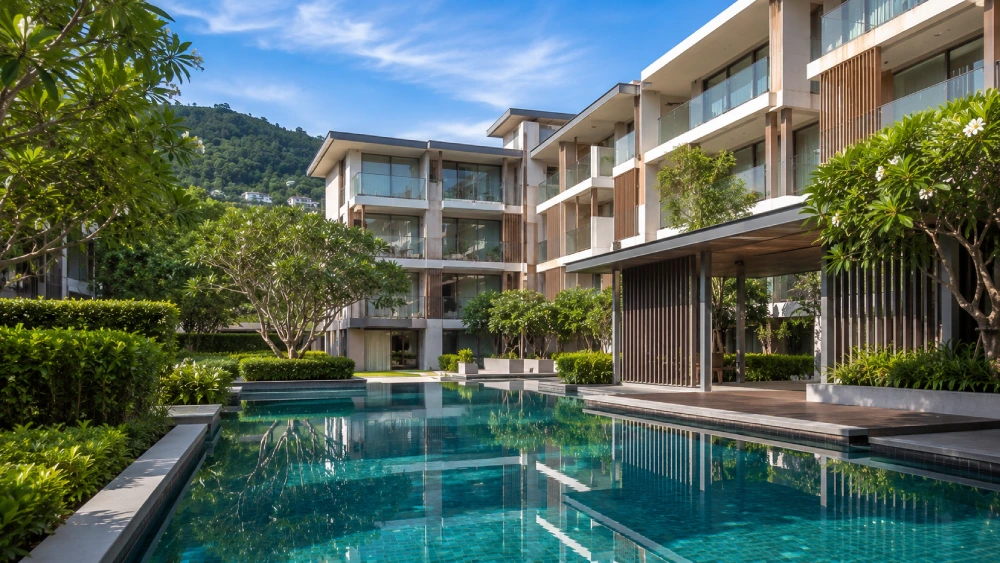
The most important question is not whether a fee appears high or low. Buyers need to determine whether the budget is sustainable, the reserve is adequate, charges are transparent, and the shared property is visibly maintained.
Match the Fee to Visible Services
Inspect the development during normal operation rather than relying on sales photographs.
Check:
- Security staffing
- Gate and CCTV operation
- Pool condition
- Lift reliability
- Corridor cleanliness
- Exterior paint
- Garden condition
- Drainage
- Common-area lighting
- Fire-safety equipment
- Waste handling
- Common-area smells or dampness
- Closed facilities
- Unfinished repairs
Speak with current owners or long-term residents. Ask whether maintenance requests are addressed, facilities are regularly available, and annual increases have improved the property.
A high fee with dirty common areas, broken equipment, weak security, or repeated delays requires explanation. A low fee with well-maintained facilities may reflect efficiency, but the accounts should confirm that the budget and reserve remain adequate.
Check for an Underfunded Budget
A low CAM rate may become expensive later if the development cannot cover routine services or major repairs.
Review:
- Annual CAM income
- Annual operating expenses
- Budget-versus-actual results
- Owner arrears
- Developer arrears
- Contractor commitments
- Insurance costs
- Reserve balance
- Five-year capital plan
An operating deficit may lead to reduced security, postponed repairs, unpaid contractors, or an additional assessment.
Review the Sinking-Fund Position
Ask for the opening reserve, current bank balance, withdrawals, approved uses, and forecast capital work.
Major future expenses may include:
- Lift replacement
- Exterior repainting
- Roof work
- Pool resurfacing
- Pump replacement
- Road repairs
- Drainage upgrades
- Structural work
- Fire-system replacement
- Generator replacement
A development can have a sinking fund and still be underfunded. The present balance matters more than the original contribution rate.
Verify Unsold-Unit Contributions
The research used for this guide states that holders of condominium units not yet transferred must share common expenses for those units.
Buyers should still verify whether those contributions are being collected.
Request:
- Number of unsold units
- Current legal owner
- CAM billed to that owner
- Outstanding balances
- Treatment of vacant units
- Developer payment history
- Total arrears in the accounts
Early buyers should not accept an unexplained operating deficit attributed to unsold inventory without reviewing the financial records.
Demand Clear Financial Reporting
Owners should be able to connect the fee to real expenditure.
Request:
- Approved annual budget
- Monthly receipt-and-expenditure accounts
- Annual financial statements
- Auditor’s report
- Contractor invoices
- Insurance invoices
- Payroll or staffing costs
- Arrears report
- Reserve statements
- Meeting minutes
- Budget-versus-actual comparison
A private manager should preserve the same transparency when processing CAM on behalf of an owner. Each payment should show the development invoice, payment evidence, date, and any separate administration charge.
Understand Late-Payment Consequences
The Condominium Act translation used in the research states that overdue common expenses may attract a surcharge of up to 12% per year without compounding.
Where arrears continue for six months or more, the surcharge may rise to up to 20% per year. Owners may also lose voting rights and face suspension of certain common services where permitted under the rules.
A condominium transfer requires certification that applicable common-expense liabilities have been cleared. Owners planning to sell should check the account early and obtain the required clearance rather than waiting for the transfer date.
CAM Due-Diligence Red Flags
| Red flag | Why it matters | Evidence to request |
| Rate quoted without formula | Buyer cannot reproduce the charge | Written unit calculation |
| CAM and sinking fund combined | Operating and reserve costs are unclear | Separate schedules |
| No recent financial statements | Spending cannot be verified | Annual accounts and audit |
| Very low reserve balance | Major work may require extra payment | Reserve statement and capital plan |
| Large owner arrears | Budget collection may be weak | Current arrears report |
| Sharp unexplained increase | Approval or budgeting may be unclear | Meeting resolution |
| Private services included vaguely | Owner may pay twice | Inclusions and exclusions list |
| Poor visible maintenance | Fee may not produce adequate service | Inspection and work records |
| Missing developer contributions | Operating income may be overstated | Unsold-unit ledger |
| No debt-clearance process | Future transfer may be delayed | Written clearance procedure |
Check the Full Ownership Cost
CAM should never be reviewed as an isolated number. Before committing to a property, ask luxury condominium management services in Phuket to separate the recurring fee, reserve contributions, private expenses, unpaid balances, planned capital work, and additional management charges. The right decision depends on transparent records and visible results, not the lowest advertised rate.
FAQs About Common Area Maintenance Fees
Are common area maintenance fees the same across Phuket?
No. Common area maintenance fees in Phuket developments differ according to facilities, staffing, ownership structure, registered expense ratios, security, landscaping, equipment, and reserve planning. Published project examples show different recurring and sinking-fund rates. Buyers should use the exact project’s current fee schedule, bylaws, budget, and accounts instead of applying one broad market average.
How are common area maintenance fees calculated?
Common area maintenance fees may be calculated using registered ownership share, property area, benefit received, plot size, villa type, or a fixed project formula. The method should appear in the development rules or fee schedule. Buyers should request a written calculation showing the exact measurement, approved rate, billing period, advance requirement, and any separate reserve contribution.
Are sinking funds included in common area fees?
A sinking fund is normally separate from recurring common area maintenance fees. CAM supports ongoing services such as security, cleaning, shared utilities, staffing, and routine maintenance. The sinking fund supports larger future work. Buyers should check the current reserve balance, past withdrawals, planned major projects, and whether further contributions or special assessments may be needed.
Do common area fees cover a private villa pool?
Common area maintenance fees may cover a pool shared by the development, but they do not automatically cover a private pool inside one villa. Private cleaning, chemicals, pumps, repairs, and electricity may be charged separately. The development budget and villa-management agreement should identify the exact boundary so the owner does not pay twice for similar descriptions.
Can common area maintenance fees increase?
Yes, common area maintenance fees can change when operating costs, services, insurance, contractors, repairs, or budgets change. Buyers should not assume there is one universal Phuket increase cap. Request the rate history, registered rules, meeting resolutions, approved budgets, and planned future changes. This shows whether past increases were gradual, exceptional, or connected to improved services.
What happens when common area fees are unpaid?
Unpaid common area maintenance fees may attract a surcharge and create legal or administrative problems. The research used here states that the surcharge may reach 12% annually, rising to as much as 20% after six months. Voting rights or some services may also be affected, and outstanding liabilities can prevent the required clearance for a condominium transfer.
Are common area fees included in Phuket rent?
Common area maintenance fees may be included in the advertised rent, paid separately by the tenant, or absorbed by the owner. The lease controls the economic arrangement. It should state who pays CAM, whether increases can be passed through, and how utilities, parking, access cards, facility charges, move-in fees, and late-payment penalties are treated.