Condominium owners in Phuket often receive several bills that look tax-related, including annual government assessments, common-area fees, sinking-fund requests, management charges, and rental-income records.
Treating them as one expense can lead to missed payments, duplicate payments, or incorrect owner reports. Condominiums do fall within Thailand’s Land and Building Tax system, but the amount depends on the official appraised value, recorded ownership, actual use, exemption conditions, and local assessment.
The safest approach is to separate every charge, verify the issuing authority, and keep evidence of each payment. The first bill to check may not be the tax bill.
Quick Check: Before assigning tax payments, CAM fees, rental records, and owner reporting to one provider, choose condominium financial management in Phuket with clear cost categories, assessment tracking, payment approval, and receipt control.
Do Condominiums Pay Property Tax in Phuket?
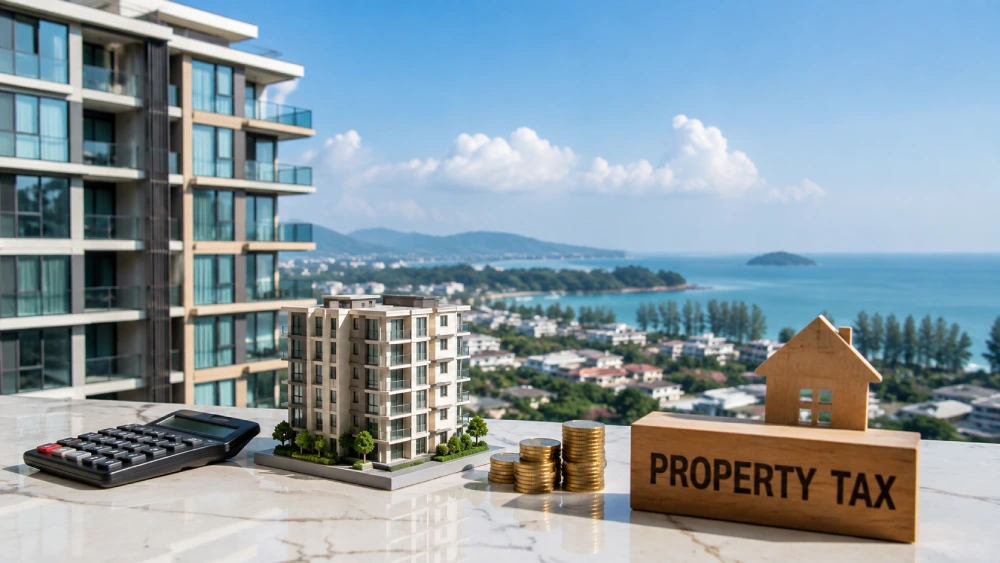
Yes, condominium units in Phuket fall within Thailand’s annual Land and Building Tax framework. The final payable amount can vary because the calculation depends on the unit’s official appraised value, recorded use, ownership details, and available exemption.
Phuket Condo Ownership Cost Categories
Condominium owners should separate government tax from building and rental costs. The issuing authority, calculation method, timing, and purpose are different for each obligation.
| Owner obligation | What it covers | Who normally collects it |
| Land and Building Tax | Annual tax based on official value and use | Relevant local authority |
| Rental-income tax | Tax connected with income from letting | Thai Revenue Department |
| CAM fee | Security, staffing and shared facilities | Condominium juristic person |
| Sinking fund | Reserve for major shared-building work | Condominium juristic person |
| Management fee | Private-unit administration and oversight | Property management provider |
| Transfer-related charges | Costs linked to purchase or sale | Land Office and tax authorities |
| Private-unit expenses | Utilities, cleaning, repairs and maintenance | Relevant service provider |
The Phuket condo management inclusions should clearly distinguish private-unit duties, juristic-office responsibilities, CAM fees, financial reporting, maintenance, rental operations, and tax-document support.
Land and Building Tax Is Annual
Land and Building Tax is an annual government obligation connected with ownership and use of land and buildings. Condominium units are included because the registered owner holds legal ownership of a defined unit within the condominium structure.
The local authority responsible for the condominium’s location administers the assessment. This may be a municipality or another qualifying local administrative organisation.
The condominium juristic person does not automatically replace the government authority. It normally manages building operations and collects common-area charges rather than issuing the official Land and Building Tax assessment.
The Tax Amount May Be Zero
Being included in the tax system does not mean every owner receives a large payable bill. An exemption may reduce the taxable amount, and some assessments may result in little or no tax due.
Exemption conditions should be checked using:
- Registered ownership
- Ownership status for the relevant tax year
- House-registration information
- Official appraised value
- Actual use of the unit
- Local assessment details
- Supporting ownership documents
Online statements such as “all Thai owners are exempt” or “all foreign owners must pay the full rate” are too broad. The actual registration and assessment conditions matter.
The Owner Should Check the Issuer
A Phuket condominium may sit within a different local administrative area from another unit only a short distance away. Owners should therefore use the authority named on the assessment rather than contacting a general Phuket office.
The wrong office may include:
- The Provincial Land Office
- The Thai Revenue Department
- The condominium juristic office
- A municipality outside the property’s area
- A private management company
Each organisation handles a different part of property ownership. The assessment itself should identify where questions, objections, and payments must be directed.
Condo Tax in Phuket: Annual Framework
The annual framework begins with the registered unit, official appraisal, use category, and exemption status. Owners should verify these items before accepting an estimated rate or paying an unexplained amount.
Check Who Owns the Unit
The tax record should match the legal owner shown in the condominium ownership documents. Ownership changes, inheritance, company ownership, or transfers during the year can create confusion over who receives or pays the assessment.
The owner or manager should verify:
- Registered owner’s full name
- Condominium project name
- Unit number
- Ownership document details
- Mailing address
- Local representative
- Date of ownership transfer
- Assessment year
An overseas owner should maintain a reliable Thai contact address. Missed assessments are often an administrative problem rather than proof that no tax is due.
Use the Official Appraised Value
Land and Building Tax does not begin with the online asking price or the amount originally paid for the condominium. The calculation uses the official government appraisal applicable to the unit.
Owners should not substitute:
- Developer list price
- Property portal estimate
- Bank mortgage valuation
- Insurance value
- Previous sale price
- Current resale asking price
The official appraisal may be obtained through the Treasury Department’s valuation system or confirmed from the local assessment.
The government appraisal can differ from market value. It should not be described as always lower because official values may be reviewed or changed during an appraisal cycle.
Confirm the Property Use
The use recorded by the local authority affects the tax treatment. A unit used as a residence may not be treated in the same way as one used for other or commercial purposes.
Possible classifications include:
| Recorded use | Questions the owner should check |
| Owner residence | Is the unit genuinely used as a home? |
| Family residence | Who occupies the unit and how is it registered? |
| Long-term rental | Is the use still classified as residential? |
| Short-term operation | Has the authority treated it as another use? |
| Company use | Is the unit held or operated for business purposes? |
| Mixed use | Are different parts or periods treated differently? |
| Vacant property | Has the unit been unused for a prolonged period? |
A short-term rental listing does not allow an owner to assume a rate from an online guide. The local authority should confirm the classification applied to the specific unit.
Airbnb management for vacation rentals in Phuket should keep booking dates, income, owner-blocked periods, platform charges, and operating records available where use must be explained.
Understand the Residential Rate
Official guidance states that residential property without the qualifying house-registration exemption begins at a low rate. The research supplied for this page identifies 0.02% as the starting residential rate in that situation.
This does not mean every Phuket condominium will produce the same tax bill. The calculation still depends on:
- Official appraised value
- Applicable exemption
- Ownership registration
- Recorded use
- Tax year
- Local assessment
A simple estimate may help with budgeting, but it should not replace the issued assessment.
Do Not Assume the Other-Use Rate
Official guidance identifies 0.3% as a starting rate for property classified under other uses. It is unsafe to state that every rented condominium or every holiday rental automatically receives that treatment.
The authority may consider actual facts such as:
- How the unit is occupied
- Length of stays
- Business operation
- Registration records
- Rental structure
- Local inspection
- Documents supplied by the owner
The owner should request clarification when the use category does not match the actual property use.
Check the Annual Deadline
Land and Building Tax is annual, but owners should not publish or follow one fixed deadline without checking the current year.
The practical payment date may depend on:
- Assessment issue date
- Local administrative timetable
- Government extensions
- Revised payment notices
- Local collection procedures
- Objection or correction status
For 2026, official local-government discussions show that some collection periods were extended. The assessment or current local notice should therefore control the payment decision.
Keep the Assessment and Receipt
A complete tax record should include more than a bank-transfer screenshot. Owners need enough evidence to identify the property, tax year, amount, approval, and successful payment.
Keep:
- Assessment notice
- Unit and ownership details
- Appraised value
- Use classification
- Exemption decision
- Payment approval
- Bank evidence
- Official receipt
- Correction request
- Objection outcome
- Owner-statement entry
The Phuket property manager tax-handling scope may include assessment monitoring, bill organisation, owner statements, tax-document storage, rental-income summaries, and coordination with qualified advisers.
Correct an Inaccurate Assessment
Owners should not ignore an assessment that contains incorrect information. They should also avoid paying first without understanding whether the error affects ownership, value, exemption, or use.
Common errors include:
- Previous owner still listed
- Wrong condominium unit
- Duplicate record
- Incorrect appraised value
- Incorrect property use
- Missing exemption
- Wrong mailing address
- Incorrect payment status
The local tax service provides procedures for correcting property records, reporting changes of use, and objecting to an assessment. Supporting documents should be submitted within the applicable process and deadline.
Condo Tax in Phuket: Purchase and Sale Costs
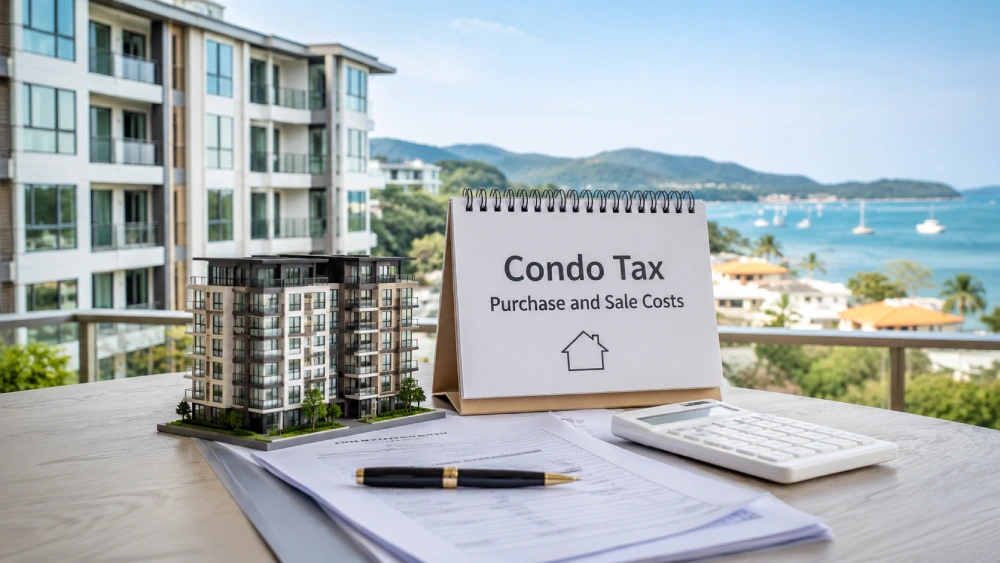
Annual property tax should not be confused with charges triggered by buying or selling a condominium. Transfer fees, withholding tax, stamp duty, and business tax arise from a transaction rather than ordinary yearly ownership.
Separate Annual and Transaction Charges
The distinction is simple:
| Annual ownership cost | Purchase or sale cost |
| Land and Building Tax | Transfer fee |
| CAM fee | Withholding tax on transfer |
| Rental-income tax | Specific Business Tax where applicable |
| Management fee | Stamp duty where applicable |
| Insurance | Legal and registration costs |
| Utilities | Brokerage or marketing costs |
A person who bought a condominium several years ago does not pay the transfer fee every year. Likewise, paying transfer-related charges does not settle future annual Land and Building Tax.
Transfer Fee Is Not Annual Tax
The transfer fee is connected with registering the change of ownership at the Land Office. The sales agreement often states how the buyer and seller divide transaction costs.
Owners should check:
- Stated sale price
- Government appraised value
- Agreed allocation of fees
- Seller ownership period
- Seller status
- Company or individual ownership
- Withholding requirements
- Applicable business or stamp tax
Exact amounts should be calculated for the specific transaction rather than copied from a general online example.
Withholding and Seller Taxes Vary
Taxes connected with disposal can depend on whether the seller is an individual or legal entity, the registered value, sale price, ownership duration, and other facts.
These charges should remain outside the annual condominium-tax section. Mixing them together makes it harder for owners to budget recurring costs and understand the final cost of a sale.
The Phuket management contract tax responsibilities should state whether the manager only stores documents or also coordinates accountants, lawyers, payment approvals, and Land Office records.
Rental Income Creates a Separate Tax Issue
An owner who rents out a Phuket condominium may have Thai assessable income even after paying annual Land and Building Tax.
Rental-income records should show:
- Gross rent
- Deposits
- Refunds
- Management charges
- Repairs
- Utilities
- Agent deductions
- Withholding evidence
- Net owner payment
- Rental period
Thai Revenue Department guidance allows a standard expense deduction for letting buildings in applicable personal-income-tax calculations. The owner’s final position still depends on total income, residency, allowances, withholding, ownership structure, and filing requirements.
The overseas Phuket owner tax coordination should connect rental-income summaries, property-tax records, invoices, withholding documents, owner approvals, and professional accounting support.
Do Not Assume Low Rent Means No Tax
A Reddit discussion in the supplied research included a claim that rent of a certain monthly amount would almost certainly produce no personal-income tax.
That conclusion is too confident. Taxable income depends on the owner’s full position, not one rental figure viewed in isolation.
The owner may need to consider:
- Other Thai income
- Tax residence
- Allowances
- Standard or actual expenses
- Withholding tax
- Filing requirements
- Company ownership
- Co-ownership
- Cross-border reporting
A qualified Thai tax adviser should review unusual or material rental-income situations.
Investor Planning Must Include Every Cost
A condominium may have a low annual property-tax bill while producing high recurring building and operating costs. Investors should therefore calculate net return after tax, CAM, maintenance, management, vacancy, and repairs.
Phuket investor property management planning should include:
- Purchase costs
- Annual property tax
- Rental-income tax
- CAM fees
- Sinking-fund exposure
- Insurance
- Management charges
- Repairs
- Vacancy
- Rental commissions
- Net owner return
A low government tax does not automatically make the investment inexpensive to hold.
Condo Tax in Phuket: Non-Tax Building Costs

CAM fees, sinking funds, utilities, maintenance, and private management costs can be much larger than annual property tax. These charges should be tracked separately so owners understand who issued them and what they fund.
CAM Fees Are Not Property Tax
Common Area Maintenance fees are charged by the condominium juristic person to operate and maintain shared parts of the building.
They may cover:
- Security
- Reception or building staff
- Shared electricity
- Lift servicing
- Pool maintenance
- Gym upkeep
- Common-area cleaning
- Landscaping
- Waste handling
- Building insurance
- Routine repairs
- Administration
The fee may be billed monthly, quarterly, or annually. Its amount depends on the condominium’s approved budget and allocation method.
The luxury Phuket development common-area fees should be reviewed separately from government tax, private-unit expenses, and management charges.
The Sinking Fund Is a Reserve
A sinking fund is money reserved for major building work rather than routine daily operation.
It may support:
- External painting
- Roof replacement
- Lift replacement
- Major pool repairs
- Structural work
- Waterproofing
- Large mechanical systems
- Emergency capital repairs
A new-development buyer may pay an initial sinking-fund contribution. Existing owners may face further contributions if the reserve is insufficient and the condominium approves additional funding.
The project’s purchase contract, juristic-person rules, meeting resolutions, and financial statements should confirm the amount.
Owner and Tenant Costs Differ
A lease should state which recurring costs are paid by the owner and which are paid by the tenant.
Potential tenant costs include:
- Electricity
- Water
- Internet
- Access-card replacement
- Parking charges
- Damage
- Cleaning at move-out
- Agreed minor services
Potential owner costs include:
- Land and Building Tax
- CAM fees
- Sinking-fund contributions
- Structural repairs
- Building assessments
- Major appliance replacement
- Management charges
- Owner insurance
The Phuket condo tenant billing responsibilities should connect lease terms, utility balances, deposits, building rules, access cards, damage evidence, and move-out settlement.
Private Management Fees Are Separate
Property-management fees pay for services provided to the private unit and owner. They should not be described as taxes or CAM.
They may cover:
- Owner reporting
- Tenant communication
- Inspections
- Rent collection
- Bill monitoring
- Contractor coordination
- Key control
- Financial records
- Check-in support
- Maintenance follow-up
The Phuket property management fee components should be compared against the actual scope, reporting detail, rental activity, and level of local oversight.
Short-Term Rentals Add Operating Costs
Short-term rental properties may incur costs that do not exist in a normal owner-occupied unit or long-term lease.
These may include:
- Professional housekeeping services in Phuket
- 24-hour check-in service for villas in Phuket
- Guest supplies
- Linen replacement
- Platform commissions
- Frequent utilities
- Damage handling
- Guest support
- Turnover inspections
These are operating costs. They should not be placed inside the annual property-tax figure.
Shared Facilities Need Separate Records
Private owners sometimes manage a wider property portfolio containing condominiums, houses, and villas. Each property type should have its own tax and operating-cost record.
Services such as pool management company for rental properties in Phuket, garden management company for rental properties in Phuket, villa property management in Phuket, and house property management in Phuket may be relevant to a mixed portfolio, but they should not be charged to a condominium unit unless the expense genuinely belongs to it.
Separate records prevent one property’s costs from distorting another property’s income and tax reporting.
Build a Clear Owner Cost Statement
A useful owner statement should separate every charge by category.
| Statement category | Example records |
| Government tax | Land and Building Tax assessment |
| Rental tax records | Gross rent and withholding documents |
| Juristic-office costs | CAM and sinking-fund payments |
| Private management | Monthly management charge |
| Rental operations | Cleaning, check-in and platform fees |
| Maintenance | Contractor invoices and repairs |
| Utilities | Electricity, water and internet |
| Owner payout | Net amount after approved deductions |
The manager should attach or retain evidence for every material deduction.
The good Phuket property manager compliance standards should include fee clarity, record keeping, bill monitoring, financial reporting, compliance awareness, and professional referral when tax advice exceeds the manager’s role.
Define the Manager’s Tax Role
A property manager may monitor notices and arrange approved payments, but should not automatically be treated as the owner’s accountant or tax adviser.
The management agreement should identify:
- Who receives the assessment
- Who checks the property details
- Who confirms the use classification
- Who approves the payment
- Which account provides the funds
- Who stores the receipt
- Who contacts the local authority
- Who handles an objection
- When an accountant is required
- How the expense appears in reports
The Phuket property manager selection criteria should include tax-document coordination, condominium experience, reporting quality, fee transparency, and access to qualified specialists.
Owners should also follow a Phuket property manager verification process covering legal identity, financial controls, fee schedules, sample reports, condominium knowledge, and document handling.
Condo Tax Support Across Phuket
Condominium tax coordination is available throughout Phuket, but the responsible municipality or local administrative authority depends on the unit’s registered address. Owners should confirm which authority issued the assessment before approving payment, requesting a correction, or challenging the recorded property use.
West Coast Condominium Areas
Support is available for condominium owners in Bang Tao, Laguna Phuket, Cherng Talay, Surin, Kamala, Patong, Kata, and Karon. This may include assessment tracking, CAM record separation, payment approval, receipt storage, and owner reporting.
Southern Phuket Areas
Condominium owners in Rawai, Nai Harn, Ya Nui, Friendship Beach, Chalong, and Saiyuan can receive help coordinating annual tax notices, rental-income records, juristic-office charges, and local authority communication.
Central and Northern Phuket Areas
Coverage also extends to Kathu, Thalang, Mai Khao, and surrounding Phuket areas. Each unit should maintain separate records for government property tax, CAM fees, sinking-fund payments, management charges, and rental expenses.
Island-wide support is available across Phuket, with each condominium’s tax records handled according to its exact location, assessment issuer, ownership details, and recorded use.
Condo Tax in Phuket: Keep Every Cost Clear
Phuket condominium owners should separate annual property tax, rental-income records, CAM fees, sinking funds, management costs, and transaction charges before approving payment. Use condominium financial management in Phuket that records the issuing authority, tax year, assessment, approval, receipt, and owner-statement category. Complex tax positions should still be reviewed by a qualified Thai adviser.
FAQs About Phuket Condominium Property Tax
Who pays Phuket condominium tax after a midyear sale?
The annual Phuket condominium property-tax position should be checked against the ownership date used for that tax year and the issued assessment. A buyer and seller may privately agree to divide certain annual costs, but that agreement does not necessarily change the person identified by the authority. The sales contract should clearly allocate unpaid tax, CAM fees, and other outstanding charges.
What happens if the condominium owner receives no assessment?
Not receiving an assessment does not confirm that no Phuket condominium property tax is due. The owner should confirm that the local authority has the correct name, unit number, ownership record, and mailing address. Overseas owners should appoint a reliable local contact and keep evidence of enquiries. Any payment should be made only against verified property and tax-year information.
Can a property manager pay condominium tax for an owner?
A property manager can coordinate Phuket condominium property-tax payment when the management agreement and owner approval permit it. The process should identify the assessment, amount, funding account, approving person, payment method, and official receipt. The manager should not decide exemptions, classifications, or complex tax questions without confirmation from the authority or an appropriate adviser.
How can an owner challenge the wrong property use?
When a Phuket condominium property-tax assessment records the wrong use, the owner should collect evidence showing how the unit is actually occupied or operated. This may include leases, utility records, house-registration information, booking records, photographs, or company documents. The correction or objection must be submitted through the process provided by the responsible local authority.
Is rental-income tax included in the annual condo tax?
Rental-income tax is separate from Phuket condominium property tax. Land and Building Tax relates to the property’s value and use, while income tax concerns rent earned by the owner. Paying one does not settle the other. Owners should maintain gross-rent records, deductible expenses, withholding documents, management charges, and professional advice appropriate to their tax status.
Which documents should an overseas condo owner retain?
An overseas owner should retain the Phuket condominium property-tax assessment, official appraisal information, ownership records, use classification, exemption decision, payment approval, bank evidence, and official receipt. CAM statements, sinking-fund notices, rental-income summaries, management invoices, and correspondence with the local authority should remain in separate categories so each payment can be traced.
Are CAM fees deductible from condominium property tax?
CAM fees do not normally reduce Phuket condominium property tax directly because they are building-operation charges issued by the condominium juristic person. Whether they may be treated as expenses in a rental-income calculation is a separate tax question that depends on the owner’s circumstances and accounting method. A qualified Thai accountant should confirm the correct treatment.