Phuket Airbnb owners face one serious problem: guests judge listings quickly, compare them with hotels, and punish vague claims through poor reviews. A strong manager fixes this with accurate positioning, honest photos, clear amenities, seasonal pricing, fast messaging, and clean reporting. The experienced solution is a listing system that matches the real stay, builds guest trust, and keeps the calendar controlled.
Quick Tip: A stronger listing starts with clearer setup, better guest flow, and fewer booking mistakes. See how our airbnb listing management works service supports Phuket rental owners.
How Airbnb Listing Management Works in Phuket?

Airbnb listing management in Phuket is the full process of creating, improving, controlling, and updating a rental listing. It connects Market & Listing Optimization, On-Ground Operations and Fees and Earnings, and Legal and Compliance into one practical workflow. The goal is to help guests understand the property clearly before they book.
| Listing Area | What Managers Control | Real Problem Solved |
| Listing accuracy | Location, features, rules, capacity | Prevents guest disappointment |
| Market position | Guest type, area, value angle | Competes against hotels |
| Photos | Room order, pool, view, layout | Builds first-click trust |
| Description | Layout, beach distance, check-in | Removes booking doubts |
| Amenities | AC, Wi-Fi, pool, parking | Improves filters and confidence |
| Calendar | Rates, minimum stays, buffers | Prevents weak gaps |
| Messaging | Inquiry and arrival replies | Converts hesitant guests |
| Compliance | Condo rules and short-stay checks | Reduces listing risk |
Airbnb listing management is not only uploading photos or writing a title. It starts with knowing what the property truly offers and what guests are likely to question. For owners needing wider rental support, airbnb management phuket connects listing setup with pricing, messaging, cleaning, and calendar control.
Accuracy Turns Listings Into Guest Trust
A listing must match the stay guests will actually experience. If the copy exaggerates the location, view, beach access, or comfort level, the booking may convert once but fail later through complaints. Good managers treat accuracy as the first conversion tool.
The strongest guest frustration comes from vague wording. Phrases like posh location, luxury area, or steps from beach can create problems if the surrounding street, walking distance, or access route feels different. Phuket listing copy should be specific, not decorative.
Managers should verify the property before writing anything. They check guest capacity, bedroom count, bathrooms, AC coverage, Wi-Fi, view type, pool access, parking, stairs, road access, and check-in method. This keeps the digital listing aligned with the real stay.
For owners still learning the wider role, property management basics gives useful context. Listing accuracy is one part of a larger management system. It protects the guest expectation before operations begin.
Market & Listing Optimization Starts Here
Market & Listing Optimization means shaping the listing around the right Phuket guest. A family villa, a couple’s pool stay, a digital nomad condo, and a luxury group rental need different titles, photos, amenities, and rules. A manager should never position every property the same way.
A Phuket listing often competes with hotels. Guests may choose a hotel because it feels simpler, safer, and cheaper. The listing must show why the Airbnb is worth booking through space, privacy, kitchen access, pool comfort, long-stay value, or family convenience.
Managers define the guest profile before optimizing. Families care about bedrooms, pool safety, kitchen use, laundry, and quiet surroundings. Remote workers care about Wi-Fi, desk space, monthly rates, and stable location access.
A luxury villa guest may care about privacy, views, staff support, airport transfer, and outdoor living space. A beach traveler may care about walking distance, transport, and nearby restaurants. The title, photo order, and description should reflect the main guest type.
Photos Must Match the Real Phuket Stay
Photos decide whether many guests click or scroll away. In Phuket, photos must show the strongest features while staying honest about layout, space, view, and access. A beautiful image that hides important limits can create review problems.
The first photo should usually show the strongest honest booking reason. For a villa, that may be the pool, sea view, outdoor terrace, or full exterior. For a condo, it may be the interior, balcony view, workspace, or building lifestyle.
The photo order should follow guest decisions. Show the hero image first, then living room, bedrooms, bathrooms, kitchen, pool, balcony, workspace, entrance, parking, and nearby lifestyle context. Guests should understand the stay without guessing.
Managers should avoid misleading angles. Rooms should not look bigger than reality, and a partial view should not be presented as a full sea view. If the property is not walkable to the beach, the gallery should not imply direct beach access.
For villas, the listing should also be supported by condition checks. Owners can use villa inspection phuket when they need to confirm whether the property is photo-ready, guest-ready, and accurate before listing. Strong photos work only when the property condition supports them.
Copy Must Answer Booking Doubts Fast
The description should answer guest questions before they message. Long, vague sales copy often performs worse than clear practical details. Guests want to understand the layout, location, sleeping setup, amenities, and check-in process quickly.
A strong Phuket description explains the property type, bedroom arrangement, bathroom count, pool privacy, kitchen setup, Wi-Fi, work area, parking, beach distance, and nearby area. It should also mention who the stay suits best. This helps prevent poor-fit bookings.
The copy should be easy to scan. Short sections work better than large blocks of text. Guests should not need to search for basic details like check-in time, extra guest rules, or cleaning frequency.
Location wording needs special care. Say whether the beach is walkable, a short drive, or nearby by transport. Mention the area honestly, such as Bang Tao, Rawai, Nai Harn, Kamala, Patong, Kata, Karon, or Laguna, if relevant.
Amenities Build Search Trust and Comfort
Amenities help guests filter and trust the listing. In Phuket, air conditioning is not optional comfort for many travelers. Managers should clearly show where AC is available, especially bedrooms and main living spaces.
Fast Wi-Fi is also important because Phuket attracts remote workers, long-stay guests, and digital nomads. If the listing claims work-friendly, the manager should support that with a workspace, stable internet, and clear notes. Vague Wi-Fi claims can create guest friction.
Important amenities include private pool, kitchen, washing machine, parking, workspace, balcony, garden, safe, baby cot, high chair, pool towels, and self or assisted check-in. These details affect both search filters and booking confidence. Missing amenities can make a strong property invisible to the right guest.
Managers should remove amenities that are unavailable or broken. A listed amenity becomes a guest expectation. If it fails during the stay, the listing may lose trust and review strength.
Pricing and Calendar Rules Control Bookings
Pricing and calendar rules are part of listing management, not a separate task. Phuket demand changes by high season, peak holidays, shoulder months, and green season. A listing with weak pricing rules can lose bookings or create poor calendar gaps.
Managers set base rates, seasonal rates, minimum stays, weekly discounts, monthly discounts, last-minute offers, and owner blocks. They also plan cleaning buffers between stays. These settings protect both revenue and operations.
Minimum stay rules matter because short bookings can break valuable calendar blocks. Peak periods may need longer stays, while low-demand periods may need more flexible rules. The right rule depends on season, area, guest type, and cleaning capacity.
For seasonal pricing depth, Phuket villa seasonal rate structure is a natural supporting resource. It explains how rates change across Phuket demand periods. Listing performance improves when pricing and calendar logic match the market.
Guest Messaging Converts Uncertain Travelers
Guest messaging can decide whether an inquiry becomes a booking. Many guests ask practical questions before committing. Slow or vague replies can push them back to hotels or competing listings.
Managers use structured replies for common questions. These include beach distance, airport transfer, Wi-Fi speed, pool privacy, nearby restaurants, family suitability, extra guests, parking, local transport, early check-in, and late checkout. The response should be fast, clear, and accurate.
Messaging continues after booking. Guests need arrival instructions, access details, house rules, local guidance, and checkout steps. This reduces confusion and protects reviews.
For more depth, guest response timing in Phuket rentals fits naturally here. Listing visibility means little if messages are handled poorly. Strong response timing supports both trust and conversion.
On-Ground Operations and Fees and Earnings
On-Ground Operations and Fees and Earnings connect the online listing to the physical stay. A listing may look strong, but reviews fail if cleaning, check-in, maintenance, and guest support do not match the promise. Phuket listings need local execution because many owners are away.
On-ground work includes check-in coordination, key handover, cleaning, linen, restocking, maintenance response, pool checks, and guest issue handling. These tasks support the listing’s accuracy and review performance. If the listing promises a smooth stay, operations must deliver it.
Fees and earnings should also be clear. Owners should understand management commission, cleaning charges, linen costs, maintenance charges, platform fees, discounts, and net earnings. A good listing report should not hide the cost of running the rental.
This is where property management services support the full rental process beyond the listing page. Owners often need one system for listing control, guest support, maintenance, and financial clarity. A listing performs better when the property behind it is managed properly.
Multi-Platform Sync Stops Booking Confusion
Many Phuket rentals appear on Airbnb, Booking.com, Agoda, Vrbo, direct websites, and local channels. This can improve exposure, but it also increases risk. Without calendar sync, owners can face double bookings.
Managers should keep pricing, photos, availability, guest capacity, house rules, and cancellation policies consistent across platforms. If Airbnb says one thing and Booking.com says another, guests may lose trust. Inconsistent rules can also create operational disputes.
Channel management is most important during high season and holidays. A single double booking can damage revenue, guest trust, and owner confidence. Calendar updates should move quickly across all active platforms.
Managers also need to compare platform behavior. Some guests search Airbnb for space, while others use Agoda or Booking.com for hotel-style confidence. The listing message should stay consistent while matching each platform’s format.
Legal and Compliance Checks Protect Owners
Legal and Compliance checks are part of responsible listing management. Short-term rental rules in Thailand can be complex, especially for stays under 30 days and condo buildings. A listing strategy should not ignore building rules or legal risk.
Managers should check whether the property is a villa, condo, townhouse, or apartment. Condo juristic rules may restrict short-term stays even when the platform allows listing creation. Building access, guest registration, and stay-length rules can affect the listing setup.
This section should remain careful and educational. Managers may help check documents, building policies, and practical rules, but legal advice should come from qualified professionals. Owners should not assume that every Phuket property can be listed for short stays in the same way.
For broader operational support, property management services can help owners connect listing setup with local rule awareness and property oversight. Compliance is not only a checkbox. It affects how the listing should be positioned and booked.
Reports Show If the Listing Is Working
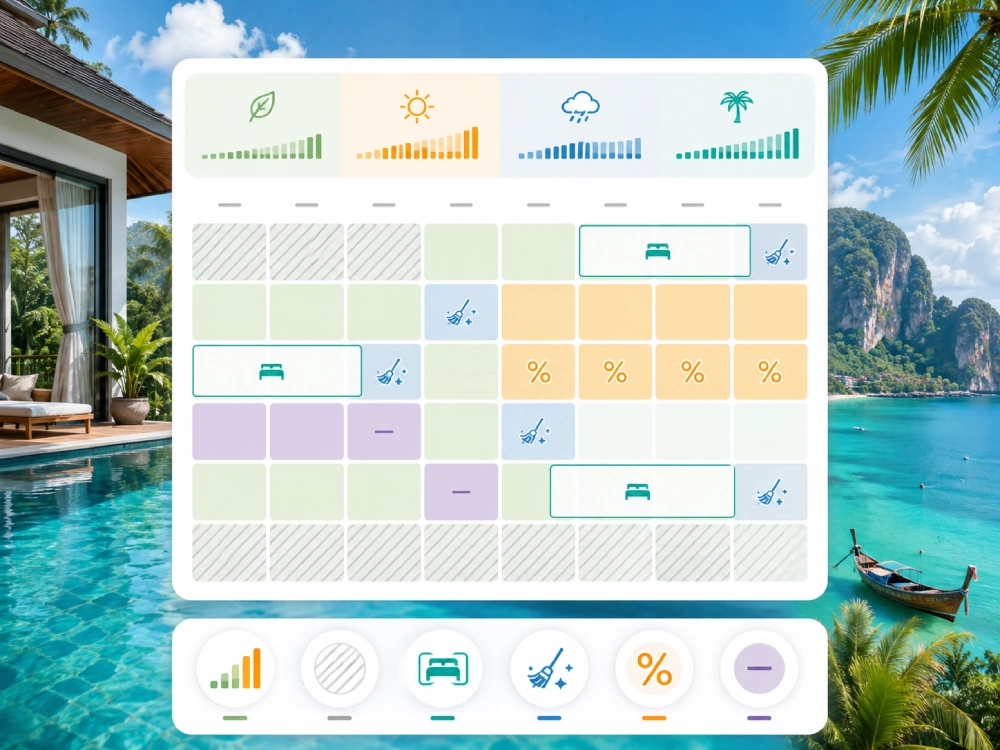
Owners need clear reporting after the listing goes live. Without data, they cannot know whether the listing is attracting views, converting inquiries, or losing guests at a specific point. Listing reports turn guesswork into decisions.
Reports should show views, inquiries, booking pace, occupancy, average nightly rate, guest reviews, calendar gaps, discount use, response time, and listing updates. They should also show what the manager changed and why. This helps owners understand performance.
A strong report also includes next actions. The manager may recommend new photos, revised title wording, updated amenities, pricing changes, or improved guest instructions. Listing management should improve over time, not stop after publishing.
For remote owners, remote owner update workflow in Phuket supports this idea. Owners away from Phuket need a clear view of listing performance and guest experience. The report should make the rental easier to understand from a distance.
The Final Listing Management Workflow
Airbnb listing management works best as a repeatable workflow. It starts with the real property and ends with ongoing performance improvement. Each step should support guest trust, booking conversion, and owner clarity.
Step-by-step workflow:
- Review property condition, location, amenities, and access.
- Define the right Phuket guest profile.
- Create honest market positioning.
- Write a clear, feature-led title.
- Plan accurate photos in guest decision order.
- Write description copy that removes booking doubts.
- Add accurate amenities and house rules.
- Set seasonal pricing and calendar rules.
- Manage inquiries and guest messages.
- Sync listings across active platforms.
- Check legal and building restrictions.
- Track views, inquiries, bookings, and reviews.
- Update the listing based on performance.
- Report results and next actions to the owner.
At this stage, property management services are the right next step for owners who want listing performance connected with guest support, maintenance, reporting, and local management. The listing is only one part of the rental system. It works best when the property behind it is ready, responsive, and honestly presented.
Frequently Asked Questions
Why do guests distrust vague Airbnb location claims?
Guests distrust vague claims because they fear the listing may not match reality. Terms like luxury area or close to beach can mean different things to different people. Managers should use exact distance, area names, and honest access details.
Can Phuket Airbnb listings compete with hotels?
Yes, but the listing must show a clear reason to choose it. Guests may prefer Airbnb for space, privacy, kitchens, pools, laundry, and family comfort. The listing must communicate those advantages quickly.
Should a listing mention exact beach distance?
Yes, exact beach distance reduces confusion and protects reviews. If the beach requires driving, the listing should say so clearly. Honest distance details create better guest expectations.
How do managers avoid double bookings?
Managers avoid double bookings by syncing calendars across Airbnb, Booking.com, Agoda, Vrbo, and direct channels. They also align minimum stays, blocked dates, and cleaning buffers. Manual checks are still important during peak periods.
Is dynamic pricing enough to improve bookings?
No, dynamic pricing alone is not enough. Photos, reviews, amenities, messaging, calendar rules, and listing accuracy also affect bookings. Pricing works best when the full listing is strong.
Conclusion
Airbnb listing management in Phuket works by creating an accurate, locally positioned, conversion-focused listing that keeps improving. Managers control photos, copy, amenities, pricing, calendar rules, guest messaging, platform sync, compliance checks, and performance reports. The strongest listings earn trust because they match the real stay and answer guest doubts before booking.