Many Phuket owners face a serious problem: the property needs daily attention, but they may live overseas, visit seasonally, or depend on rental guests. A skilled management team turns scattered tasks into a controlled operating system with inspections, maintenance, guest care, reports, and clear approvals. The experienced solution is a step-by-step workflow that protects the property before weather, guests, repairs, or unclear fees create bigger problems.
Quick Tip: Managing a Phuket property from abroad is easier with trusted local support. Explore our Property Management Companies service for smoother owner support.
How Property Management Companies Work in Phuket?
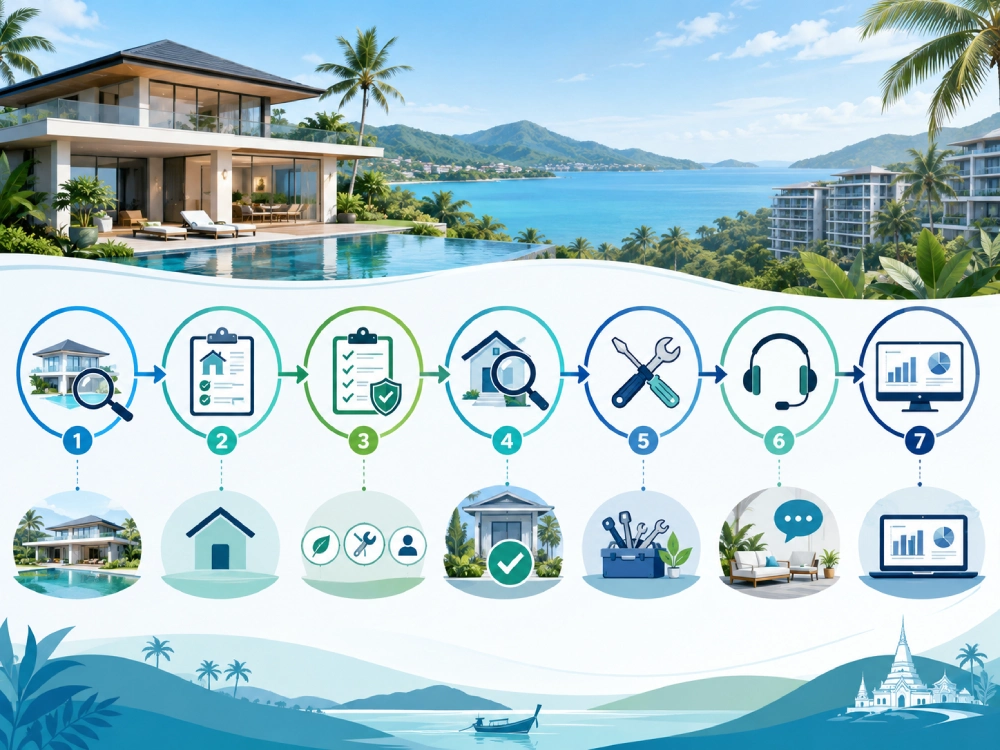
This section explains the full working system, not just one task. A management company connects Operations & Guest Management, Maintenance & Property Upkeep, and Financials & Legal Compliance into one structured process. The goal is simple: keep the property usable, rentable, protected, and clearly reported.
| Working Area | What the Company Does | Owner Problem It Solves |
| Property review | Checks condition, systems, risks | Owner does not know real condition |
| Owner planning | Confirms rental, private use, or vacant care | Wrong workflow for property use |
| Guest operations | Handles messages, arrival, cleaning, issues | Guests need fast local support |
| Maintenance | Manages AC, plumbing, pool, garden, repairs | Small defects become costly |
| Reporting | Sends photos, notes, invoices, summaries | Remote owners lack visibility |
| Fees and compliance | Explains charges, rules, and documents | Owners fear hidden costs |
A Phuket management company does not only collect rent or send cleaners. It builds a working routine around the property’s use, location, condition, and owner expectations. This is why property management services are often used when owners need one local system instead of many separate contacts.
First Property Review Shapes Every Decision
The first serious step is a property review. This helps the company see what it is actually managing before making promises. A villa, condo, apartment, or rental home can need very different care.
The review usually covers interiors, exterior areas, AC units, plumbing, electrical systems, appliances, furniture, drainage, access points, and safety issues. For villas, it also includes pool systems, garden areas, gates, walls, lighting, and outdoor wear. For condos, it focuses more on private unit condition and building access rules.
This first inspection creates a baseline. It tells the owner what needs urgent repair, what needs scheduled maintenance, and what can wait. Without this step, the management plan becomes guesswork.
A useful supporting guide is property management basics. It helps readers understand the meaning before studying the full workflow. This link fits well for owners who are still learning the foundation.
Owner Goals Control the Daily Workflow
A good company does not manage every Phuket property the same way. The owner’s plan decides how the workflow should run. A private holiday home, vacant condo, Airbnb apartment, long-term rental, and luxury pool villa all need different systems.
If the property is used only during holidays, the focus is security, ventilation, cleaning, pool care, and arrival readiness. If the owner is overseas, the focus expands to inspections, emergency response, maintenance approval, and detailed owner reports. If the property is rented, the workflow becomes more active because guests or tenants need fast support.
This is where many owners make mistakes. They ask for a general management plan without defining property use. A better start is to define whether the property is for private stays, short-term rental, long-term rental, mixed use, or vacant care.
Scope and Fees Must Be Clear First
The service scope should be written clearly before work starts. Owners need to know what is included, what costs extra, how repairs are approved, and how often reports are sent. A vague agreement creates conflict later.
A strong management scope usually confirms inspection frequency, cleaning schedule, pool care, garden work, guest support, tenant communication, emergency rules, reporting method, and repair approval limits. It should also explain whether cleaning, laundry, pest control, and contractor coordination are included. This keeps expectations realistic from the start.
Fees may follow a commission model, fixed monthly model, hybrid model, or separate charge structure. Rental properties often use commission, while vacant homes may use fixed care plans. Owners should compare fee structure with actual work, not only the lowest number.
For a deeper contract-focused reader path, link to management agreement structure in Phuket. This supports owners who need clarity before signing. It also keeps fee questions tied to operational detail.
Operations & Guest Management in Action
Guest operations move quickly in Phuket because short-term rentals depend on timing. A guest may need arrival details, check-in support, AC help, Wi-Fi guidance, cleaning correction, or an urgent repair. A company must handle these issues without waiting for the owner abroad.
Operations & Guest Management usually includes listing support, booking flow, calendar updates, guest messages, arrival instructions, check-in, check-out, complaint handling, and post-stay inspections. Cleaning and linen turnover must match the booking calendar. A weak guest system can damage reviews and create repeat problems.
For rental owners, airbnb management phuket is the natural next step when guest support becomes too time-sensitive. It connects communication, cleaning, arrival handling, and rental readiness. This link should appear where readers understand the guest workload.
Short-term guest support and long-term tenant support are not the same. Guests need fast hospitality-style help and review protection. Tenants need maintenance handling, condition monitoring, lease coordination, and move-in or move-out checks.
Maintenance & Property Upkeep in Phuket
Maintenance is one of the biggest reasons owners need local management. Phuket’s heat, humidity, rain, and coastal exposure can turn small defects into expensive repairs. A company should manage maintenance before the property becomes reactive.
Maintenance & Property Upkeep includes AC servicing, plumbing repairs, electrical checks, pool equipment, garden trimming, pest control, drainage checks, locks, doors, paint, and general wear. The company may not perform every repair directly. Its real job is to organize contractors, quotes, approvals, schedules, quality checks, photos, and invoices.
A villa needs more hands-on maintenance than a simple condo unit. Pool chemistry, garden growth, irrigation, drainage, exterior walls, gates, and outdoor fixtures need regular attention. Owners can use villa inspection phuket when they want a more structured inspection path for villa-specific risks.
Phuket weather makes planned care essential. Humidity can damage interiors, rain can reveal leaks, and blocked drainage can create water damage. Pool and garden areas can also decline quickly when nobody checks them.
A related resource is villa care factors in Phuket. This helps readers understand why villa management needs a stronger routine. It fits naturally inside the maintenance section.
Condo Juristic Rules Need Unit-Level Care

Many condo owners misunderstand this part. The condo juristic office usually handles shared property and building rules. The owner’s private unit still needs its own checks, cleaning, repairs, and rental preparation.
A property management company works between the owner, the private unit, the guest or tenant, and the building office. It may coordinate access cards, keys, visitor rules, move-in requirements, repair permissions, and communication with the juristic team. This prevents simple building rules from turning into guest or tenant problems.
The company should also inspect inside the unit. That includes AC units, water leaks, appliances, furniture, bathroom areas, kitchen condition, windows, locks, and signs of dampness. A condo can still develop private-unit issues even when common areas look well managed.
This is where property management inclusions in Phuket becomes useful. It helps owners separate building-level care from unit-level care. The internal link supports readers who need a checklist-style explanation.
Financials & Legal Compliance Explained
Financial handling is not only about rental income. Owners need records that show what came in, what went out, and why expenses happened. Clear financial reporting is especially important for owners who are not in Phuket.
Financials & Legal Compliance may include rental summaries, expense reports, utility payments, supplier payments, repair invoices, owner statements, deposit records, lease coordination, and building-rule support. Some companies also help coordinate local rental documents or immigration-related guest requirements. Legal advice should still come from qualified professionals, not from guesswork.
A good company explains limits clearly. It should not promise to solve ownership law, foreign quota rules, or tax issues without proper professional support. It can help organize documents and workflow, but legal decisions need the right expert.
Owners should be careful with guaranteed-return language. Management can support rental operations, property condition, and guest experience. It cannot remove all market risk, resale risk, legal risk, or seasonal demand changes.
Owner Reporting Builds Remote Confidence
Reporting is the owner’s evidence system. Without reports, an overseas owner is only trusting words. With proper reports, the owner can see condition, repairs, income, expenses, and open issues.
Reports should include inspection notes, photos, before-and-after repair images, invoices, cleaning updates, rental summaries, expense records, occupancy notes, and property condition comments. A good report is easy to understand. It should not hide costs behind vague descriptions.
Owners should ask for sample reports before starting. This shows how detailed the company is and whether it communicates clearly. Weak reporting is often a sign of weak operations.
For this part, Phuket owner update workflow is a close supporting link. It helps explain how local managers keep remote owners informed. It also connects naturally with the reporting discussion.
Emergency Response Shows Real Value
Emergency response is where local management proves its worth. A leak, broken AC, storm issue, lockout, power problem, blocked drain, or security concern cannot wait for an overseas owner to wake up. The company needs a local action process.
A good emergency workflow includes receiving the issue, checking severity, sending the right person, informing the owner, approving urgent spending, fixing the problem, and sending evidence. This process protects both the property and the owner’s peace of mind. It also protects guests when the property is rented.
Emergency limits should be agreed in advance. The owner should define how much the company can spend without approval in urgent cases. This avoids delays when immediate action prevents bigger damage.
This is another strong point for property management services because emergency support needs a full local system. Separate cleaners or contractors cannot always coordinate urgent decisions. A management structure gives the owner one central response path.
Final Checks Before Owners Start
Before choosing a company, owners should check the working process, not just the sales message. The strongest companies explain their inspections, reporting, fees, emergency rules, maintenance approvals, and communication standards clearly. They should also understand the difference between villas, condos, rentals, and vacant properties.
Owners should ask for the exact inspection checklist, reporting sample, repair approval process, guest support details, and fee breakdown. They should also ask who handles after-hours issues and how quickly the team can attend the property. These questions reveal whether the company has a real workflow or only a basic service promise.
For a deeper evaluation path, use Phuket manager interview checklist. This supports readers who are moving from education to decision-making. Another strong related resource is property manager comparison factors in Phuket.
At this stage, owners who want a complete operating system can return to property management services. This final service link works because the reader now understands the workflow. It turns the educational journey into a practical next step.
Frequently Asked Questions
Do Phuket condo owners still need unit management?
Yes, condo owners may still need private unit management. The juristic office usually handles common areas, but the owner’s unit needs cleaning, AC checks, leak checks, access handling, and rental preparation. This matters more when the owner lives overseas.
How often should a managed Phuket property be checked?
Inspection frequency depends on property type, rental use, vacancy, and risk level. Villas, pool homes, and vacant properties usually need more regular checks than simple occupied condos. The schedule should be agreed before management starts.
Who handles repair approval when the owner is abroad?
A property management company usually coordinates repair quotes, owner approval, contractor scheduling, and final checks. Emergency spending limits should be agreed in advance. This allows urgent issues to be handled without dangerous delays.
Are management fees fixed or commission-based?
Both models exist in Phuket. Rental properties often use commission, while private or vacant properties may use fixed monthly care. Some villas use hybrid models because they need rental support plus pool, garden, and maintenance care.
Can a company manage a property that is not rented?
Yes, a company can manage a non-rental property. The work usually focuses on inspections, cleaning, humidity control, pest checks, pool care, garden care, security, and storm preparation. This helps protect the home between owner visits.
Conclusion
Property management companies in Phuket work through a structured operating process. They review the property, define owner goals, set scope, inspect regularly, coordinate maintenance, manage guests or tenants, report clearly, and respond locally during urgent problems. The strongest workflow protects the owner from distance, confusion, poor reporting, and preventable property damage.