A Phuket rental home can decline quickly when nobody checks it with a trained eye. Humidity, rain, salt air, guest misuse, delayed repairs, and unclear reporting can turn small issues into expensive damage. The strongest protection comes from local action, structured inspections, legal awareness, and clear owner updates through trusted property management services.
Owner Tip: Want fewer rental risks, faster local response, and better protection for your Phuket home? Learn how our property management services help protect rental homes with inspections, maintenance, guest control, and clear owner reporting.
How Property Managers Protect Phuket Rental Homes?
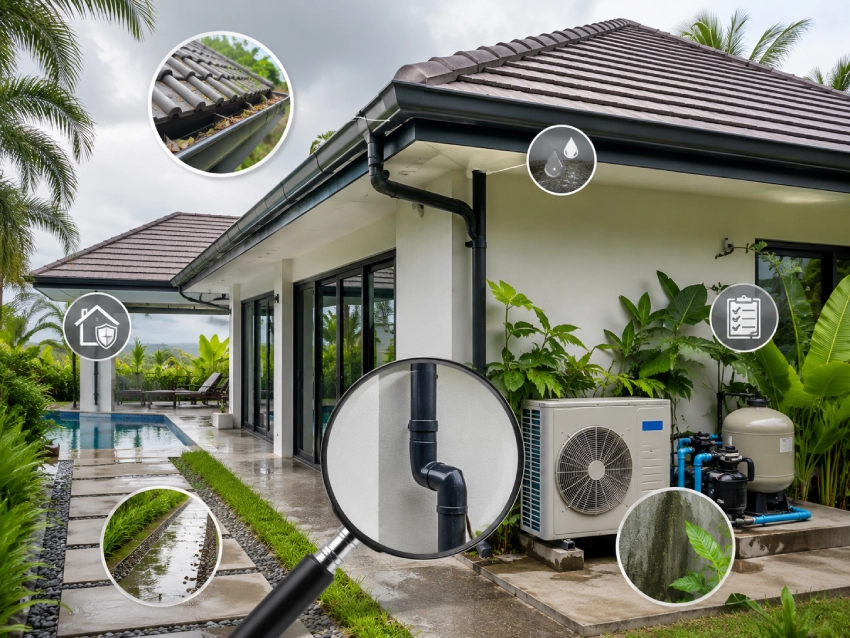
Phuket rental protection is not only about cleaning after guests leave. It is a working system that checks the property, controls access, records damage, handles compliance, and responds before problems spread. The main protection areas are legal control, physical maintenance, and guest management.
| Risk Area | What Can Go Wrong | Manager Protection |
| Legal compliance | TM30 gaps, weak records, wrong rental setup | Guest records, lease checks, building rules |
| Climate damage | Mould, leaks, rust, damp smells | AC care, drainage checks, roof inspections |
| Guest misuse | Broken items, AC overuse, lost keys | House rules, check-in guidance, checkout checks |
| Owner distance | No real view of condition | Photo reports, repair notes, local updates |
| Emergency delay | Water damage, power faults, storm impact | Local response, vendor coordination, fast action |
| Outdoor decay | Pool algae, garden overgrowth, furniture damage | Pool care, garden trimming, storm preparation |
Protection Map for Phuket Rental Homes
A proper protection map starts before the guest arrives. Managers check the legal setup, house condition, inventory, access method, cleaning standard, pool status, and repair history. This creates a baseline before the home is exposed to rental use.
During the stay, the manager protects the home through guest support and issue control. Clear instructions reduce misuse of AC units, pool systems, water heaters, kitchen appliances, locks, gates, and rubbish areas. Fast communication also prevents guests from trying unsafe fixes.
After checkout, the manager checks the home again. This is where broken items, stains, missing keys, blocked drains, or AC leaks are caught early. The owner receives clear evidence before minor issues turn into higher costs.
Legal and Regulatory Protection
Legal protection is often ignored until a problem appears. In Phuket, rental homes may involve foreign guests, condo rules, juristic office requirements, lease terms, guest records, and short-stay limits. A manager protects the owner by keeping the rental structure organised before bookings begin.
TM30, guest records, and stay control
Foreign guest reporting is a real concern for the owners in Thailand. A manager helps collect guest details, organise arrival records, and keep the owner aware of reporting duties. This is especially important when the owner lives overseas and cannot manage every guest arrival.
Length of stay also matters because different rental structures can create different legal risks. Managers help owners avoid careless short-stay arrangements that conflict with building rules or accommodation requirements. For deeper context, owners can study the short-term rental management meaning in Phuket.
Legal protection also depends on documentation. A manager keeps guest data, booking dates, deposits, lease terms, payment records, and owner approvals in one system. This reduces confusion when a dispute, complaint, or inspection issue appears.
Contracts, condo rules, and rental limits
Rental agreements protect the owner only when they are clear. A manager helps connect lease terms with deposit rules, utility responsibility, house access, guest limits, maintenance permission, and damage handling. Owners who want more detail can review Phuket property management contract basics.
Condo units need extra attention because the juristic office may have rules for guests, access cards, parking, noise, lifts, and minimum stays. Managers protect owners by checking these rules before the unit is listed or occupied. This is where Condo Management becomes important for owners who rent apartments or condominium units.
Poor legal handling can create avoidable stress. The risk is not only a fine or complaint, but also blocked access, unhappy neighbours, weak evidence, and rental disruption. Good managers reduce this risk through records, rules, and repeatable procedures.
Tropical Climate and Physical Maintenance
Phuket homes age faster when climate maintenance is weak. Heavy rain, humidity, heat, and coastal air can affect roofs, walls, metal fittings, furniture, AC units, pools, gardens, and interiors. Managers protect the property by treating weather as a constant risk, not a seasonal surprise.
Rain, humidity, roofs, and drainage
Rain protection begins with the roof and drainage system. Managers check gutters, downpipes, terraces, balcony drains, rooflines, ceiling stains, water pooling, and garden runoff. This matters most before and during the rainy season.
Humidity creates hidden problems inside the home. Damp smells, swollen wood, peeling paint, mould marks, and soft furnishings can worsen when a home stays closed. A manager reduces this risk with ventilation checks, AC use planning, and condition inspections.
Drainage checks protect both villas and houses. Blocked drains can push water toward walls, pool decks, gardens, and lower rooms. Owners managing larger homes should consider scheduled villa inspection phuket support before problems spread.
AC, mould, pests, and indoor protection
Air conditioning is part of property protection in Phuket. Dirty filters, blocked drain lines, and leaking indoor units can create water stains, poor airflow, odours, and mould risk. Managers schedule AC cleaning and check for signs of overuse after guest stays.
Mould prevention requires more than wiping surfaces. Managers inspect wardrobes, curtains, mattresses, bathrooms, kitchen areas, ceiling corners, and closed rooms. They also watch for damp smells because smell often appears before visible damage.
Pest control is another indoor protection layer. Empty homes and food waste can attract ants, cockroaches, termites, rodents, and mosquitoes. Good housekeeping, rubbish control, drain checks, and scheduled pest treatment help protect the rental condition.
Pools, gardens, and outdoor assets
Outdoor areas carry major risk in Phuket. Pool water balance, algae, pumps, filters, tiles, decks, lights, and outdoor showers need regular checks. A neglected pool can quickly damage guest experience and increase repair costs.
Gardens grow fast in tropical conditions. Managers control branches, roots, leaves, irrigation, pathways, boundary areas, and storm debris. This helps prevent blocked drains, pest shelters, broken lights, and unsafe walkways.
Outdoor furniture also needs protection. Cushions, umbrellas, loungers, timber furniture, metal frames, and terrace décor can suffer from rain, sun, rust, and mould. Owners can learn more through villa property management importance in Phuket.
Tenant and Guest Management
Guest control protects the home from preventable damage. Many problems start when guests do not understand the property, the rules, or the local environment. Managers reduce damage by setting expectations before arrival and checking the home after departure.
House rules and arrival guidance
Clear rules protect the owner before the guest enters the home. Rules should cover smoking, parties, pets, noise, pool use, rubbish, parking, AC use, keys, doors, windows, and extra visitors. For villa stays, this connects closely with airbnb management phuket.
Arrival guidance prevents misuse of important systems. Managers explain locks, gates, alarms, AC controls, kitchen appliances, water heaters, pool safety, rubbish collection, and parking. This reduces accidental damage and guest frustration.
Short-stay villas need stronger control because turnover is higher. Frequent guests mean more luggage movement, bathroom use, cooking, linen use, pool use, and AC strain. Owners can use the short-term villa rental workflow in Phuket as a support topic.
Inventory, checkout, and damage proof
Inventory records protect owner assets. Managers list furniture, appliances, remotes, keys, linens, kitchenware, décor, electronics, outdoor items, and pool equipment. Photos help prove the condition before and after stays.
Checkout checks should happen quickly. Managers inspect stains, broken items, missing objects, excess rubbish, lost access cards, damaged soft furnishings, blocked drains, and AC leaks. This timing matters because damage claims become weaker when evidence is delayed.
Damage tracking should separate normal wear from guest misuse. A scratched floor from age is not the same as a broken chair after a party. Strong managers use checklists, photos, notes, and repair records to protect the owner fairly.
Owner Visibility and Local Response
Remote owners need verified visibility, not vague updates. The Reddit research shows people often distrust online rental information, outdated listings, and unclear availability. A manager solves a similar owner problem by giving real photos, clear reports, and local action.
Photo reports and repair approvals
Photo reporting protects owners from guessing. Managers send date-stamped images of rooms, bathrooms, kitchens, roofs, gardens, pools, AC units, and damage areas. This gives owners real visibility without needing to fly to Phuket.
Repair approvals should be structured. A manager explains the problem, shares photos, gets vendor details, provides repair options, and confirms completion. This helps avoid confusion around timing, parts, labour, and payment.
Transparency also protects trust. Owners should know what was checked, what changed, what needs repair, and what can wait. A useful support topic is Phuket property management evaluation points.
Emergency handling before loss spreads
Emergencies need local speed. Leaks, storm damage, power faults, AC failures, lockouts, broken appliances, drainage overflow, and pool equipment issues can worsen quickly. Managers protect the home by acting before damage spreads.
A response system should include trusted vendors. Plumbers, electricians, AC technicians, pool teams, gardeners, cleaners, locksmiths, and repair contractors must be reachable. Owners can compare this with a Phuket property emergency handling workflow.
Fast action also protects bookings. A guest with no AC, no water, no power, or a broken lock may complain or cancel. A local manager protects the home, the guest experience, and the owner’s income at the same time.
Protection Plan by Property Type
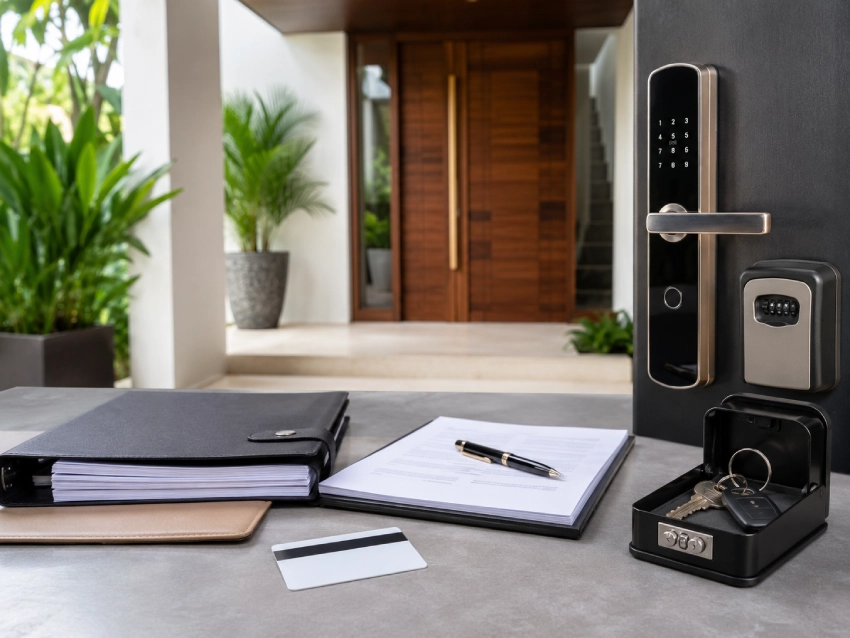
Every Phuket rental home needs protection, but not in the same way. A beachfront villa, inland house, condo unit, and apartment each carry different risk patterns. The strongest plan matches property type, guest use, climate exposure, and owner distance.
Villas, condos, houses, and apartments
Villas need stronger outdoor and system checks. Pools, gardens, roofs, gates, terraces, staff access, pumps, outdoor furniture, and guest arrival flow all need control. Owners choosing rental support can study Phuket villa rental management selection factors.
Condos need strong rule and tenant handling. Managers check juristic policies, parking, access cards, lift use, guest records, noise issues, and shared-area expectations. This connects directly with the condo tenant handling process in Phuket.
Houses need general protection across structure, garden, security, utilities, and access. Detached homes can sit empty longer and need more local monitoring. Owners with private homes can review Houses for Management when planning care.
Apartments need condition control and tenant communication. Smaller units still face AC issues, plumbing faults, mould, access problems, and appliance wear. A useful support page is the apartment property management overview in Phuket.
Guest-Ready Protection Before Bookings
A protected rental home must be ready before every booking. Guest-ready preparation is not only cleaning, because it includes safety, comfort, function, access, supplies, and presentation. A manager checks the home from the guest’s first step to the final checkout.
The pre-arrival protection checklist
Before arrival, managers check AC, water pressure, lights, locks, Wi-Fi, pool condition, linen, towels, rubbish areas, kitchen supplies, bathrooms, and outdoor spaces. This prevents complaints and reduces rushed fixes. It also protects the home from guest misuse caused by confusion.
A good manager also checks instructions. Guests need clear notes for appliances, rubbish, parking, pool safety, doors, windows, and emergency contact. This is where guest-ready villa preparation basics become a useful supporting topic.
Pre-arrival checks protect reviews and property condition together. Guests treat a well-prepared home with more confidence and fewer mistakes. Owners get fewer emergency calls and better protection between bookings.
Warning Signs Owners Should Track
Protection also means knowing what poor management looks like. Owners should not wait for serious damage before checking the manager’s process. Weak reporting, vague repairs, missing photos, slow replies, and repeated guest complaints are early risk signals.
The signs of weak protection
A weak manager gives updates only after being asked. They cannot show inspection photos, repair records, vendor details, checkout notes, or inventory changes. This creates blind spots for owners who live overseas.
Another sign is poor emergency handling. If leaks, AC faults, drainage problems, or guest lockouts are delayed, the home carries avoidable risk. Owners should compare these issues with common property management risk signs in Phuket.
Good managers are consistent. They do not only react when guests complain or owners chase updates. They protect the home through schedules, records, inspections, and clear accountability.
FAQs
How often should a Phuket rental home be checked?
A rental home should be checked before and after every guest stay. Vacant homes should also receive routine inspections because humidity, leaks, pests, and electrical faults can appear without warning. Villas, beachfront homes, and older properties may need more frequent checks.
How do managers prevent mould in Phuket homes?
Managers reduce mould by checking ventilation, AC drainage, damp smells, soft furnishings, wardrobes, bathrooms, and closed rooms. They schedule cleaning before mould spreads into fabrics and walls. They also keep the home aired and monitored during vacant periods.
What protects owners from guest damage?
The main protection is house rules, inventory records, check-in guidance, and checkout inspection. Photos before and after stays help prove what changed. Clear documentation makes damage handling more fair and easier to resolve.
Why do overseas owners need local managers?
Overseas owners cannot inspect roofs, drains, AC units, pools, gardens, or guest damage in person. A local manager gives real visibility through photos, repair updates, and emergency action. This protects both the physical home and owner confidence.
What makes a manager reliable in Phuket?
A reliable manager gives regular reports, checks the home properly, handles legal records, responds fast, and documents repairs. They also understand Phuket’s climate, guest behaviour, and local property rules. Owners can compare this with good property management qualities in Phuket.