Irrigation and seasonal watering management in Phuket cannot rely on one controller setting throughout the year. Heavy monsoon rain can saturate roots and flood low areas, while prolonged dry weather can expose weak pressure, blocked emitters, and poor water planning. These faults often remain hidden until plants decline or water consumption rises.
An effective approach adjusts each watering zone according to rainfall, soil moisture, drainage, exposure, and plant type. The first step is knowing when the garden needs water and when irrigation is making conditions worse.
Quick Check: Before selecting a provider, hire a Phuket garden maintenance team that checks irrigation zones, soil moisture, drainage, water pressure, and seasonal controller settings.
Irrigation and Seasonal Watering Management
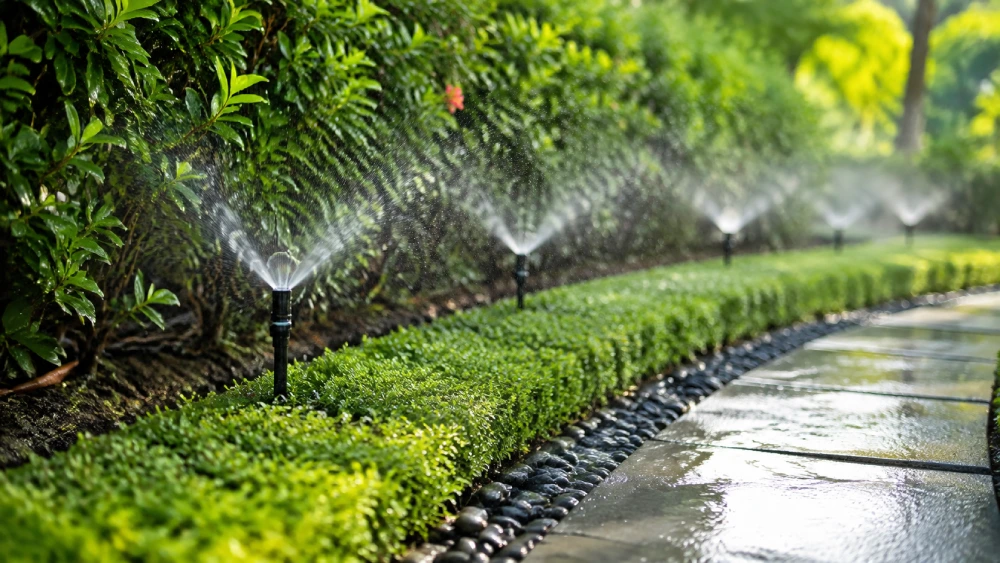
Effective watering starts with a schedule that responds to current conditions. Rainfall, soil absorption, root depth, plant type, slope, shade, and system pressure must be checked together before adjusting frequency or runtime.
Seasonal Irrigation Decision Table
| Condition | Common problem | Check first | Practical response |
| Sustained monsoon rain | Saturated | Root-zone moisture and drainage | Pause unnecessary cycles and inspect sheltered zones separately |
| Intermittent local rain | Some zones wet while others remain dry | Rainfall at the property | Adjust zones individually instead of stopping the entire system |
| Early dry season | Soil begins drying faster | Moisture below the surface | Increase monitoring before increasing runtime |
| Prolonged dry weather | Plant stress and weak pressure | Emitters, pumps, valves, and supply | Correct faults before adding more watering cycles |
| Water running down slopes | Poor soil absorption | Application rate and soil compaction | Use shorter cycles separated |
| Yellow plants in wet soil | Possible overwatering | Drainage and root-zone condition | Reduce irrigation and clear blocked outlets |
| Rising water consumption | Hidden leak or stuck valve | Water meter and zone operation | Isolate and repair the faulty section |
| Uneven plant condition | One schedule serving different plants | Zone layout and emitter output | Separate plants according to their water needs |
A fixed schedule fails because Phuket does not receive the same rainfall or experience the same drying rate every month. Even within one property, shaded planting beds, sunny lawns, pots, established trees, and covered areas can require different treatment.
These checks should form part of regular property inspection maintenance checks. A controller display can confirm that a cycle ran, but it cannot prove that water reached every root zone correctly.
Irrigation and Seasonal Watering: Strategy
Seasonal management means changing irrigation in response to actual garden conditions, not simply switching between two preset calendars. Phuket’s wet and dry periods establish the broad direction, but inspections determine the final settings.
Wet-Season Watering Controls
Rainfall normally increases from approximately May through October. During sustained rain, automatic irrigation should be reduced or paused when the soil already contains enough moisture.
The whole system should not always be switched off without checking the property. Covered beds, pots, raised planters, dense tree canopies, and areas beside walls may receive less rain than open lawns. Localised rainfall can also leave one part of Phuket wet while another receives very little.
Before restarting irrigation, inspect the soil below the surface. The top layer may appear dry while the active root zone remains saturated. Persistent puddles, soft soil, algae, yellow leaves, and unpleasant smells can indicate poor drainage rather than insufficient water.
Drainage channels, grates, outlets, and low sections must remain clear. These tasks are a central part of rainy-season villa maintenance in Phuket because irrigation and stormwater cannot be managed separately.
Standing water also creates maintenance and access problems. A proper garden pest and safety risk management plan should address mosquito breeding areas, slippery paths, hidden holes, unstable soil, and water flowing toward buildings.
Dry-Season Watering Controls
During the drier period, gardens need closer monitoring because natural rainfall declines and exposed soil loses moisture faster. The correct response is not to increase every zone by the same percentage.
Check the soil, plants, emitters, valves, pump, filter, and pressure first. Dry plants can result from a blocked drip line or failed valve even when the controller reports normal operation. Extending the runtime will not repair a blocked or disconnected emitter.
Increase watering only where root-zone moisture confirms a need. Sunny lawns and exposed beds may require adjustment before shaded areas or established trees. Pots can dry quickly, but their limited drainage space also makes them vulnerable to overwatering.
Water pressure may fluctuate during periods of high demand or constrained supply. An irrigation review should confirm that the final sprinkler or emitter in each zone receives adequate water before the schedule is extended.
For remotely owned villas, villa management support for overseas owners should include physical garden checks. Photographs and controller records are helpful, but neither replaces inspecting soil, emitters, and plant condition at the property.
Post-Storm Irrigation Reset
After a major storm, leave the automatic schedule paused until drainage and root-zone moisture have been checked. Restarting too soon can keep damaged or compacted soil saturated.
Inspect exposed pipes, electrical connections, pumps, filters, valves, sprinkler heads, and drip lines. Fallen branches and displaced soil can crack components or cover emitters. Floodwater can also move mulch into drains and change how water travels across the garden.
A structured storm-damaged garden recovery management process should restore drainage first, stabilise affected plants, repair irrigation faults, and then reset each zone. Watering should support recovery without adding further saturation.
Urgent leaks, burst pipes, pump failures, and flooding require a defined property maintenance emergency response. Isolate the failed zone quickly and prevent water from reaching buildings, electrical equipment, pools, or access paths.
Irrigation and Seasonal Watering: Design
Good irrigation design delivers the required amount of water to each active root zone without flooding soil or spraying paths. The layout must account for plant demand, pressure, slope, shade, and soil absorption.
Separate Plants Into Watering Zones
A lawn should not normally share the same valve and runtime as established trees, delicate beds, or container plants. Their roots occupy different depths, and their exposure and water demand can vary considerably.
Create independent zones for:
- Lawns
- Established trees
- Shrubs and planting beds
- Pots and raised planters
- Shaded sections
- Sunny or wind-exposed areas
- Sloping ground
- Covered planting areas
This method is often called hydrozoning. It simply means grouping plants and areas with similar water requirements so they can receive an appropriate schedule.
Properties using house management in Phuket should include zone maps in their maintenance records. Each zone should show its valve, irrigation method, plant group, normal pressure, and seasonal setting.
The same principle applies to condominium property management in Phuket where gardens may include entrance planting, shared lawns, roof gardens, shaded courtyards, and roadside beds. These areas should not be treated as one uniform watering space.
Choose Drip Lines or Sprinklers Carefully
Drip irrigation is suitable for many shrubs, beds, and rows of plants because it applies water close to the roots. Correct installation can reduce overspray and unnecessary surface evaporation.
Drip systems still need maintenance. Filters can clog, emitters can block, lines can split, and pressure can become uneven. Because the water is less visible than sprinkler spray, failures may remain unnoticed until individual plants show stress.
Sprinklers are often more practical for lawns, but their coverage must overlap correctly. Broken heads, poor alignment, excessive pressure, and obstructed spray patterns can leave dry sections while sending water onto paths, walls, or roads.
Do not claim that drip irrigation always reduces water consumption by a fixed percentage. Actual savings depend on the previous system, installation quality, operating pressure, maintenance, soil, and watering schedule.
Where components fail, an irrigation system repair service in Phuket should test the entire affected zone. Replacing the visible broken head without checking pressure, valves, and underground leaks may leave the real fault unresolved.
Water the Active Root Zone
Short daily splashes can wet the surface without reaching deeper roots. This encourages plants to depend on moisture close to the topsoil, where heat and wind remove it quickly.
The practical goal is to wet the plant’s active root zone and then allow enough time for oxygen to return
Root depth, soil type, emitter output, slope, recent rain, and drainage determine the required application. A mature tree, shallow lawn, container plant, and new shrub should not receive identical watering.
Test the soil after a cycle instead of guessing. If water reaches only the surface, adjust the delivery. If puddles form before moisture penetrates, shorten the cycle and add a soak interval before the next pass.
Stop Runoff With Cycle-and-Soak Watering
Long watering cycles can exceed the absorption rate of compacted or sloping ground. Once the surface stops accepting water, the remaining irrigation runs downhill instead of reaching the roots.
Cycle-and-soak watering divides the required runtime into shorter applications. A pause between cycles gives water time to move into the soil before the system runs again.
For example, a zone that produces runoff during one continuous cycle can be tested using shorter cycles separated by an absorption period. The exact duration must be based on observed runoff and soil moisture, not a copied online schedule.
This is one way property maintenance cost reduction methods can lower avoidable water use. Repairing leaks, correcting overspray, and matching runtime to soil absorption can also reduce damage-related expenses.
Use Smart Controllers With Physical Checks
Weather-responsive controllers can delay or adjust irrigation using rainfall and weather information. They are useful, but they are not maintenance-free.
Every zone must be programmed with accurate information about plant type, irrigation method, exposure, soil, and slope. A badly configured smart controller can automate the wrong schedule more efficiently.
Rain sensors and soil-moisture sensors must be positioned correctly and tested. A rain sensor mounted beneath a roof may not register rainfall, while a soil sensor installed in an unusually wet or dry spot can misrepresent the rest of the zone.
Physical inspection remains essential. Property maintenance and repair handling should include controller testing, manual zone operation, pressure checks, leak detection, and confirmation that water reaches the intended roots.
System Fault and Response Chart
| Warning sign | Probable fault | Immediate check | Corrective action |
| One dry plant in a wet bed | Blocked emitter | Emitter flow | Clean or replace the emitter |
| Entire zone remains dry | Valve or controller fault | Manual zone test | Test wiring, solenoid, and valve |
| Final heads have weak spray | Pressure or flow problem | Pressure across the zone | Find leaks, restrictions, or excess demand |
| Water appears when system is off | Stuck valve or pipe leak | Meter and valve box | Isolate and repair the affected line |
| Spray reaches paths or walls | Misaligned or damaged head | Head position and nozzle | Reposition or replace the component |
| Wet patch with no visible outlet | Underground leak | Meter movement and soil | Pressure-test and repair the pipe |
| Controller waters after rain | Sensor or programming fault | Rain-skip setting and sensor | Correct settings or replace the sensor |
| Repeated puddling | Poor drainage or excessive runtime | Soil absorption and outlets | Reduce cycles and repair drainage |
Regular system checks protect planting, paths, buildings, and water supplies. They also support broader Phuket villa asset protection measures by preventing hidden leaks, saturated
Irrigation and Seasonal Watering: Supply
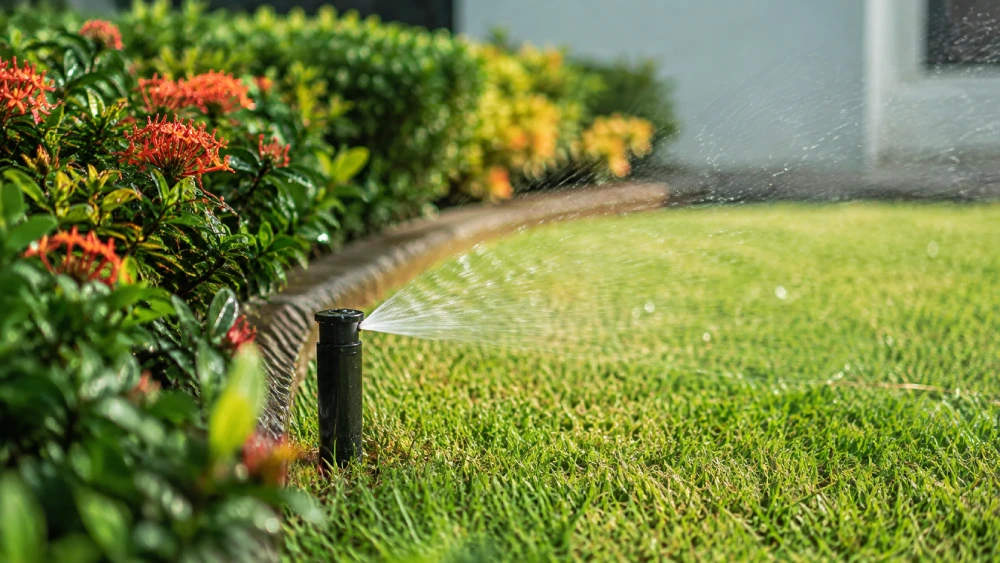
Water conservation in Phuket means using available water carefully, finding faults early, and prioritising essential property needs. It does not mean recommending unverified wells or alternative sources without checking legality and water quality.
Plan for Dry-Season Pressure
Phuket relies partly on water stored in Bang Wad, Bang Niew Dam, and Klong Katha reservoirs. Prolonged dry weather has contributed to supply pressure and past shortages, so garden irrigation should not assume unlimited municipal water.
Monitor changes in water pressure and irrigation coverage. Weak pressure may prevent distant sprinklers or emitters from operating correctly, even though closer parts of the zone appear normal.
Do not solve weak pressure by extending runtime without diagnosis. Check filters, pumps, valves, pipe size, simultaneous demand, and possible leaks first. Additional runtime may waste water without correcting uneven distribution.
Stored water can provide resilience where the property has a lawful, correctly designed system. Tanks require screened inlets, safe overflow routes, suitable pumps, and maintenance that prevents contamination or mosquito access.
Groundwater extraction or private wells should not be presented as automatic solutions. Ownership, permission, construction standards, yield, and water quality must be checked before the source is used.
Match Plant Choice to Water Supply
Plants that suit the property’s soil, sun, wind, and available water are easier to manage. A plant described as suitable for Phuket can still struggle when placed in the wrong microclimate.
Group plants with similar demand instead of mixing thirsty and drought-tolerant species on one line. This reduces the need to overwater an entire bed to protect one unsuitable plant.
New planting usually needs closer monitoring while roots establish. Established plants may need less frequent irrigation, but their actual requirements must be confirmed rather than assumed.
Gardens attached to vacation villas property management in Phuket should have clear plant and zone records. This allows maintenance teams to adjust irrigation without relying on memory or a previous contractor’s unexplained settings.
Coordinate Irrigation With Other Services
Irrigation can affect pools, buildings, paths, and occupied areas. Sprinklers should not spray pool water, walls, outdoor furniture, electrical fittings, entrances, or guest access routes.
Where a garden borders a pool, coordination with hire a pool technician in Phuket can help identify soil, runoff, or irrigation water entering the pool. Repeated contamination may indicate poor sprinkler alignment or drainage.
For rental properties using a luxury Airbnb manager in Phuket, garden work should be scheduled around occupancy. Irrigation must not leave arrival paths wet or create puddles during guest access periods.
Routine property management duties and responsibilities should assign ownership of controller settings, inspections, repairs, drainage clearing, and seasonal records. Without clear responsibility, faults are easily noticed but never resolved.
Phuket Areas Covered for Garden Maintenance
Irrigation checks, seasonal schedule adjustments, drainage reviews, and garden maintenance are available across Bang Tao, Rawai, Nai Harn, Kamala, Surin, Patong, Chalong, Kata, Karon, Mai Khao, Laguna, Kathu, Thalang, Cherng Talay, and surrounding areas in Phuket.
Coverage also includes Ya Nui, Friendship Beach, Karon, Saiyuan, Choeng Thale, and other nearby Phuket locations. The required watering plan may differ according to property exposure, slope, planting, rainfall, and water pressure.
Arrange a Seasonal Irrigation Inspection
If plants remain dry, zones keep flooding, or water use has increased, inspect the system before extending the schedule. A local team can check soil moisture, drainage, emitters, valves, pumps, pressure, sensors, and controller settings. Hire a Phuket garden maintenance team to identify the fault and set each zone for current conditions. Early correction can prevent wasted water and avoidable garden damage.
Irrigation and Seasonal Watering FAQs
Can irrigation run when rain misses one garden zone?
Yes. Irrigation and seasonal watering management may require selected zones to operate even when rain has fallen elsewhere on the property. Roofs, walls, tree canopies, and localised showers can leave protected areas dry. Check root-zone moisture in each affected section, then run only the zones that need water instead of activating the complete system.
Why does a smart irrigation controller overwater?
A smart controller can overwater when irrigation and seasonal watering management settings contain incorrect information about soil, plant type, slope, exposure, or emitter output. Its rain sensor may also be obstructed or badly positioned. Test each zone manually, inspect the sensor, and compare the programmed schedule with physical root-zone moisture before changing runtime.
How can hidden irrigation leaks be detected?
In irrigation and seasonal watering management, unexplained meter movement, wet patches, reduced pressure, and unusually high consumption can indicate a hidden leak. Switch off water-using fixtures, observe the meter, and isolate irrigation zones where possible. Underground pipework may require pressure testing because water can move through soil before becoming visible at the surface.
Why do irrigation sprinklers lose pressure?
Pressure loss during irrigation and seasonal watering management can result from a broken pipe, blocked filter, partially closed valve, failed pump, oversized zone, or competing water demand. Inspect the complete zone rather than adjusting the controller immediately. Longer runtime does not compensate when the final sprinklers or emitters are receiving inadequate flow.
Should newly planted gardens use the old schedule?
No. Irrigation and seasonal watering management for new planting requires closer moisture checks while roots establish. The previous schedule may have been designed for mature plants with different root depths and demand. Adjust each new planting zone according to species, soil, exposure, drainage, and observed moisture without keeping the ground continuously saturated.
Can irrigation water damage buildings and paths?
Yes. Poor irrigation and seasonal watering management can direct water against walls, foundations, electrical fittings, paths, and entrances. Repeated overspray can encourage staining, algae, slippery surfaces, or saturated soil beside struct
How often should an overseas owner’s system be checked?
The correct inspection frequency for irrigation and seasonal watering management depends on season, system age, plant sensitivity, occupancy, and recent weather. Checks should become more frequent during prolonged dry weather, major storms, new planting establishment, or unexplained consumption. The local team should also report con