Property inspections create anxiety when tenants expect personal judgement and owners fear hidden damage. The real purpose is more practical: find maintenance problems, identify safety risks, verify agreed property rules, and record changes before small faults become expensive.
Experienced managers use the same evidence-based process in every room, compare current conditions with earlier records, and assign clear actions after the visit. They do not judge ordinary family life or treat every mark as tenant damage. The difference is what gets checked, recorded, and resolved next.
What Property Managers Look For: Core Checks?
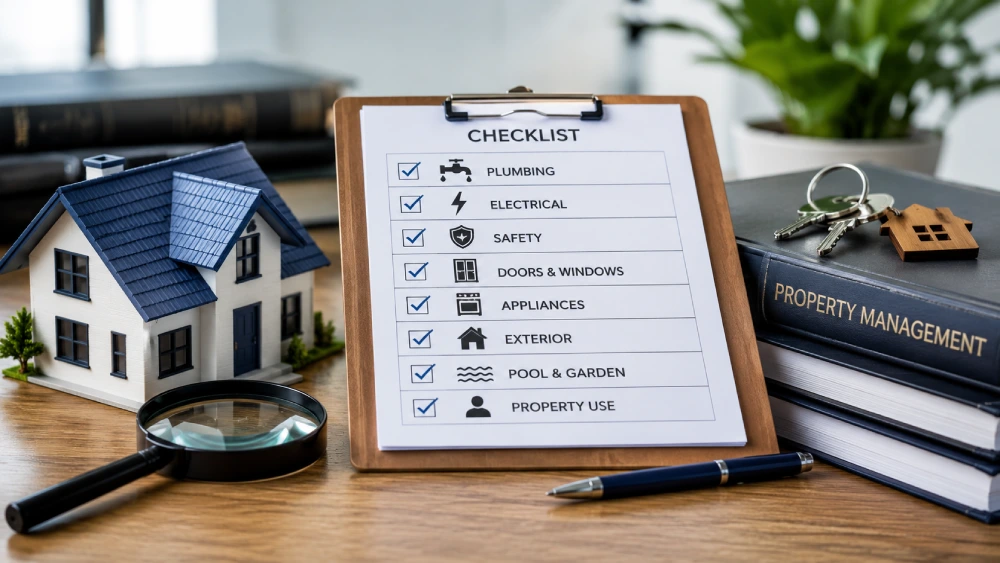
A professional inspection follows a repeatable sequence. It examines the property’s physical condition, safety systems, maintenance needs, agreed use, supporting evidence, and unresolved work without turning normal signs of occupancy into personal criticism.
Core Property Inspection Checklist
| Inspection Area | What the Manager Checks | Problem Signal | Required Record |
| Plumbing | Taps, toilets, pipes, sinks and drains | Leaks, slow drainage, odours or swelling | Location, photograph and repair action |
| Moisture and AC | Drain lines, filters, airflow and condensation | Damp marks, musty odours or water discharge | Moisture source and service requirement |
| Electrical points | Sockets, switches, cables and panel access | Heat marks, exposed wiring or blocked access | Safety classification and technician referral |
| Safety equipment | Alarms, extinguishers, stairs and escape routes | Failed equipment or obstructed access | Test result and corrective action |
| Doors and windows | Locks, frames, glass and seals | Failed locks, cracks or water entry | Security or maintenance action |
| Internal surfaces | Walls, ceilings, flooring and fixed finishes | Stains, cracks, lifting or impact damage | Comparison with earlier condition |
| Appliances | Operation, seals, cords and water connections | Failure, leakage or unsafe connection | Repair, replacement or monitoring |
| Exterior areas | Roof edges, gutters, drains and pathways | Blockage, pooling or trip risks | Exterior maintenance request |
| Pool and garden | Water condition, pumps, decking and growth | Cloudy water, faulty equipment or obstruction | Specialist maintenance record |
| Property use | Occupancy, pets, smoking and alterations | Conflict with written terms | Neutral evidence and agreement review |
The checklist establishes what property management services should accomplish during a visit. The inspection protects the property, gives the occupant a fair record, and provides the owner with specific evidence rather than vague statements.
Owners who need inspections connected with repairs, vendors, reporting, and routine supervision can review property management services. The inspection should be one part of a complete control system rather than an isolated walk-through.
The broader property manager duties overview explains why inspections connect with maintenance, communication, financial control, documentation, and occupant support. Finding a problem is useful only when responsibility for the next action is clear.
Real Concern: Judgement Replaced Inspection
The strongest Reddit discussion in the supplied research received 108 upvotes and 112 comments. The central complaint was that the manager allegedly criticised a family’s lifestyle and ordinary mess instead of identifying clear damage, safety risks, or maintenance failures.
A professional manager should describe the physical consequence, not the person. “Stored items block access to the electrical panel” is an actionable finding; “the tenant is untidy” is a subjective opinion that does not explain the property risk.
A routine visit is not intended to judge parenting, furniture choices, personal taste, or whether every dish has been washed. Cleanliness becomes relevant when it conceals damage, blocks access, attracts pests, affects ventilation, creates a hazard, or breaches a specific written responsibility.
Physical Condition and Maintenance: Early Warnings
Physical condition checks identify faults that may already be causing damage or could become expensive if ignored. The manager examines water, moisture, cooling, surfaces, appliances, exterior drainage, pools, gardens, and previous repair work.
Plumbing, Leaks and Water Damage
The inspection should begin with water because leaks can spread without obvious surface damage. Managers check beneath sinks, around toilets, beside water heaters, near washing machines, along visible pipework, and around showers or baths.
Slow drains, damp cabinet bases, peeling finishes, swollen timber, discoloured grout, and musty smells can indicate more than poor cleaning. The report should identify the visible symptom, likely water source, affected material, and whether an urgent plumber or further testing is required.
A competent property repair coordination process should continue after the inspection. The issue needs an assigned person, owner approval where required, a repair date, completion evidence, and a later check confirming that the fault has not returned.
Moisture, Mould and Air Conditioning
Phuket’s warm, humid environment makes moisture inspection especially important. Managers should examine ceilings, exterior-facing walls, wardrobes, bathrooms, closed rooms, AC drain lines, filters, vents, and areas behind furniture.
A musty smell is an early warning, not a complete diagnosis. The source may be a blocked AC drain, roof seepage, plumbing leakage, condensation, weak ventilation, damp fabrics, or a room that remains closed for long periods.
Local property management in Phuket should include climate-sensitive checks rather than a generic room inspection. Moisture findings should be photographed, traced to their likely source, and followed by drying, repair, cleaning, or equipment servicing.
Walls, Ceilings and Floors
Managers look for water stains, cracking, blistered paint, loose tiles, lifting flooring, impact damage, and unapproved alterations. Every finding should be compared with the entry record and previous inspection photographs.
The inspection must separate age-related deterioration from sudden damage, misuse, and neglect. A worn surface, faded paint, or old carpet should not be assessed as though it were newly installed at the beginning of the tenancy.
The Reddit discussion showed why this distinction matters. Several highly engaged comments focused on a reportedly 24-year-old carpet, demonstrating that material age and prior condition can be as important as the visible mark itself.
Wear Versus Damage Evidence Test
| Evidence Point | Normal Deterioration Indicator | Possible Damage Indicator |
| Age | Material is old or near the end of its functional life | Relatively new material has sudden localised damage |
| Pattern | Gradual wear in normal traffic areas | Isolated burns, holes, deep impact or misuse |
| Baseline | Similar marks appear in earlier reports | Condition is materially different from the baseline |
| Cause | Ordinary use and environmental exposure | Negligence, misuse or an unreported incident |
| Severity | Cosmetic change with continued function | Safety, function or structure is affected |
| Response | Routine upkeep or planned renewal | Repair, investigation or agreement review |
A property manager should not decide liability from appearance alone. The report should record age, previous condition, location, severity, probable cause, cleanability, function, and supporting photographs.
Appliances and Fixed Equipment
Fixed appliances should be operated where safe and practical. The manager checks cooling response, unusual noise, damaged seals, loose connections, water leakage, power supply, and visible wear.
Equipment failure does not always mean tenant misuse. Age, electrical instability, poor installation, delayed servicing, humidity, pest activity, or ordinary component failure may be responsible.
Preventive inspections support property expense reduction methods by finding minor leaks, blocked drains, worn seals, weak pumps, and AC problems before they develop into larger repairs or guest disruptions.
Pool, Garden and Exterior Areas
Villas with pools require inspection of water clarity, filtration, pump operation, overflow routes, tiles, decking, lighting, gates, and stored chemicals. The manager should record specialist concerns rather than trying to diagnose technical failures without the correct skills.
Scheduled pool cleaning in Phuket supports testing, chemical balance, debris removal, filtration checks, surface cleaning, and consistent pool presentation. An inspection report should show whether the pool was merely observed or technically tested.
Gardens can conceal drainage problems, pest conditions, damaged irrigation, unstable branches, or blocked access. Regular gardening and maintenance in Phuket helps keep plants away from roofs, walls, cables, drains, pathways, and pool equipment.
Owners of detached properties often need villa management in Phuket because pools, gardens, gates, exterior lighting, pumps, roofs, and private drainage all sit outside shared building maintenance. Each system should appear in the inspection scope.
Cleanliness With a Property Consequence
A lived-in property does not need to look like an unused display home. Ordinary dishes, children’s belongings, unfolded laundry, or furniture choices do not automatically prove damage or neglect.
The condition becomes relevant when dirt hides defects, grease damages surfaces, waste attracts pests, stored belongings block ventilation, or clutter prevents access to essential equipment. The report should state the consequence instead of using insulting or emotional language.
Reliable housekeeping services in Phuket may help with turnover cleaning, linen, bathrooms, kitchens, floors, guest supplies, and deep-cleaning schedules. Housekeeping support should not be confused with the manager’s responsibility to assess maintenance objectively.
Safety and Compliance: Risk Checks
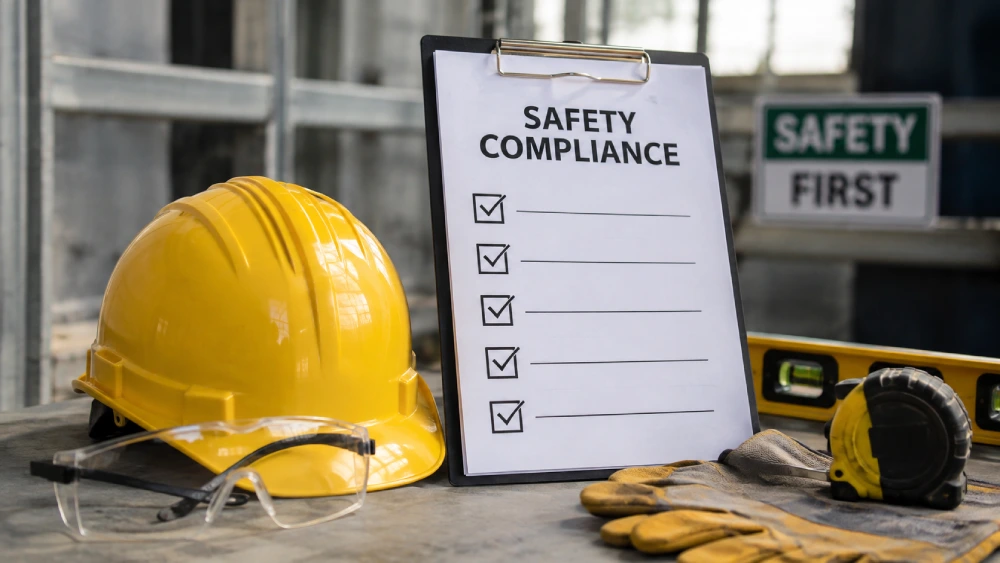
Safety checks protect occupants, visitors, contractors, and the owner. Managers review access, electrical risks, alarms, stairs, lighting, windows, doors, pool areas, escape routes, and any condition that requires immediate specialist attention.
Electrical and Fire Safety
Visible electrical checks include damaged sockets, exposed cables, overloaded extensions, heat marks, loose fittings, water near electrical points, and blocked access to the electrical panel. Managers should record warning signs and refer technical concerns to a qualified technician.
Alarms and fire equipment should be checked where installed or required. The manager records whether equipment is present, accessible, visibly damaged, expired, obstructed, or unsuccessful during an appropriate functional check.
Safety findings should never be hidden inside a general note such as “maintenance needed.” The property management operating model should define who receives the alert, who approves action, which specialist attends, and how completion is documented.
Inspection Severity and Response Matrix
| Finding Category | Typical Condition | Required Management Response |
| Emergency | Immediate danger or active major damage | Secure the area and escalate immediately |
| Urgent | Fault likely to worsen or interrupt safe use | Arrange priority assessment and owner update |
| Routine repair | Functional issue without immediate danger | Schedule work and record completion |
| Preventive maintenance | Early warning before failure | Add to the maintenance plan |
| Occupant action | Clear upkeep or agreement issue | Issue a neutral written action request |
| Monitor | No immediate work required | Photograph and compare at the next visit |
The category should match the evidence. A minor cosmetic mark should not be labelled an emergency, while exposed wiring or active water near electrical equipment should not be left as a routine note.
Doors, Windows and Property Access
Managers check external doors, windows, locks, gates, key safes, access cards, handles, glass, frames, exterior lighting, and owner-only storage. The goal is to confirm that the property can be secured and accessed safely.
Short-stay properties need an additional check of the arrival route, instructions, key handover, backup access, and late-arrival procedure. Properties using 24-hour check-in in Phuket should test whether guests can enter safely without leaving keys exposed or relying on unclear instructions.
The inspection should also identify uncontrolled duplicate keys, broken access cards, shared codes that were not changed, or gates that do not close properly. Access findings should be treated as security issues, not merely administrative inconvenience.
Stairs, Paths and Trip Risks
Loose tiles, uneven steps, damaged handrails, unstable decking, trailing cables, poor lighting, and obstructed walkways can create injury risks. Exterior paths should also be checked for moss, standing water, broken paving, and plant growth.
Managers should photograph the exact location and show scale where possible. A vague statement such as “outdoor area unsafe” does not give the owner or contractor enough information to act.
For condominiums, some hazards may sit within shared areas controlled by the building. Condominium management in Phuket can help distinguish private-unit responsibility from juristic-office, common-area, security, lift, parking, and shared-facility matters.
Pool and Outdoor Safety
Pool inspections should consider deck grip, loose tiles, water visibility, broken lighting, exposed equipment, gates, drains, furniture stability, and safe chemical storage. Technical water testing should be completed by the responsible pool team.
Garden and exterior checks include unstable branches, concealed steps, broken covers, exposed irrigation parts, blocked drains, and slippery paths. The inspection should connect each hazard with a specific corrective action.
Safety records should include who identified the risk, when the owner was informed, what temporary control was used, who completed the work, and how closure was verified.
Lease Rule Adherence: Fair Evidence
Lease-rule checks verify whether the property is being used according to the written agreement. Managers may review occupancy, pets, smoking, alterations, subletting, business use, restricted areas, and agreed upkeep without searching personal belongings or making unsupported accusations.
Occupants and Property Use
The manager may observe signs that suggest the occupancy differs from the written agreement. Evidence should be handled carefully because visitors, relatives, carers, and temporary guests do not automatically prove an unauthorised resident.
A fair report states what was observed and requests clarification. It should not present assumptions as confirmed breaches or use photographs of unrelated personal belongings to build a misleading narrative.
Owners deciding whether self-management can handle these situations may review rental management decision factors. The decision often depends on distance, time, documentation quality, repair coordination, and the complexity of the property.
Pets and Animal-Related Conditions
Where the agreement includes pet terms, the manager may check for property damage, odour, waste, scratching, garden disturbance, pest conditions, or an unrecorded animal. The inspection should focus on the property effect rather than personal views about pet ownership.
A documented pet policy management process helps connect permissions, deposits where lawful, cleaning expectations, garden responsibilities, damage records, and end-of-tenancy checks.
Evidence should distinguish an authorised pet with no property impact from an agreement breach or measurable damage. The presence of a pet does not by itself prove that the property is being neglected.
Smoking, Alterations and Restricted Areas
Managers may check for smoke residue, burns, strong persistent odours, unapproved paint, drilled fixtures, removed fittings, changed locks, modified wiring, or access to owner-restricted storage. Each concern should be compared with the agreement and earlier records.
An alteration may be harmless, beneficial, or previously approved. The manager should verify written permission before describing it as a breach.
The same standard applies to wall marks, hooks, furniture movement, and decorative changes. Evidence, context, approval history, and actual property impact matter more than preference.
Short-Stay and Platform Rules
Short-stay inspections may include guest limits, house rules, event restrictions, key control, linen inventory, damages, noise reports, and turnover readiness. The inspection may happen after departure, before arrival, or during a vacant maintenance window.
Professional Airbnb management in Phuket can connect platform calendars, guest communication, check-in, cleaning, damage reporting, maintenance, and review protection. The inspection record should support those operations rather than operate separately.
Owners preparing a detached home for rental can use a house rental management workflow to connect the initial condition report, inventory, property preparation, guest or tenant rules, inspections, repairs, and financial records.
Houses and Private Residential Properties
Private houses require checks of gates, exterior walls, roofs, gardens, drains, utility areas, water systems, pest entry points, and vacant rooms. These responsibilities may not be covered by a building team.
Structured house management in Phuket can combine inspections, key holding, bill checks, cleaning, maintenance, security reviews, pre-arrival preparation, and vacant-property oversight.
The inspection scope should reflect how the house is used. A privately occupied holiday home, long-term rental, vacant overseas-owned property, and short-stay house each create different risks.
Inspection Reports: Turn Findings Into Action
The report is the working result of the inspection. It should show what changed, why it matters, who must act, what approval is needed, and whether earlier maintenance has been completed.
What a Reliable Report Contains
Every report should identify the property, inspection date, attending person, occupied or vacant status, rooms checked, excluded areas, photographs, findings, severity, likely cause, responsible party, and follow-up action.
Photographs should be dated and connected to a written finding. A folder of unexplained images does not show whether the issue was new, previously reported, repaired, or simply monitored.
The property performance tracking methods used by an owner or management team should include recurring defects, repair completion, maintenance spending, response times, and unresolved risks. Inspection reports provide the condition data behind those measurements.
Report-to-Repair Workflow
| Stage | Required Record | Completion Test |
| Finding | Photograph and clear description | Exact location and problem are identifiable |
| Classification | Severity and likely consequence | Priority matches the evidence |
| Responsibility | Owner, occupant, manager or specialist | Assigned person is named |
| Approval | Spending or access decision | Required authority is recorded |
| Work | Contractor note, invoice or service log | Action completed as requested |
| Close-out | After photograph and functional check | Problem is resolved or formally monitored |
An inspection is incomplete when the manager identifies a leak but never confirms the repair. The repair loop closes only when action, cost, evidence, and final condition are documented.
Owners comparing management arrangements may also review management percentage basics. The percentage matters less than whether inspections, reporting, maintenance coordination, emergency handling, and follow-up are genuinely included.
Communicating Without Conflict
The manager should use neutral, precise language. Statements such as “water staining extends 30 centimetres below the AC unit” are more useful than “the room is poorly maintained.”
Occupants should receive clear actions rather than vague threats. The communication should identify the issue, evidence, relevant responsibility, reasonable next step, and how completion will be confirmed.
Both parties should retain reports, photographs, repair messages, access notices, invoices, and approval records. A consistent evidence trail reduces disagreements over what happened and when it was first identified.
Inspection Timing: Notice and Follow-Ups
Inspection timing depends on the tenancy agreement, property use, management plan, and applicable local rules. A frequency used in another country should not be presented as a universal Phuket requirement.
A professional notice should explain why access is needed, what will be inspected, the proposed date or window, who will attend, and whether photographs are expected. The occupant should also know how to report maintenance concerns before or during the visit.
Follow-up inspections should address a documented unresolved matter. Repeating the entire inspection without a clear reason can create conflict while adding little value.
When a Follow-Up Is Justified
A follow-up may be appropriate after a leak repair, safety correction, pest treatment, major cleaning requirement, unauthorised alteration, access failure, or incomplete contractor work. The manager should state the original finding and what must be verified.
A follow-up is not a second opportunity to criticise unrelated lifestyle choices. Its scope should remain connected to the earlier evidence unless a new urgent condition becomes visible.
Owners who want one system for access, inspection, repairs, records, and communication can compare local management scope before agreeing to a fee or visit schedule.
Arrange an Objective Phuket Property Inspection
A useful inspection gives owners clear evidence and gives occupants specific, fair actions. It should find leaks, safety risks, maintenance needs, agreement issues, and unfinished repairs without turning ordinary living into personal judgement.
For local inspection and ongoing oversight, review what property managers look for during a Phuket inspection. The practical next step is a documented condition review followed by assigned maintenance, photographs, and transparent reporting.
Inspect the condition. Record the evidence. Close the repair loop.
Frequently Asked Questions
Can a tenant remain present during a property inspection?
A tenant may often remain present during a property inspection, subject to the access arrangements, tenancy terms, and applicable local rules. Their presence can help clarify existing damage, demonstrate previously reported repairs, identify personal items that should not be photographed, and explain access problems. The property inspection should still follow the agreed scope and should not become a confrontation between the occupant and manager.
Can a manager photograph personal items during a property inspection?
A manager should photograph property conditions relevant to the property inspection, such as leaks, damaged finishes, broken fixtures, blocked equipment, safety risks, or unauthorised alterations. Personal possessions may appear incidentally, but photographs should not deliberately focus on private papers, identification, medicine, computer screens, or unrelated belongings. The manager should explain the photography process and store inspection records securely.
How soon should the property inspection report be issued?
The appropriate delivery period for a property inspection report depends on the management agreement, urgency of the findings, and property type. Emergency risks should be communicated immediately, while routine findings can be organised into the formal report. Owners should agree on a reporting standard that covers photographs, action priorities, repair approvals, responsible parties, and unresolved items rather than accepting an undefined promise of a later update.
When is a follow-up property inspection necessary?
A follow-up property inspection is justified when the manager must verify a specific unresolved condition, such as repaired water damage, cleared access, completed electrical work, pest treatment, corrected agreement use, or contractor completion. The follow-up notice should identify the original finding and the evidence required for closure. It should not repeat unrelated checks without a clear maintenance, safety, or agreement-based reason.
How often should a rental property inspection happen?
There is no single worldwide schedule for a rental property inspection. Frequency can depend on local law, the tenancy agreement, insurance expectations, property condition, whether the home is occupied or vacant, and whether previous inspections revealed recurring risks. Phuket owners should avoid copying foreign notice periods or inspection limits and instead confirm a lawful, reasonable schedule suited to their specific rental arrangement.
Can tenants report maintenance during a property inspection?
Yes. A property inspection is a practical opportunity for tenants to identify leaks, weak water pressure, AC faults, electrical concerns, appliance failures, pests, drainage issues, or repairs that remain incomplete. The manager should record each concern even when it is not immediately visible. The issue can then be classified, assigned, photographed where possible, and included in the repair follow-up system.
How can an overseas owner verify a property inspection?
An overseas owner should receive a structured property inspection report containing dated photographs, room-by-room findings, comparison with earlier records, repair priorities, quotations or approvals, and confirmation of completed work. Random images or a short message saying the property is fine are not enough. The owner should also be able to review recurring faults, expenditure, open actions, and after-repair evidence through an organised reporting system.