Owning an Airbnb rental in Phuket can seem simple until guests arrive, condo rules are revealed, cleaners miss details, or maintenance fails during a stay. Serious owners need a local system that checks legal limits, guest access, pricing, cleaning, reporting, and property condition before problems reach reviews. The experienced solution is Airbnb rental management, where a Phuket-based team runs the rental like a controlled hospitality operation, not a casual side listing.
Owner Tip: Before accepting Airbnb bookings, make sure your Phuket property is ready for guest support, cleaning, pricing, maintenance, and local rental rules. See how our airbnb rental management in phuket thailand service helps owners manage bookings, guests, turnovers, and property care with less stress.
What Is Airbnb Rental Management in Phuket, Thailand?

Airbnb rental management means a local team handles the daily work behind a short-stay or monthly rental. The real value is control because Phuket rentals involve guests, rules, maintenance, and owner distance. A good manager connects bookings with legal checks, service quality, and property protection.
| Management Area | What It Controls | Why It Matters in Phuket |
| Listing setup | Photos, copy, pricing, rules | Guests book with clear expectations |
| Guest handling | Messages, check-in, issues | Reduces complaints and refunds |
| Legal checks | Stay length, condo rules, TM30 | Avoids preventable rental risk |
| Maintenance | AC, pool, garden, repairs | Keeps property guest-ready |
| Owner reporting | Income, expenses, approvals | Gives remote owners visibility |
Why Owners Use Management Services
Owners usually do not hire managers because they cannot open an Airbnb account. They hire managers because daily rental work becomes risky when handled casually. The biggest reasons are distance, guest pressure, legal uncertainty, maintenance, and income control.
Many Phuket owners live overseas or outside the island. That makes every small issue slower, from a broken AC to a guest asking how to enter the building. A local team provides owners with eyes, hands, and on-the-ground decision support.
This is where property management services become more than a convenience. They help owners connect guest operations with inspections, reporting, repairs, cleaners, and local coordination. That structure is especially important when the owner cannot personally check the property after every stay.
Owners requiring a wider system beyond one booking platform can use property management in Phuket to connect rental operations with physical property care, financial reporting, inspections, and owner approvals.
Local Legal and Regulatory Realities
The most serious Airbnb mistake in Phuket is assuming every property can be rented the same way. Condos, villas, and houses can face different rules, especially around short stays. Owners should understand the difference between platform use, rental duration, building rules, and guest registration.
A professional manager should not give careless promises. The safer approach is to check whether the property can accept nightly, weekly, or monthly guests. This protects owners from listing a property that later creates check-in conflict or building complaints.
The issue is not only “Can I list it online?” The better question is “Can this exact property accept this exact rental type without avoidable risk?” That is why legal and regulatory checks should happen before marketing starts.
Reference Checks Before Taking Bookings
Reference checks mean the manager reviews the property’s operating position before pushing it live. This includes ownership documents, rental permissions, condo rules, juristic office restrictions, and access procedures. These checks also help decide the right minimum stay and guest type.
For condos, the manager should confirm whether daily or weekly guests are allowed. If the building has strict juristic rules, the listing may need monthly stays or a different rental strategy. This is where Condo Management becomes important for owners who want fewer surprises.
Structured condominium management in Phuket can connect private-unit preparation with access cards, parking, shared facilities, building notices, maintenance, and juristic-office coordination.
For villas and houses, checks focus more on access, safety, neighbours, maintenance load, and service readiness. The manager should know who handles emergencies, who approves repairs, and how quickly a guest issue can be solved. A weak check at the beginning usually becomes an expensive problem later.
Property Maintenance in Phuket Rentals
Phuket rentals need stronger maintenance than many owners expect. Humidity, rain, salt air, pool use, garden growth, and heavy AC demand can quickly affect guest comfort. A property that looks fine today can feel poorly managed after two busy turnovers.
Maintenance in Airbnb management should include routine inspections, cleaning checks, linen control, AC support, pool care, garden care, pest monitoring, and repair coordination. The goal is not only to fix damage. The goal is to prevent review-killing issues before guests notice them.
Owners with villas should consider scheduled villa inspection Phuket support as part of rental planning. Villas carry more moving parts, including pools, gates, gardens, outdoor lighting, kitchens, and multiple bathrooms. These areas need regular checks between stays.
Professional villa management in Phuket can connect those inspections with pool care, gardening, security, cleaning, repairs, guest preparation, and owner reporting.
Step 1: Check Rental Readiness First
Rental readiness starts before the listing goes live. A manager should inspect the property like a guest will experience it. That means checking access, smell, lighting, Wi-Fi, water pressure, appliances, AC, linens, and visible wear.
A good readiness check also looks at guest movement. Where will guests park, collect keys, enter the building, and ask for help? These details decide whether check-in feels smooth or stressful.
Owners should also document the property condition before bookings begin. Photos, inventory lists, and maintenance notes create a clear baseline. This helps protect owners when damage, missing items, or guest disputes appear.
Step 2: Build a Listing Guests Trust
A Phuket Airbnb listing should not oversell the property. It should explain the stay accurately, show the strongest visuals, and set clear rules before payment. Guests become more difficult when the listing hides access limits, shared-facility rules, or maintenance realities.
Strong listing management includes titles, descriptions, amenities, photo order, cancellation rules, house rules, stay length, and location notes. It should also match the property type. A Patong condo, Rawai house, and Kamala villa should not be presented with the same guest promise.
Owners who want a dedicated rental operating system should review airbnb management phuket. This type of service is built around guest communication, listing control, bookings, cleaning, and management flow. It keeps the rental from depending on random owner availability.
Dedicated Airbnb management in Phuket can connect listing control with pricing, calendars, guest communication, check-in, turnovers, maintenance, and performance reporting.
Step 3: Price by Area and Season
Phuket pricing changes by location, season, property type, and booking window. A fixed nightly rate can leave money on the table in high season. It can also block bookings in weaker periods when demand shifts.
Patong often needs a different strategy from Laguna, Bang Tao, Rawai, Nai Harn, Kata, Karon, or Kamala. Some areas attract fast holiday demand. Others work better for families, remote workers, long-stay guests, or villa groups.
Dynamic pricing should consider occupancy, nearby listings, minimum stays, events, cleaning fees, and lead time. The purpose is not just charging more. The purpose is balancing booking volume, net income, and guest quality.
Step 4: Control Check-In Before Issues
Check-in is one of the highest-risk moments in Airbnb rental management. Guests arrive tired, often with luggage, language barriers, transport delays, and questions. If access is unclear, the property immediately feels unprofessional.
A manager should prepare arrival instructions, key handling, late-arrival support, parking notes, Wi-Fi details, and emergency contacts. For condos, the check-in process must also respect building rules. Guest confusion at reception can trigger complaints quickly.
Managed 24-hour check-in in Phuket can support delayed arrivals, identity checks, secure key handovers, smart-lock problems, gate access, and urgent local assistance.
Check-out matters just as much. The team should inspect for damage, missing items, stains, used supplies, and urgent repairs. This protects the next booking and prevents small problems from multiplying.
Step 5: Manage Guests Without Conflict
Guest management is not just answering messages. It is setting behaviour expectations before guests disturb neighbours, misuse shared areas, or misunderstand house rules. Phuket rentals need this because holiday guests often treat homes like hotels.
Clear communication should cover quiet hours, pool use, smoking rules, parking, rubbish disposal, visitor limits, and shared-facility access. These rules should be polite but firm. A manager should support guests without allowing the property to become a problem for residents.
For deeper operational planning, owners can use a short-term villa guest management process as a supporting guide. A relevant internal reference is short-term villa guest management process. This helps explain how guest care protects reviews and property reputation.
Step 6: Keep the Property Guest-Ready
A guest-ready property is not just clean. It is stocked, checked, repaired, fresh, functional, and ready for immediate use. Every turnover should confirm that the property matches the promise guests paid for.
Cleaning should include bathrooms, kitchen surfaces, floors, glass, bins, linen, towels, outdoor areas, and visible dust. Maintenance checks should include AC cooling, drains, lights, appliances, locks, pool condition, Wi-Fi, and water systems. These details decide whether guests leave five-star reviews or private complaints.
Reliable housekeeping services in Phuket can connect turnover cleaning with linen preparation, restocking, damage reporting, final room checks, and arrival readiness.
Scheduled pool cleaning in Phuket can help keep water quality, filtration, equipment, tiles, decking, and the surrounding pool area ready for each booking.
Regular gardening and maintenance in Phuket can control tropical growth, drainage, irrigation, storm debris, paths, lighting access, and the appearance of outdoor areas.
Owners planning villa rentals can also review a Phuket villa guest readiness guide. Link this naturally as Phuket villa guest readiness guide. It supports this section without pulling readers away from the Airbnb management topic.
Step 7: Report Money, Repairs, and Risk
Owner reporting is where professional management becomes accountable. A good report should show bookings, income, occupancy, cleaning costs, maintenance costs, repair approvals, and payout details. Owners should not need to chase basic answers.
Reports should also include risk notes. If guests repeatedly complain about Wi-Fi, AC, noise, access, or cleanliness, the owner should see that pattern quickly. This turns guest feedback into operational improvement.
Remote owners especially need structured updates. A helpful supporting reference is the Phuket remote villa ownership process. It connects well for owners who cannot inspect the property themselves.
Villa, Condo, and House Rules Differ
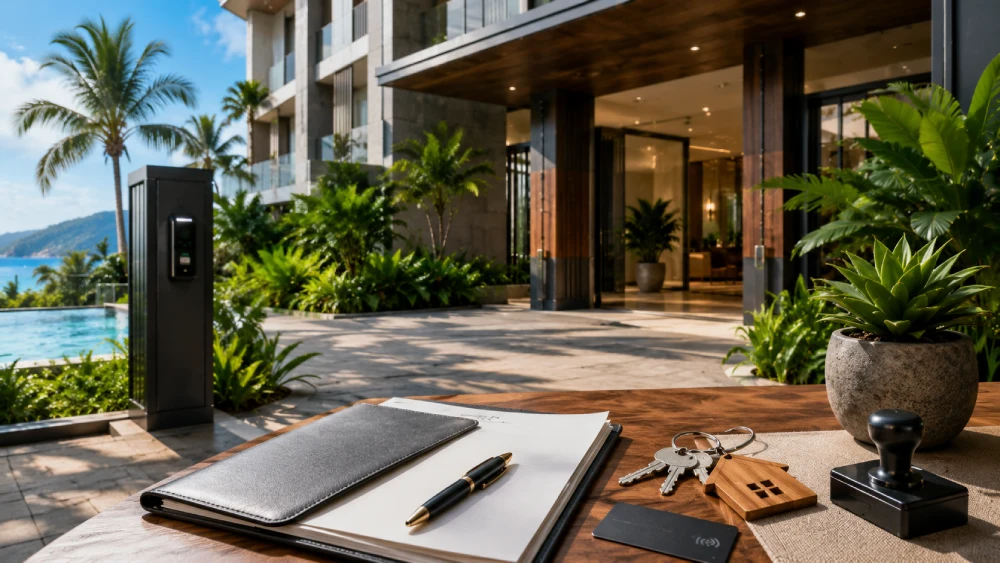
Airbnb rental management in Phuket must change by property type. A villa has different risk from a condo. A private house also needs a different maintenance and guest-access plan.
Villas need pool care, garden checks, pest monitoring, privacy control, and larger cleaning coordination. Condos need building rule checks, juristic communication, shared-facility rules, and guest access planning. Houses need local security checks, exterior upkeep, rubbish routines, and neighbour awareness.
Owners with standalone homes should consider whether Houses for Management fits their rental plan. Houses can be easier than condos in some areas, but they still need inspections, maintenance, and guest systems. The management model should fit the property, not the other way around.
Local house management in Phuket can support standalone properties through security checks, utilities, keys, structural inspections, gardens, repairs, vacant-period visits, and guest preparation.
When Full Management Makes Sense
Full management makes sense when the owner cannot personally handle guests, cleaners, maintenance, pricing, and inspections. It also makes sense when the property is valuable, remote-owned, or exposed to frequent guest turnover. The higher the guest volume, the more structure the property needs.
Full management is usually most useful for overseas owners, villa investors, condo owners with building rules, and owners who want better reporting. It is also useful when previous guests complained about check-in, cleanliness, maintenance, or unclear rules. These are signs that casual hosting is already breaking down.
Owners comparing service options should use a villa rental management comparison guide before signing. A relevant internal reference is villa rental management comparison guide. It can help owners judge inclusions, fees, and responsibility.
Questions Owners Should Ask First
Before hiring anyone, owners should ask precise operating questions. General promises are not enough. The manager should explain how they handle rules, guests, maintenance, reporting, and emergency decisions.
Ask how they check condo bylaws, minimum stays, TM30 process, guest identity, deposits, damage claims, and repair approvals. Ask who answers guests at night and who physically attends the property when something fails. These answers reveal whether the company is a real operator or only a booking handler.
Owners should also review a Phuket rental management risk checklist before choosing. A useful internal support page is Phuket rental management risk checklist. This connects the decision stage with practical owner protection.
Final Takeaway for Phuket Owners
Airbnb rental management in Phuket is a local operating system for owners who want rental income without daily stress. It combines guest handling, pricing, cleaning, legal awareness, maintenance, reporting, and property checks. The service is strongest when it prevents problems before they damage income or reviews.
The key is choosing a manager who understands Phuket property realities. That means condo rules, villa maintenance, house access, guest behaviour, seasonal pricing, and owner reporting. A manager who only promises bookings is not enough.
For owners, the best next step is simple. Confirm your property type, rental duration, building rules, maintenance needs, and reporting expectations. Then choose a Phuket team that can manage the property as a real rental operation.
Frequently Asked Questions
Is Airbnb rental management legal in Phuket?
Airbnb rental management can operate legally when the rental structure follows the correct rules. Owners must consider stay length, property type, condo bylaws, guest registration, and whether hotel-style activity applies. A manager should guide owners towards a safer structure before accepting bookings.
What does an Airbnb manager actually do?
An Airbnb manager handles the operating work behind the rental. This usually includes listing setup, pricing, guest messages, check-in, cleaning, maintenance, repairs, reviews, and owner reporting. The best managers also check rules and prevent avoidable guest problems.
Can Phuket condo owners use Airbnb safely?
Condo owners need extra caution because building rules may restrict daily or weekly rentals. The manager should check the Condominium Juristic Person rules before listing. If short stays are restricted, a monthly rental strategy may be safer.
How often should rental maintenance happen?
Maintenance should happen before problems become visible to guests. High-turnover properties need checks after every stay, while villas also need scheduled pool, garden, AC, and pest checks. Phuket’s humidity and coastal conditions make preventive maintenance essential.
What should overseas owners ask a manager?
Overseas owners should ask about reporting, repair approvals, check-in systems, guest support, legal checks, cleaning standards, and emergency response. They should also ask who physically visits the property. Remote ownership only works when local accountability is clear.
How much does Airbnb rental management cost in Phuket?
The cost depends on the service model and what is included. Owners should ask whether the fee covers listing work, pricing, guest communication, check-in, housekeeping coordination, maintenance, reporting, and emergency support. They should also check for separate cleaning, repair, callout, or platform-related charges.
Who handles guest problems outside normal hours?
The agreement should identify who monitors guest messages and attends urgent problems after hours. Access failures, active leaks, power issues, and serious AC problems may require immediate local action. Owners should verify the escalation process before the first reservation.
What reports should an Airbnb owner receive?
Reports should show bookings, occupancy, income, deductions, cleaning costs, maintenance, repairs, guest issues, owner-use dates, and final payouts. They should also explain unresolved risks and recommended actions. Photographs and invoices make the report easier to verify.