A leaking pipe, failed air conditioner, broken lock, or damaged appliance can quickly create conflict between an owner, tenant, and manager. The main problem is rarely whether something needs fixing. It is who approves the work, who selects the contractor, who pays, and what evidence supports the final charge.
In Phuket, a capable manager handles the repair process, but the owner normally funds necessary work unless the tenant caused the damage or the lease assigns a minor repair differently. A clear system prevents delays, inflated invoices, repeat faults, and deposit disputes. Here is how that system should work.
Quick Check: Before handing over repair authority, choose a property management company in Phuket for repair coordination that provides clear approval limits, itemised invoices, and documented completion checks.
Do Property Management Companies Handle Repairs?
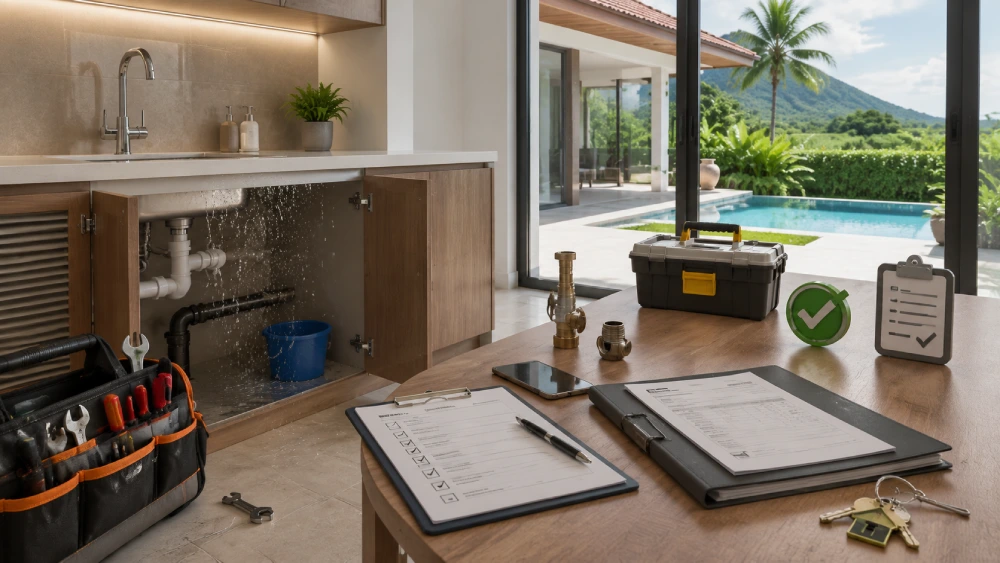
Yes. Property management companies normally receive repair reports, assess urgency, coordinate contractors, arrange access, monitor progress, and report the outcome. They manage the process, while the repair cost normally remains the owner’s responsibility.
Property Repair Responsibility Breakdown
| Repair stage | Manager’s role | Owner’s role | Tenant’s role |
| Fault report | Record the issue and request evidence | Review major risks when notified | Report the fault promptly |
| Urgency check | Classify emergency, urgent, or routine | Remain available for major approvals | Explain whether the property is safe to use |
| Cause assessment | Check wear, failure, damage, or building fault | Accept valid owner responsibility | Provide access and accurate information |
| Contractor selection | Choose the correct trade and arrange access | Approve major or unusual costs | Attend or permit agreed access |
| Repair approval | Apply the contract’s spending rules | Approve costs above the agreed limit | Avoid obstructing necessary work |
| Work supervision | Confirm scope and monitor completion | Fund approved repairs | Report if the fault remains |
| Final documentation | Provide photos, invoices, and updates | Review charges and records | Confirm access or use is restored |
A manager should do more than forward a message to a plumber or electrician. The full property manager repair coordination scope includes request intake, fault verification, contractor selection, access arrangements, owner communication, and completion evidence.
The owner normally pays for ageing equipment, building defects, necessary replacements, and repairs caused by ordinary use. A tenant may become responsible where evidence shows misuse, negligence, or damage beyond normal wear.
The exact division can also depend on the lease, the management agreement, applicable law, and the nature of the fault. That is why every repair should be classified before anyone is charged.
Repairs in Phuket: Daily Maintenance
Daily repair management starts before a contractor arrives. The manager needs a structured request, an urgency test, a record of the property’s condition, and a clear decision about what should happen next.
Record the Repair Request Properly
A message saying “the AC is strange” or “the sink is broken” does not give enough information to select the right contractor. The manager should ask for the exact location, symptoms, start time, photographs, video, and whether water, electricity, security, or access is affected.
Every request should receive a written acknowledgment. A central record prevents maintenance information from becoming scattered across calls, messaging applications, emails, and conversations with different staff members.
For occupied rental properties, house maintenance coordination should give tenants one clear reporting route. The owner should then be able to see the fault, response status, expected work, and final charge.
Separate Emergencies from Routine Faults
A dripping tap and an active flood should not enter the same repair queue. The manager must classify each request according to the immediate risk to people, access, security, equipment, and the building.
| Repair category | Typical examples | Expected management action |
| Emergency | Active flooding, electrical danger, fire risk, unsecured entrance | Contain the danger and dispatch immediate help |
| Urgent | Serious leak, failed essential plumbing, major appliance failure | Inspect quickly and arrange priority work |
| Routine | Loose fitting, minor leak, non-essential appliance issue | Schedule through the normal contractor process |
| Preventive | Servicing, drainage cleaning, corrosion checks | Add to the planned maintenance calendar |
The Phuket emergency repair response process should define who responds, what immediate action is allowed, and how quickly the owner receives an update.
A manager should not wait for normal office hours when delay could increase damage. At the same time, minor cosmetic defects should not attract unnecessary emergency call-out charges.
For guest properties, after-hours guest repair support can help confirm the problem, provide temporary instructions, arrange access, and escalate genuine emergencies outside normal hours.
Use Inspections to Catch Repairs Early
Good repair management is not limited to reacting after a tenant complains. Routine inspections can identify early leaks, corrosion, loose fittings, blocked drainage, damaged seals, mould, and equipment wear before the fault becomes expensive.
A clear property inspection report-to-repair workflow should move each finding through classification, owner approval, contractor work, functional testing, and recorded closure.
Housekeeping teams may also notice stains, unusual smells, moisture, damaged furniture, or appliance problems during turnovers. Reliable housekeeping damage checks can provide early warning, but cleaners should report the defect rather than diagnose technical causes beyond their role.
Pool faults require the same discipline. Through pool condition and equipment checks, a manager may identify pump noise, leaking pipework, damaged tiles, water-balance problems, or filtration issues before they interrupt guest use.
Outdoor areas also need scheduled attention. Garden and exterior maintenance checks can identify damaged irrigation, unstable branches, blocked drains, wall staining, or surface damage that may affect the property.
Repairs in Phuket: Contractor Control
Selecting a contractor is only one part of repair management. The manager must define the fault, issue a clear work scope, arrange access, confirm the repair standard, and check whether the problem was actually resolved.
Select the Correct Trade
Plumbing, air conditioning, pool equipment, electrical systems, roofing, drainage, appliances, and structural faults require different skills. Sending a general handyman to every problem may result in temporary fixes, repeat visits, or extra damage.
The manager should explain whether repairs are performed by an in-house team, regular third-party contractors, or specialists selected for individual jobs. The owner should know whether any contractor relationship includes a coordination charge or invoice markup.
For villas, villa repair supervision may involve several systems at once. A roof leak, for example, can affect ceilings, electrical fittings, walls, furniture, and mould risk, so the manager may need to coordinate more than one contractor.
Define the Work Before Approval
A quotation should explain the fault, proposed repair, materials, labour, expected completion time, and warranty. A single total with no description gives the owner little control over quality or cost.
Large non-emergency work may justify more than one quotation. Small urgent repairs may need a faster decision, but the manager should still document why the chosen action was reasonable.
The villa asset protection through maintenance depends on preventing temporary fixes from hiding larger defects. A repaired surface is not enough if the moisture source, electrical risk, drainage blockage, or failing component remains.
Control Contractor Access
The manager should record who enters the property, when access occurs, what area is affected, and whether the tenant or guest must be present. Keys, access cards, alarm codes, and contractor entry should not be handled casually.
For condominiums, condominium repair oversight may also require coordination with the juristic office, building technicians, common-area rules, lift access, parking, or approved working hours.
The manager must determine whether the fault sits inside the private unit or comes from a shared building system. A leak entering through a common pipe, roof, exterior wall, or neighbouring unit may require the building administration rather than an owner-appointed contractor.
Inspect the Completed Repair
A contractor invoice does not prove the fault has been resolved. The manager should inspect the result, test the affected equipment, request photographs, confirm that the area is clean, and ask the tenant or guest whether normal use has returned.
For short-term properties, guest repair coordination should also account for booking disruption. The manager may need to arrange temporary access instructions, update the guest, record any affected facilities, and prevent the next arrival from encountering the same fault.
Repeat failures should be checked against the original scope and warranty. The owner should not automatically pay for the same unsuccessful repair twice.
Repairs in Phuket: Approval Limits
Managers need enough authority to stop minor faults from becoming major damage. Owners also need protection from uncontrolled spending, unclear quotations, and repairs approved without a defined contractual mandate.
Set a Written Spending Limit
The management agreement should state the amount a manager may approve without separate owner consent. There is no single Phuket-wide amount that suits every property, so the limit should reflect the property, equipment, rental model, and owner’s risk preference.
The repair approval rules in management contracts should explain whether the limit applies per fault, per contractor visit, or per invoice. It should also state whether diagnostic charges and tax count toward the limit.
Repairs above that amount should normally require written owner approval unless the situation qualifies as an emergency. The manager should provide the diagnosis, quotation, urgency, and likely consequence of delay.
Define Emergency Authority
A burst pipe, electrical danger, fire risk, or unsecured entrance may require immediate action before the owner responds. The agreement should permit reasonable containment work while still limiting unnecessary replacement or major reconstruction without consent.
Emergency authority should answer four questions:
- What qualifies as an emergency?
- What immediate work may proceed?
- When must the owner be informed?
- What evidence must follow?
A manager may need to shut off water, secure a door, isolate electricity, stop active leakage, or arrange temporary protection. Once the immediate risk is controlled, permanent work should return to the normal approval process.
Keep Owner Funds Controlled
Repair bills may be paid from rental income, an owner transfer, or an agreed maintenance reserve. The manager should not allow the available balance to determine whether a repair is necessary without informing the owner of the risk.
For owners living abroad, overseas owner repair approval controls should combine written limits, photographs, quotations, invoices, and local supervision. Time-zone differences should not leave urgent faults unattended or allow unnecessary work to proceed unchecked.
The owner should also know whether the manager receives a maintenance coordination fee. Any markup should be disclosed separately rather than hidden inside the contractor’s invoice.
Protect Remote Owners from Weak Oversight
Owners who are away cannot directly inspect leaks, equipment failures, contractor work, or repeated faults. This creates a risk of delayed repairs, inflated quotations, duplicated work, and invoices that do not match the result.
The main remote villa repair oversight risks can be reduced through time-stamped photographs, written fault descriptions, quoted scopes, approval records, completion tests, and retained invoices.
A manager should make the repair understandable to an owner who never saw the original defect. “Fixed” is not an adequate report when the owner is expected to fund the work.
Repairs in Phuket: Who Pays?
Payment responsibility depends on what caused the defect, what the lease says, and whether the problem is ordinary maintenance, necessary repair, ageing equipment, tenant damage, or a common-building fault.
Repair Cost Classification
| Fault type | Likely responsibility | Evidence needed |
| Ageing appliance failure | Usually owner | Appliance age, technician diagnosis, service history |
| Structural or building defect | Usually owner or building body | Inspection report, building records, photographs |
| Ordinary maintenance or petty repair | May depend on lease and custom | Lease wording, invoice, maintenance history |
| Tenant misuse or negligence | May be tenant | Photos, inspection evidence, contractor findings |
| Accidental damage | Depends on facts and lease | Incident details, condition records, repair quotation |
| Common-area failure | Building or estate body may be involved | Source investigation, juristic or estate report |
| Preventive servicing | Depends on agreement | Service schedule and assigned responsibility |
| Emergency containment | Usually owner initially | Emergency report, photographs, invoice |
Thai rental rules generally distinguish necessary property repairs from ordinary maintenance and petty repairs. The specific lease still matters, and responsibility should not be assigned from assumption alone.
The rental-home repair protection process should establish the cause before the manager charges either party. A tenant should not be charged simply because a fitting failed during the tenancy.
Normal wear may include deterioration caused by age and ordinary use. Tenant damage requires stronger evidence of misuse, negligence, unauthorised work, or conduct beyond normal occupancy.
Separate AC Servicing from AC Failure
Air-conditioning disputes are common because routine cleaning, blocked drainage, refrigerant problems, electrical faults, and compressor failure are different issues. The lease should state who arranges and pays for scheduled servicing.
A tenant may be responsible for agreed routine cleaning while an owner remains responsible for an ageing compressor or failed main component. The manager should obtain a technical diagnosis rather than treating every air-conditioning problem as one category.
Humidity can also make fault diagnosis harder. Villa humidity and mold prevention may require checking leaks, air-conditioning performance, ventilation, drainage, and hidden moisture before repairing stained walls or damaged finishes.
Account for Phuket’s Rainy Season
Roof leaks, blocked drains, failed pumps, water entry, corrosion, and exterior deterioration can worsen during prolonged rain. A manager should inspect known risk areas before severe weather rather than waiting for interior damage.
Planned rainy-season villa maintenance and repairs may include drainage clearing, roof checks, pump testing, seal inspections, moisture monitoring, and post-storm reporting.
When rain exposes a defect, the manager should trace the source before approving cosmetic repair. Repainting a damp wall without stopping the water entry will create a repeat invoice.
Repairs in Phuket: Evidence and Deposits
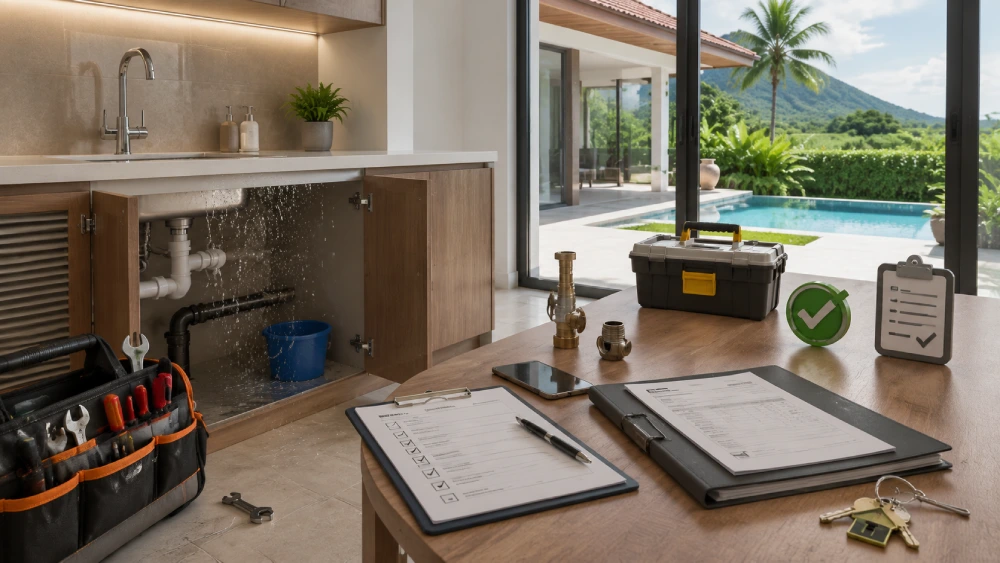
Repair disputes become harder when nobody can prove the original condition, cause of damage, work completed, or amount paid. Strong documentation protects the owner, tenant, manager, and security deposit.
Build a Complete Repair Record
Every completed repair file should contain:
- Original tenant or inspection report
- Date and time reported
- Photographs or video
- Urgency classification
- Cause assessment
- Contractor diagnosis
- Quotation
- Owner approval where required
- Access record
- Completion photographs
- Final invoice
- Warranty information
- Confirmation that the fault was resolved
These records should remain connected to the same case. An owner should not need to search several message threads to understand one repair.
Distinguish Wear from Damage
Move-in photographs and a signed condition report provide the baseline. Periodic inspection records show whether deterioration was reported, ignored, repaired, or allowed to worsen.
At move-out, the manager should compare the property against that evidence while considering age, length of occupancy, expected use, previous faults, and maintenance history. An old item should not be valued as though it were new.
Security-deposit deductions should be itemised. Each deduction should connect to a documented defect, a reasonable responsibility decision, and an actual repair cost.
Avoid Unsupported Tenant Charges
A contractor should explain whether the fault resulted from age, poor installation, ordinary use, lack of servicing, external conditions, or misuse. The manager should not decide responsibility from appearance alone.
Where evidence is unclear, the manager should present the uncertainty to the owner rather than making a confident but unsupported tenant charge. Weak documentation creates disputes and can damage trust with both parties.
Repairs in Phuket: Prevent Repeat Failures
The best repair process does not end when the immediate symptom disappears. Managers should identify the source, verify the work, retain warranty records, and adjust preventive maintenance when the same defect could return.
A failed pump, repeated leak, recurring mould patch, or frequently blocked drain may point to a larger system problem. Repeated minor invoices can cost more than a properly diagnosed permanent solution.
The manager should review repeat repairs by property, contractor, equipment type, and cause. This helps the owner decide when continued repair is less practical than replacement.
Preventive work should also be connected to inspection findings. Pool equipment, air conditioning, drainage, roofing, irrigation, seals, and electrical systems should not be treated as unrelated problems when one failure can affect another area.
Choose Clear Repair Control
Repair management works when the process is clear before the first fault occurs. Ask a property management company in Phuket for repair coordination to explain request handling, approval limits, emergency authority, contractor selection, invoice records, and completion checks before signing. The right system gives the manager enough authority to protect the property while keeping the owner in control of cost and evidence.
FAQs About Property Management Repairs
Do property managers pay for repairs themselves?
Property managers normally do not fund repairs from their own money. They arrange the work and pay the contractor from owner-authorised funds, rental income, or an agreed maintenance balance. The owner usually remains financially responsible for necessary property repairs unless evidence shows tenant misuse, another party’s liability, or a different responsibility under the lease.
Can property managers approve repairs without permission?
Property managers may approve repairs without separate permission when the management agreement gives them authority below a written spending limit. Emergency containment may also proceed where delay could endanger people or increase property damage. The agreement should define the limit, emergency exception, notification time, and evidence the manager must provide afterward.
How quickly should emergency repairs be handled?
Emergency repairs should be addressed as soon as the manager confirms an immediate threat involving flooding, electricity, fire, security, or serious property damage. The first action may be containment rather than permanent repair. The manager should dispatch suitable help, notify the owner, record the condition, and return to the normal approval process once the immediate danger is controlled.
Who pays for repairs caused by normal wear?
Repairs caused by normal ageing or ordinary use generally remain an owner responsibility, while petty maintenance responsibilities may depend on the lease and applicable rules. The manager should check the item’s age, condition report, service history, contractor diagnosis, and tenant conduct. The tenant should not be charged merely because the item failed while occupied.
Can repair costs come from a security deposit?
Repair costs may be deducted from a security deposit when the tenant is responsible and the deduction is supported by evidence. Valid repairs should be linked to move-in records, move-out findings, photographs, responsibility under the lease, and actual invoices. Ordinary wear, existing defects, and unsupported estimates should not be mixed with proven tenant-caused damage.
Can managers use their own contractors for repairs?
Managers may use in-house technicians or regular outside contractors for repairs, provided the arrangement is transparent and suitable for the required trade. Owners should know how contractors are selected, whether quotations are compared, whether a markup applies, and how completed work is checked. Specialist faults should not be assigned to an unsuitable general worker.
What records should owners receive for repairs?
For completed repairs, owners should receive the original fault report, photographs, urgency decision, contractor diagnosis, quotation, approval record, completion evidence, final invoice, and warranty details where available. The documents should show what happened, why the work was necessary, who approved it, what was completed, and how the final owner charge was calculated.