Property operations become difficult to control when bookings, guest records, repairs, cleaning schedules, invoices, inspections, and owner approvals sit in separate systems.
Small communication gaps can cause missed turnovers, delayed repairs, incorrect reports, and unclear responsibility. Centralization in property management in Phuket brings repeatable work and shared records into one coordinated structure while keeping physical inspections, maintenance, emergencies, and guest support locally available.
The aim is not to remove people from the property. It is to give every team one accurate record, one defined responsibility, and one clear escalation process.
Quick Check: Before combining bookings, maintenance, housekeeping, payments, and reporting under one provider, choose centralized property management services in Phuket with defined responsibilities, consistent records, local response teams, and written approval limits.
Centralization in Property Management in Phuket
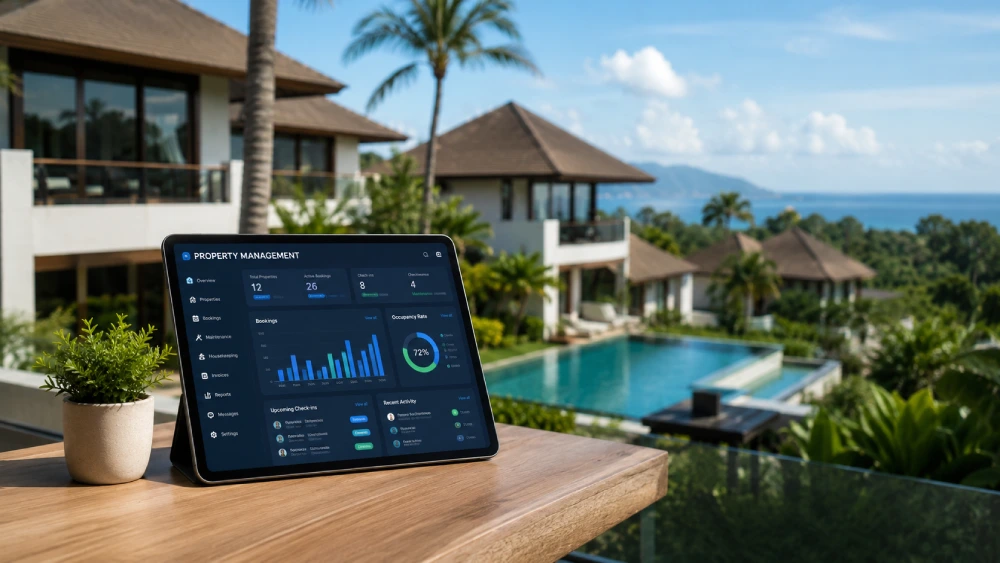
Centralization in property management in Phuket means placing repeatable administrative work, shared information, specialist responsibilities, and routine decisions inside one coordinated system. Local teams still complete physical work, but the system controls assignments, approvals, evidence, and reporting.
Centralized and Local Responsibility Split
A strong centralized model separates tasks that benefit from standard rules from duties requiring local attendance. This prevents administrative duplication without weakening inspections, maintenance quality, emergency response, guest support, or knowledge of each property.
| Property function | Centralized responsibility | Local responsibility |
| Bookings | Calendar, rates, records, confirmation | Verify property readiness |
| Owner reporting | Standard statements and shared data | Confirm physical work |
| Maintenance | Request intake, priority, scheduling | Inspection and repair |
| Housekeeping | Turnover schedule and quality records | Cleaning and linen setup |
| Pool care | Visit schedule and maintenance history | Water testing and equipment checks |
| Garden care | Task planning and issue tracking | Trimming, irrigation, and cleanup |
| Guest support | Shared guest and booking record | Arrival and urgent assistance |
| Payments | Invoice control and approval record | Verify completed work |
| Inspections | Common checklist and issue log | Physical property check |
| Emergencies | Escalation and spending controls | Immediate local response |
| Compliance | Document and deadline tracking | Local verification |
| Performance | Portfolio data and exceptions | Explain property-level causes |
The complete Phuket property manager handling scope may include bookings, guests, maintenance, bills, vendors, compliance records, emergencies, reporting, and owner communication. These duties must operate as connected parts of one system.
Centralization Is More Than Software
A digital dashboard can store information, but software cannot define responsibility by itself. Centralization is an operating model built around people, processes, decisions, and shared records, with technology supporting the agreed workflow.
Installing new software before fixing an unclear process often transfers the same confusion into a different platform. Requests still disappear, records remain incomplete, and staff continue to depend on private messages or verbal instructions.
The correct order is to map the process, remove unnecessary steps, assign responsibility, set approval limits, create the shared record, and then automate suitable tasks. Human review should remain available for risk, complaints, emergencies, and property-specific decisions.
One Structure Must Control the Work
Owners should not have to contact separate people to understand booking status, cleaning, repairs, invoices, inspections, or guest problems. Internal specialists may handle different functions, but the owner should receive one coordinated record and one accountable response.
Each task should show:
- The property involved
- The person responsible
- The required action
- Its priority
- The approval status
- The deadline
- Supporting evidence
- Completion status
- The next responsible team
The good Phuket property manager operating standards should include clear communication, reliable maintenance routines, financial evidence, emergency procedures, vacant-property checks, and consistent reporting.
Centralization in Phuket: Operational Restructure
Operational restructuring decides which duties move into the shared system and which remain at the property. The safest approach begins with repeatable administration before changing local maintenance, inspections, guest assistance, or emergency responsibilities.
Audit the Current Workflows First
A proper audit identifies repeated work, missing information, duplicate records, delayed approvals, weak handovers, and duties that depend too heavily on one employee. Centralization should solve these problems rather than relocate them.
The easiest starting points normally include:
- Invoice processing
- Payment records
- Booking reports
- Owner statements
- Standard enquiries
- Contractor records
- Document tracking
- Maintenance-request logging
- Routine follow-ups
Physical and judgement-sensitive tasks should move only when the central structure can support reliable local execution. The purpose is to reduce confusion without creating slower service.
Owners can apply clear Phuket property manager selection criteria covering systems, response times, local staffing, reporting, maintenance networks, fees, emergency support, and communication standards.
Define Central Specialist Roles
Changing where employees work does not automatically improve operations. Each specialist role needs a controlled workload, a response target, an approval limit, a completion standard, and an escalation route.
A booking coordinator may manage enquiries, calendars, rates, owner-use dates, and confirmation records. A finance administrator may control invoices, payments, owner statements, and missing financial evidence.
A maintenance dispatcher may receive requests, classify urgency, schedule contractors, monitor approval, and track completion. Local technicians still inspect faults, complete repairs, and provide photographs or service records.
Write Clear Authority into the Contract
Central teams may control bookings, property access, money, guest records, contractors, or emergency spending. These powers should never depend on a broad phrase such as “complete management.”
The Phuket property management contract controls should define service scope, approval limits, repair authority, emergency actions, quotation rules, reporting, record ownership, payments, access, and termination duties.
Centralization Authority Checklist
This checklist identifies the decisions that require written control. It also prevents central teams from delaying urgent work because nobody knows who can approve the next step.
| Control question | Required decision |
| Who accepts bookings? | Named role and approval conditions |
| Who changes prices? | Approved range and owner threshold |
| Who approves repairs? | Standard and emergency limits |
| Who pays invoices? | Verification and payment process |
| Who controls keys? | Access record and return process |
| Who appoints contractors? | Approved list and exceptions |
| Who handles guest records? | Access and retention rules |
| Who reports to the owner? | Format, frequency, and evidence |
| Who handles emergencies? | Escalation chain and local responder |
| Who removes system access? | Contract-end procedure |
Authority must be narrow enough to protect the owner but practical enough to prevent unnecessary delays. Urgent property protection should not wait for several departments to approve the same action.
Protect Local Property Knowledge
A central team may understand the official property record but still lack knowledge of the layout, equipment, access restrictions, maintenance history, local contractors, recurring faults, or owner preferences.
Every managed property should have a verified profile containing:
- Property layout
- Access instructions
- Equipment records
- Service history
- Guest or tenant rules
- Owner preferences
- Known defects
- Approved contractors
- Emergency contacts
- Local restrictions
- Current photographs
- Escalation instructions
The Phuket property inspection reporting process should add dated photographs, room-level findings, repair priorities, approvals, unresolved tasks, and completion evidence to the shared property record.
Give Overseas Owners Clear Visibility
Remote owners often receive information through separate emails, messaging apps, invoices, and booking-platform reports. This makes it difficult to verify property condition, spending, bookings, repairs, and outstanding problems.
Effective overseas Phuket villa management controls should provide calendar access, inspection records, maintenance evidence, owner approvals, financial statements, and one clear communication route.
Centralization should reduce daily owner involvement without removing owner control. Major repairs, unusual expenses, long bookings, large discounts, and contract changes should still follow written approval thresholds.
Centralization in Phuket: Core Service Areas
Centralization works when bookings, finances, maintenance, housekeeping, pool care, gardening, inspections, and guest support share accurate information. Every confirmed action must reach the local team responsible for physical delivery.
Centralize Bookings and Rental Records
Separate listings, calendars, agents, and pricing records create double-booking and rate-control risks. One central booking record should control availability, owner-use dates, guest information, payment status, cancellation terms, and property readiness.
The Phuket short-term rental management workflow should connect listings, booking channels, calendars, pricing, check-ins, turnovers, expenses, maintenance, performance records, and owner payouts.
For platform-based rentals, Airbnb management support for Phuket villas should link guest messages, cleaning, bookings, inspections, repairs, reviews, expenses, and owner reporting.
An Airbnb management full service in Phuket should connect every confirmed reservation to housekeeping, check-in support, guest records, maintenance readiness, and local property access.
Centralize Finance and Owner Reporting
Owners cannot judge property performance from gross booking income alone. The central record should connect income, platform deductions, management charges, utilities, housekeeping, refunds, contractor invoices, repairs, and net owner payouts.
Every transaction should include:
- Property name
- Transaction date
- Booking or invoice reference
- Expense category
- Approval status
- Supporting evidence
- Responsible person
- Payment status
One standard statement makes it possible to trace every major figure to a booking, invoice, approval, or completed task. A longer report is not automatically better if the numbers cannot be verified.
Centralize Maintenance Control
Maintenance execution should remain close to the property, but its requests, priorities, costs, contractors, approvals, and completion evidence can be centrally controlled.
The central system should classify each request before assigning it.
Maintenance Priority Structure
| Priority | Example | Expected action |
| Critical | Flooding, fire, unsafe access | Immediate local response |
| Urgent | Water or air-conditioning failure | Same-day assessment |
| Standard | Appliance or fixture fault | Scheduled repair |
| Preventive | Pool pump, aircon, roof service | Planned visit |
| Monitoring | Minor wear or early cracking | Record and recheck |
The Phuket property emergency response process should connect initial assessment, guest safety, local contractors, spending authority, incident records, repair coordination, and owner updates.
A central request desk without emergency authority can make repairs slower. The local team needs written permission to contain serious damage before completing the full approval and reporting process.
Connect Pool Maintenance to Property Records
Pool servicing follows a routine schedule, but equipment faults, storms, heavy guest use, algae, and long vacancies may require faster action. Central records should show each visit, finding, chemical adjustment, equipment concern, and follow-up date.
A pool management company for rental properties in Phuket should connect pool visits with bookings, guest arrivals, maintenance history, repair approvals, photographs, and equipment records.
The pool technician remains responsible for physical testing and treatment. The central system controls scheduling, service evidence, unresolved issues, and owner reporting.
Connect Gardening and Exterior Care
Gardens can deteriorate quickly when irrigation fails, plants overgrow, pests appear, or storm debris blocks access. These issues can also affect guest safety, property presentation, drainage, and external equipment.
A garden management company for rental properties in Phuket should coordinate trimming, irrigation checks, storm cleanup, pest observations, vacant-property visits, contractor access, and photographic reporting.
The shared record helps the property team connect garden issues with drainage, pool contamination, pest entry, lighting, guest arrivals, and external maintenance.
Connect Housekeeping and Turnovers
Housekeeping teams need more than an arrival date. They require guest numbers, room setup, linen requirements, arrival time, special requests, damage information, maintenance alerts, and readiness deadlines.
Professional housekeeping services in Phuket should connect the booking record with cleaning schedules, linen control, missing-item reports, damage evidence, and final property-readiness checks.
A turnover should not close while a broken lock, failed air conditioner, pool issue, or unresolved guest request remains open. One readiness status should cover cleaning and property condition together.
Connect Check-In and Guest Support
Late flights, access failures, lost keys, transport delays, and unclear directions create immediate pressure. A centralized guest record should contain arrival details, occupant numbers, payment status, access instructions, and local contact information.
A 24-hour check-in service for villas in Phuket should receive the complete guest record before arrival. The central system must identify the first contact, backup contact, access method, and escalation route.
The Phuket villa guest management safeguards should connect guest identity, approved occupancy, house rules, visitors, deposits, complaints, and local support.
Apply Centralization to Each Property Type
Villas, houses, and condominiums have different physical and administrative needs. They can still share one structure for tasks, approvals, finances, reporting, inspections, and owner communication.
Luxury villa property management in Phuket may include private pools, gardens, guest operations, staff, security, and extensive maintenance systems.
Condominium property management services in Phuket must account for building access, common-area rules, tenant records, juristic requirements, and shared facilities.
Full house management in Phuket should connect rental activity, utilities, inspections, repairs, tenant communication, and owner reporting without treating the house like a hotel.
The luxury villa management inclusions in Phuket also show why local property-specific care remains necessary inside one central system.
Centralization in Phuket: Benefits and Challenges
Centralization can improve visibility, consistency, response control, and accountability. Poor implementation can create slower approvals, overloaded teams, impersonal service, unreliable data, and dependence on one system.
Benefits and Risks Side by Side
The result depends on workflow design, staffing, local coverage, system accuracy, and authority limits. Centralization itself does not guarantee lower costs, faster service, or better property care.
| Operating area | Possible benefit | Main risk | Required control |
| Reporting | Consistent statements | Incorrect shared data | Common categories and audits |
| Bookings | One calendar and guest record | Weak property knowledge | Verified property profiles |
| Maintenance | Visible tasks and costs | Slow approval chain | Emergency authority |
| Staffing | Specialist responsibilities | Overload or job insecurity | Clear roles and workload review |
| Customer service | Faster routine replies | Impersonal support | Local escalation |
| Technology | One source of information | System-wide outage | Backup procedures |
| Vendors | Shared performance records | Wrong contractor assignment | Property-level verification |
| Growth | Faster property onboarding | Scaling a weak process | Workflow review |
| Compliance | Central document tracking | Local rule overlooked | Local confirmation |
| Owner control | Better visibility | Excessive automatic decisions | Approval thresholds |
Improve Consistency and Owner Visibility
Centralization gives each property the same task stages, financial categories, approval records, and evidence standards. Owners can compare performance without interpreting several unrelated spreadsheets.
A useful dashboard should identify overdue repairs, missing invoices, incomplete inspections, unresolved complaints, unusual expenses, and delayed approvals. It should reveal exceptions rather than hiding them inside summary figures.
The Phuket villa asset protection system should connect access, maintenance, guest control, spending, repairs, compliance records, security, and financial evidence.
Reduce Repeated Administration
Separate teams often repeat invoice entry, document collection, contractor checks, standard replies, booking updates, and monthly reporting.
Central specialists can reduce this duplication when the process has a clear start, completion point, owner, and escalation route. Moving the same emails and spreadsheets into a central office will not produce the same benefit.
Local teams should gain more time for inspections, guests, maintenance checks, property condition, and urgent issues. Centralization should support local delivery rather than reduce it below a reliable level.
Preserve Human and Local Service
Routine requests can move through central support, but emergencies, complaints, owner concerns, and property-specific decisions require human judgement.
Guests and owners should not be told that one department cannot see another team’s information. Shared records should allow the responsible person to explain the current status, next action, and expected timing.
The strongest structure combines standardized central processes with named local contacts. This protects consistency without removing trust, familiarity, and local knowledge.
Prevent Technology Dependence
When one platform stores bookings, invoices, guest records, work orders, inspection photographs, and owner statements, an outage can affect the entire portfolio.
A reliable operation needs:
- Permission-based access
- Two-factor authentication
- Data backups
- Audit logs
- Offline emergency contacts
- Manual access instructions
- Outage procedures
- Regular access reviews
- Immediate access removal after staff leave
- Human review for high-risk decisions
Technology should make operations visible. It should not become an unsupported single point of failure.
Prevent Centralized Staff Burnout
Moving every call, approval, complaint, booking, and maintenance request to one team can create a new workload problem. Centralization must redesign work instead of concentrating pressure.
Shared coverage, clear response targets, rotating on-call responsibilities, backup staff, standard guest rules, and preventive maintenance reduce unpredictable work.
The bad Phuket property manager warning signs include unclear responsibility, weak reporting, reactive repairs, uncontrolled access, poor handovers, missing receipts, and hidden costs.
Measure Whether It Works
Lower payroll does not prove that centralization has succeeded. A cheaper structure with slower repairs, weaker communication, or declining property condition is not an operational improvement.
Measure performance before and after centralization using:
- Enquiry response time
- Booking-processing time
- Maintenance completion time
- Overdue work orders
- Invoice approval time
- Reporting accuracy
- Missed tasks
- Owner complaints
- Staff workload
- Emergency response
- Property condition
- Occupancy where relevant
The central model should improve service, visibility, accuracy, accountability, and workload sustainability together.
Centralization in Phuket: Areas Covered

Island-wide centralization requires one operating structure supported by local teams positioned close enough to inspect, clean, repair, prepare, and respond. Travel time, weather, traffic, and simultaneous emergencies must remain part of service planning.
Coverage includes:
- Bang Tao
- Patong
- Surin
- Kamala
- Rawai
- Nai Harn
- Mai Khao
- Ya Nui
- Friendship Beach
- Chalong
- Saiyuan
- Laguna Phuket
- Kata
- Karon
- Kathu
- Thalang
- Cherng Talay or Choeng Thale
- Surrounding Phuket areas
Available across Bang Tao, Rawai, Nai Harn, Kamala, Surin, Patong, Chalong, Kata, Karon, Mai Khao, Laguna, Kathu, Thalang, Cherng Talay, and surrounding areas in Phuket.
Centralization in Phuket: Establish Control
The best structure centralizes records, routine administration, reporting, approvals, and task visibility while keeping physical service locally accountable. Choose centralized property management services in Phuket that maintain local inspections, maintenance, guest assistance, and emergency response. Centralization should make responsibility clearer, not make the property feel more distant.
FAQs About Centralization in Phuket
Can centralization work for one Phuket property?
Centralization in property management in Phuket can benefit one property when bookings, maintenance, cleaning, invoices, guest support, and owner approvals are handled by different people. The property may not require several specialist departments, but it still benefits from one controlled record that prevents information from being scattered across personal messages, spreadsheets, booking platforms, and contractor invoices.
Does centralization require one physical office?
Centralization in property management in Phuket does not require every employee or contractor to work from one office. Shared systems, reporting rules, specialist coordination, and common procedures can provide centralized control. Local cleaners, technicians, inspectors, pool teams, gardeners, and check-in staff can remain close to each property while their work enters one coordinated process.
Can centralization reduce management costs?
Centralization in property management in Phuket may reduce duplicated administration, repeated data entry, separate reporting work, and unnecessary software overlap. It does not guarantee lower total costs. Systems, specialist roles, training, local coverage, and emergency capacity still require investment. The correct test is whether cost, service speed, accuracy, and property condition improve together.
Does centralization replace local property teams?
Centralization in property management in Phuket should not remove the local people required for inspections, repairs, housekeeping, pool care, gardening, access, complaints, and emergencies. It should coordinate these duties through shared schedules, records, approvals, and reporting. Removing too much local capacity can turn a useful operating structure into a slow and disconnected remote service.
How does centralization help overseas owners?
Centralization in property management in Phuket gives overseas owners one place to review bookings, expenses, inspections, repairs, invoices, approvals, maintenance history, and owner statements. The owner should retain approval rights for major repairs, unusual costs, large booking discounts, and contract changes. Better visibility should reduce daily involvement without removing financial or operational control.
Can centralization delay emergency repairs?
Centralization in property management in Phuket can delay repairs when every action requires several approvals. A properly designed structure uses urgency categories, named local responders, backup contractors, and emergency spending limits. Immediate containment should occur when safety, security, or serious property damage is at risk, followed by photographs, invoices, and complete owner reporting.
How is centralization different from automation?
Centralization in property management in Phuket determines where information, work, and responsibility are controlled. Automation completes selected repetitive tasks inside that structure, such as reminders, calendar updates, invoice routing, or status messages. Automation without clear responsibility can accelerate a poor process, while centralization defines who owns the result and when human judgement is required.