Phuket Airbnb owners often see empty dates and assume the price is the only problem. Experienced managers act differently because low occupancy can come from weak photos, poor visibility, slow replies, strict rules, bad reviews, wrong guests, or poor calendar settings. The proven solution is a controlled system that improves search exposure, pricing, guest fit, operations, and reporting before random discounts damage the listing.
Quick Tip: More bookings start with better pricing, calendar control, and guest-ready operations. See how our airbnb managers improve occupancy service supports Phuket rental owners.
How Airbnb Managers Improve Occupancy in Phuket?

Airbnb managers improve occupancy in Phuket through a connected system, not one isolated tactic. The main system combines Seasonal & Dynamic Pricing Strategies, Multi-Channel Distribution & SEO Optimization, and Targeting Specific Traveler Niches & Operational Speed & Guest Experience. The goal is to fill the right nights with the right guests without creating future review or maintenance problems.
| Occupancy Lever | Manager Action | Problem It Solves |
| Audit | Finds why dates stay empty | Stops wrong fixes |
| Pricing | Adjusts weak and strong dates | Fills gaps without panic cuts |
| SEO visibility | Improves title, photos, amenities | Gets more guest views |
| Channels | Uses Airbnb, Agoda, Booking, Vrbo | Expands demand sources |
| Guest targeting | Matches property to traveler type | Avoids bad-fit bookings |
| Messaging | Replies fast with clear answers | Converts uncertain guests |
| Operations | Keeps cleaning and repairs ready | Prevents blocked nights |
| Reports | Tracks what worked | Guides next action |
A manager does not simply chase a full calendar. High occupancy with poor guests, weak rates, or repeated damage can reduce long-term performance. Owners who want complete support can use airbnb management phuket when pricing, listing visibility, guest messaging, and calendar control need one connected process.
Occupancy Audits Find the Booking Leak
An occupancy audit comes before any pricing change. Empty dates do not automatically mean the rate is too high. A manager first checks where guests are dropping out.
The audit reviews occupancy rate, booking pace, listing views, inquiry rate, conversion rate, ADR, review score, response time, competitor availability, minimum stays, and calendar gaps. If views are low, visibility may be the issue. If views are high but bookings are low, the listing may not convert.
This step protects owners from panic discounting. A cheap price cannot fix poor photos, slow replies, strict rules, or unclear location details. A real audit shows which lever should be adjusted first.
For owners who want wider context, property management overview explains how occupancy fits into the bigger rental system. Occupancy improves faster when pricing, listing, guest care, and maintenance are managed together. This prevents owners from treating bookings as a single-platform problem.
Seasonal & Dynamic Pricing Strategies
Seasonal pricing matters because Phuket demand changes sharply through the year. Peak and high-season rules cannot be copied into green season. Managers build different rate logic for each demand period.
During high-demand months, managers protect strong dates with firm rates and better minimum stay rules. During weaker months, they use controlled flexibility, weekly offers, monthly discounts, and last-minute gap pricing. The aim is not to discount everything, but to fill dates that are truly at risk.
Dynamic pricing also reacts to booking pace. If similar villas are filling and the property is not, the manager reviews price, photos, and rules. If demand is strong, rates can hold without unnecessary discounts.
A strong pricing system usually includes:
- Peak-date protection for holiday blocks.
- Low-season flexibility for weaker demand.
- Gap-night pricing for orphan dates.
- Weekly and monthly discounts for longer stays.
- Competitor checks before rate changes.
- Booking pace review every week.
For deeper pricing logic, high season villa rate logic is a close supporting topic. It helps owners understand why pricing changes by season. Occupancy improves when rates match demand instead of owner emotion.
Multi-Channel Distribution & SEO Optimization
Airbnb alone may not reach every Phuket traveler. Some guests search Airbnb, while others prefer Booking.com, Agoda, Vrbo, direct booking pages, or local channels. Managers improve occupancy by widening visibility without creating double-booking risk.
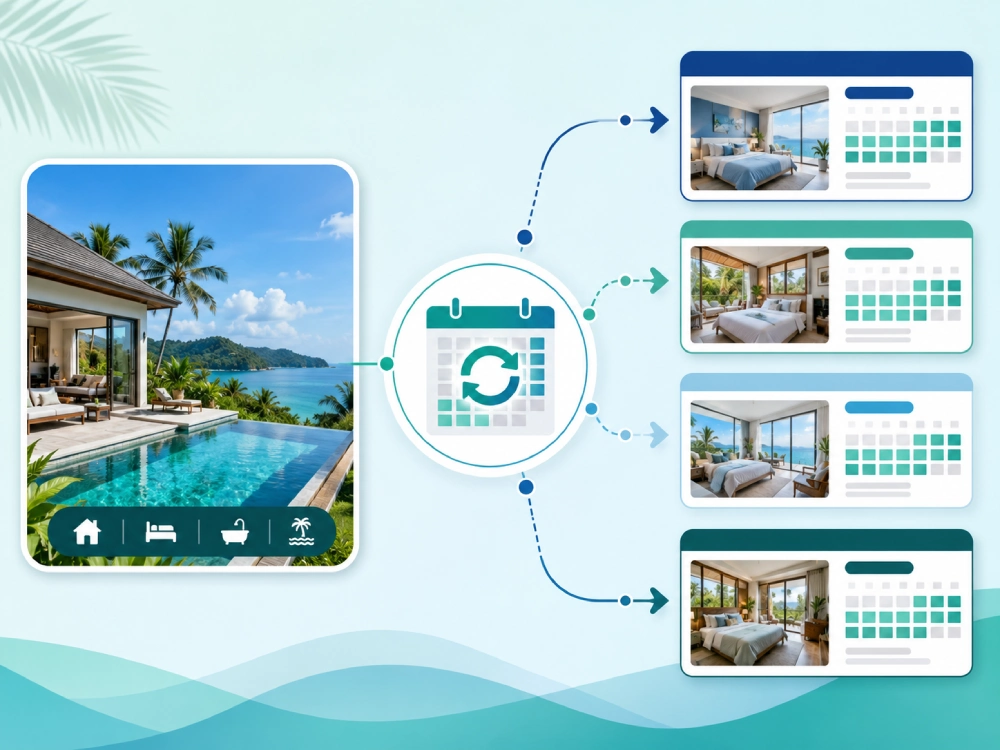
Multi-channel distribution works only when calendars, prices, guest capacity, house rules, and cleaning buffers are synced. More platforms can help, but poor syncing can damage trust quickly. A double booking during high season is worse than an empty night.
SEO optimization also matters inside rental platforms. Managers improve the title, first photo, amenities, descriptions, area wording, and listing freshness. Search visibility creates the first chance for occupancy to improve.
A good Phuket listing title may highlight private pool, sea view, walkable beach access, family layout, work-friendly space, or named areas. The title should attract the right guest, not every guest. Strong visibility without good targeting can create poor bookings.
A related topic is the Phuket rental listing update process. Listing updates affect how often guests click, inquire, and book. A stale listing loses momentum even when the property is good.
Photos and Titles Attract the Right Guests
Photos and titles influence both clicks and guest quality. A listing can attract more views while still attracting the wrong people. Managers must show the property honestly and strategically.
The Reddit research shows a useful occupancy lesson: photos can send guest-capacity signals. If images show extra beds, wide open sleeping areas, or party-friendly spaces, guests may assume they can bring more people. Managers avoid this by matching photos to the intended guest type.
For Phuket villas, photos should show the strongest real booking reasons. These may include the pool, bedrooms, view, kitchen, workspace, family areas, balcony, parking, and outdoor living space. The gallery should not accidentally sell the property as a party villa if the owner wants families or longer-stay guests.
Titles should also filter guests. A “quiet family pool villa” attracts a different group than a “large group stay near nightlife.” Occupancy improves when the listing attracts guests who are likely to book, follow rules, and leave strong reviews.
Calendar Rules Stop Empty Night Gaps
Calendar rules can create hidden occupancy problems. A strict minimum stay can block guests who would book short gaps. A weak minimum stay can split high-value weeks into awkward empty nights.
Managers adjust minimum stays by season and calendar shape. Peak dates may need longer stays to protect holiday blocks. Low season may need shorter stays to capture regional travelers and last-minute demand.
Gap-night rules are also important. A two-night space between bookings may need relaxed rules and targeted pricing. That small adjustment can turn dead calendar space into revenue.
Calendar controls usually include:
- Minimum stay changes
- Gap-night rules
- Flexible check-in days
- Cleaning buffer planning
- Owner block control
- Advance notice settings
- Booking window settings
- Same-day booking rules
- Maximum stay settings
These settings should not be static all year. Phuket occupancy changes by demand period, property type, and location. A villa in Bang Tao may need different rules from a Rawai long-stay apartment.
Targeting Specific Traveler Niches
Targeting Specific Traveler Niches helps managers fill the calendar without lowering standards. Different Phuket areas attract different guests. A manager improves occupancy by matching the listing to the traveler group most likely to book.
Bang Tao and Laguna often suit premium families and resort-style travelers. Kamala and Surin can suit luxury villa guests and sea-view stays. Patong often attracts short-stay nightlife and beach guests.
Rawai and Nai Harn may suit long-stay travelers, wellness guests, remote workers, and expats. Chalong may work for diving, yachting, and activity-based stays. The property description, amenities, and pricing should reflect the area’s real guest demand.
The same property can fail if aimed at the wrong audience. A family-friendly villa should show child-safe features, kitchen use, bedroom clarity, and pool comfort. A remote-worker listing should show Wi-Fi, workspace, laundry, kitchen, quiet area, and monthly rules.
Operational Speed & Guest Experience
Operational Speed & Guest Experience directly affect occupancy. Fast replies can convert inquiries before guests book elsewhere. Fast cleaning and maintenance keep more nights available.
Many guests message several hosts at once. Managers use saved replies and local answers to respond quickly about beach distance, airport transfer, pool privacy, Wi-Fi, parking, children, late checkout, and check-in. Clear answers reduce hesitation.
Guest experience also protects future bookings. If AC fails, Wi-Fi is weak, the pool is cloudy, or check-in is confusing, reviews suffer. Poor reviews reduce future occupancy faster than a small price mistake.
For messaging depth, Phuket guest communication flow is a useful internal link. Guest communication turns listing interest into confirmed stays. It also helps prevent avoidable complaints after arrival.
Reviews Protect Future Occupancy
Reviews are not just reputation signals. They influence trust, conversion, and future booking confidence. Managers protect occupancy by protecting the guest experience behind each stay.
Good review management starts before arrival. The listing must be accurate, expectations must be clear, and arrival instructions must be simple. Guests should not discover surprises after check-in.
The main review drivers are cleanliness, accuracy, communication, check-in ease, AC, Wi-Fi, pool condition, maintenance response, value perception, and checkout simplicity. Managers track these points because each one can affect future bookings. A single repeated complaint can reduce confidence.
Review protection is not about asking for praise. It is about reducing friction that causes negative feedback. Occupancy improves when guests trust that the listing will deliver what it promises.
Long-Stay Strategy Supports Slow Months
Low and shoulder months require different occupancy tactics. Short holiday demand may weaken, but longer stays can still work. Managers target remote workers, expats, wellness travelers, regional guests, and families staying longer.
A long-stay strategy needs more than a monthly discount. The listing should show Wi-Fi clarity, workspace, laundry, kitchen, quiet surroundings, parking, and utility rules. Guests need to understand whether the property can support real daily living.
Weekly and monthly discounts can improve occupancy if used carefully. They reduce cleaning turnover and create baseline calendar stability. They are especially useful when daily demand is too weak to fill enough nights.
Managers may also create mid-term calendar blocks. Instead of waiting for short bookings, they can position the property for 14-day, 28-day, or longer stays. This strategy works best when the property’s amenities match long-stay needs.
Maintenance and Cleaning Prevent Lost Nights
A property cannot stay occupied if it is not ready. AC problems, Wi-Fi failures, pool issues, plumbing leaks, pests, broken locks, dirty linen, and slow cleaning all reduce bookable nights. Managers protect occupancy by preventing these issues.
Cleaning speed matters because Phuket rentals often need fast turnovers. A delayed cleaning team can force a blocked night. Strong managers coordinate checkout inspections, linen rotation, restocking, damage checks, and photo verification.
Maintenance also supports reviews. A guest who arrives to a broken AC or cloudy pool may not care that the listing had a good rate. Operational failure can turn one stay into future occupancy loss.
For deeper support, rental property repair planning in Phuket fits this section. Maintenance response keeps the calendar usable. It also protects reviews that support future bookings.
This is also where property management services become useful for owners. Occupancy is not only a marketing problem. It depends on the physical property being ready every time a booking appears.
Reports Show Which Moves Worked
Reports turn occupancy management into a measurable process. Owners need to know what changed and whether it worked. A simple booking total is not enough.
A useful report should show occupancy rate, booking pace, listing views, inquiry rate, conversion rate, ADR, calendar gaps, discounts, reviews, maintenance blocks, competitor notes, and next actions. This helps explain why the manager adjusted price, photos, rules, or channels. It also prevents emotional decisions from single slow weeks.
Reports should separate occupancy from quality. A full calendar is not always good if rates are weak, guests are poor-fit, or maintenance pressure increases. Strong occupancy should be sustainable.
Remote owners often need clearer reporting because they cannot inspect the market daily. Remote villa management structure supports this point. Good reports help owners understand what the manager sees locally.
At this stage, property management services can connect reports with guest operations, maintenance, pricing, and owner updates. The service link fits naturally after the reader understands that occupancy needs a complete system. It turns the educational discussion into a practical next step.
Final Occupancy Improvement Workflow
A strong occupancy plan follows a clear order. Managers do not start by cutting rates. They diagnose, adjust, monitor, and improve the full rental system.
Step-by-step occupancy workflow:
- Audit current occupancy and booking pace.
- Check views, inquiries, and conversion.
- Review photos, title, amenities, and description.
- Compare local competitors and seasonal demand.
- Adjust pricing for weak dates only.
- Fix minimum stay and gap-night rules.
- Improve guest response speed.
- Target the right traveler niche.
- Open extra channels where suitable.
- Protect reviews through operations.
- Keep cleaning and maintenance ready.
- Track results in owner reports.
For owners who want one team handling the full process, property management services are the practical next step. Occupancy improves when listing, pricing, guests, maintenance, cleaning, and reports work together. Random changes rarely beat a controlled operating system.
Frequently Asked Questions
Do lower prices always increase Airbnb occupancy?
No, lower prices do not always fix occupancy. The real issue may be weak photos, slow replies, poor reviews, strict rules, or missing amenities. Managers audit the listing before cutting prices.
Why do strict minimum stays reduce bookings?
Strict minimum stays can block guests who want shorter trips. This matters most in low season, shoulder periods, and small calendar gaps. Managers adjust minimum stays based on demand and calendar shape.
Can better photos improve occupancy without discounts?
Yes, better photos can increase clicks and booking confidence. Photos should show the strongest real value and attract the right guest group. Misleading photos can create complaints and review damage.
How do managers attract long-stay guests in Phuket?
Managers highlight Wi-Fi, workspace, laundry, kitchen, quiet location, monthly discounts, and flexible stay lengths. Long-stay guests need practical living details. This strategy is useful during slower months.
How do owners know if occupancy strategy is working?
Owners should review occupancy rate, booking pace, views, inquiries, conversion, ADR, calendar gaps, discounts, reviews, and maintenance blocks. Good reports show what changed and what happened next. This makes occupancy decisions clearer.
Conclusion
Airbnb managers improve occupancy in Phuket through a controlled system, not random discounting. They audit booking leaks, improve visibility, use seasonal pricing, adjust calendar rules, target the right guests, respond quickly, protect reviews, expand channels, and keep the property ready. Sustainable occupancy comes from matching the right guest, right date, right price, and right experience.