Rental income can look healthy while overdue payments, expiring leases, concessions, and vacant units quietly reduce the owner’s return. The problem grows when tenant details, payment records, contracts, and occupancy updates sit in separate files.
An experienced manager uses a rent roll to bring those facts into one working view, then checks the figures against leases, tenant ledgers, receipts, and property records. This allows arrears, renewals, and income gaps to be addressed before they become larger financial problems. The real value lies in what the manager notices early.
Quick Check: Before appointing a rental manager, choose property rental management services in Phuket that provide accurate rent rolls, verified payment records, clear arrears tracking, and consistent owner reports.
Rent Roll Useful to a Property Manager in Phuket

A rent roll useful to a property manager in Phuket brings rental units, occupants, rent amounts, lease dates, payment status, and vacancies into one structured record. It gives the manager an immediate portfolio-level view without replacing the supporting lease or tenant ledger.
Rent Roll Fields That Drive Decisions
The rent roll must contain enough detail to support collection, renewal, occupancy, and reporting decisions. Missing or outdated fields can make the report appear complete while hiding the exact problems the manager needs to resolve.
| Rent-roll field | What it shows | Management decision supported |
| Property or unit | Which rental produces the entry | Unit-level performance review |
| Tenant or occupant | Who holds the current tenancy | Communication and record control |
| Lease start date | When the agreement began | Lease verification |
| Lease end date | When the tenancy may finish | Renewal and turnover planning |
| Contract rent | Rent required by the lease | Expected-income calculation |
| Rent collected | Amount actually received | Collection performance |
| Outstanding balance | Unpaid rent or charges | Arrears action |
| Payment status | Current, late, or under arrangement | Follow-up priority |
| Deposit | Security amount held | Move-out settlement |
| Occupancy status | Occupied, vacant, reserved, or notice given | Vacancy planning |
| Concession | Discount or rent-free period | True income calculation |
| Renewal status | Renewing, undecided, or leaving | Marketing and turnover timing |
| Last update | When the information was verified | Data-reliability check |
The wider Phuket property management handling scope includes rent collection, tenant control, lease records, deposits, owner statements, maintenance expenses, and occupancy reporting. The rent roll connects the rental facts within that broader management responsibility.
Rent Roll and Tenant Ledger Differences
A rent roll is a summary of the current rental position across one property or an entire portfolio. It usually shows what should be paid, what has been paid, the lease period, occupancy, and any outstanding balance.
A tenant ledger records the detailed financial history of one tenancy. It shows individual charges, payments, credits, adjustments, late fees, and the running balance.
The rent roll may show that Unit A owes THB 20,000. The ledger explains when the debt arose, which payments were received, whether a credit was applied, and how the current balance was calculated.
Managers should use both records together. The rent roll identifies where attention is required, while the ledger provides the evidence needed to understand and resolve the issue.
Rent Roll Accuracy Comes Before Action
A manager should not issue demands, report income, or make renewal decisions from a rent roll that has not been checked. Incorrect lease dates, duplicate tenants, missing concessions, and payments posted to the wrong unit can create false arrears or inflated revenue.
Useful Phuket apartment property management records should connect occupancy, tenant details, lease documents, payments, deposits, utilities, and owner statements. The rent roll should agree with those underlying records.
Before relying on the report, the manager should check:
- Contract rent against the signed lease
- Payment status against the tenant ledger
- Collections against receipts or bank records
- Occupancy against inspections and access records
- Lease dates against signed extensions
- Concessions against written approval
- Deposits against financial records
- Vacancies against current listings
Rent Roll in Phuket: Financial Tracking
Financial tracking is one of the main reasons managers maintain a rent roll. It shows expected income, actual collections, unpaid balances, concessions, vacancy loss, and units that require immediate investigation.
See the Full Arrears Position
A manager cannot control arrears without seeing the full balance across every unit. Separate messages and individual tenant files make it difficult to understand how much is owed and which cases require priority action.
The rent roll should show:
- Total rent charged
- Total rent collected
- Current outstanding balance
- Number of days overdue
- Previous late-payment pattern
- Active payment arrangement
- Next payment date
- Lease and occupancy status
- Required follow-up
Clear Phuket condo tenant payment tracking should connect tenant identities, rent due dates, payment proof, deposits, outstanding balances, utilities, and move-out settlement.
A current balance by itself is not enough. Managers need to distinguish between a tenant who missed one payment and a tenant who repeatedly breaks payment agreements.
Apply Consistent Collection Statuses
Real property managers often inherit arrears because previous collection rules were applied inconsistently. One tenant may receive reminders, another may receive an informal extension, while a third receives a formal notice immediately.
The rent roll should use consistent status labels:
| Collection status | Meaning | Manager’s next check |
| Current | Required rent received | Confirm posting accuracy |
| Grace period | Due but not legally late | Prepare reminder |
| Late | Payment deadline passed | Verify balance and lease |
| Arrangement active | Written repayment plan exists | Check next instalment |
| Arrangement broken | Agreed payment was missed | Review approved process |
| Notice issued | Formal step recorded | Check deadline and evidence |
| Legal review | Case referred for advice | Preserve complete records |
| Vacated with balance | Tenant has left owing money | Prepare final reconciliation |
| Written off | Recovery ended by authority | Record approval and reason |
The rent roll should guide a consistent process, but it should not dictate legal action automatically. Notice periods, payment handling, and enforcement must follow the tenancy agreement and the law applying to the property.
Keep Payment Plans Visible
Payment arrangements can make an arrears report appear healthier than it is. A tenant may be paying an instalment while new monthly rent continues to accumulate.
A controlled rent roll should show:
- Original overdue balance
- Arrangement start date
- Agreed instalment
- Next instalment date
- Payments received
- Remaining arrangement balance
- New rent added
- Breach status
The original debt should remain visible until it has been cleared. Moving the balance into a separate spreadsheet makes it easier for the manager and owner to lose track of the true exposure.
Reconcile Expected and Actual Rent
Contract rent is the amount required by the lease. Collected rent is the amount actually received. The difference may result from arrears, concessions, partial payments, vacancies, write-offs, or posting mistakes.
The manager should calculate:
Expected rent
Contracted rent due across occupied units.
Collected rent
Money received and correctly allocated.
Outstanding rent
Expected rent minus valid collections and approved credits.
Vacancy loss
Potential rent lost while a unit remains unoccupied.
Concession loss
Income reduced through an approved discount or rent-free period.
A Phuket apartment rental management workflow should connect leases, rent collection, deposits, occupancy, renewals, expenses, and net rental returns.
Separate Income from Operating Costs
A rent roll primarily tracks rental income and tenancy status. Pool care, gardening, cleaning, repairs, utilities, and other operating expenses normally belong in the owner statement or property financial report.
Those costs still matter when evaluating rental performance. A fully occupied property can produce a weak net return when service and maintenance costs are not controlled.
Relevant operating records may include:
- Pool management company for rental properties in Phuket invoices
- Garden management company for rental properties in Phuket visits
- Vacation rental housekeeping in Phuket turnover costs
- Utility bills
- Maintenance invoices
- Platform deductions
- Management charges
These figures should not be mixed into the contracted rent field. They should be connected through a clear owner statement that explains gross income, operating costs, and net payout.
Give Owners Supporting Detail
A gross monthly total does not tell the owner which properties performed well or why income changed. The rent roll allows the manager to explain the result by unit, tenant, lease, and occupancy status.
The Phuket villa owner reporting benefits include calendar control, occupancy updates, rental activity, utility bills, vendor invoices, maintenance records, and monthly summaries.
A proper owner report should explain:
- Expected rent
- Actual collections
- Outstanding balances
- Current vacancies
- Lease expirations
- Approved concessions
- Operating expenses
- Net owner income
- Unresolved financial issues
Rent Roll in Phuket: Lease and Tenant Control
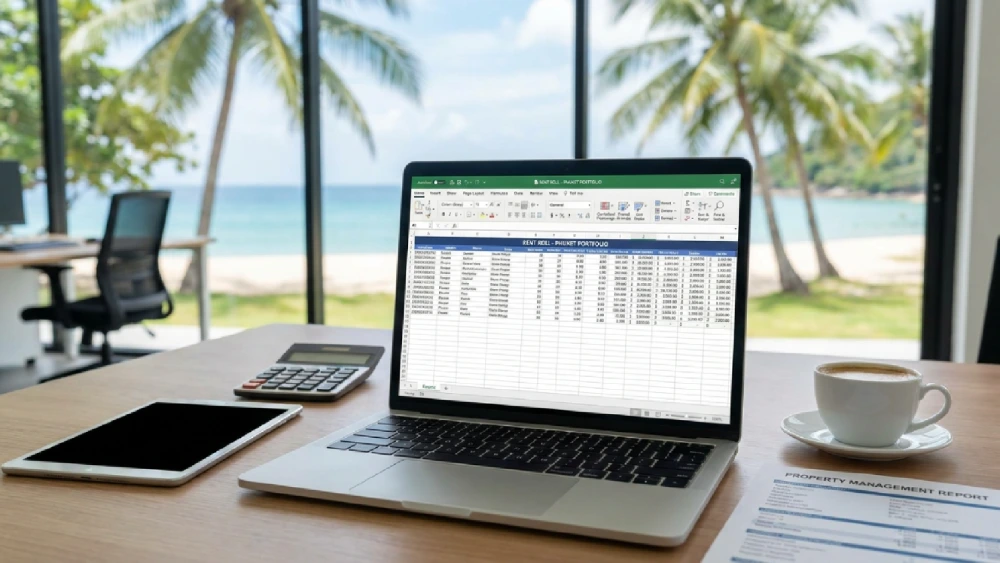
Lease and tenant control depends on accurate dates, payment records, deposits, and occupancy statuses. The rent roll allows managers to plan renewals and turnovers before an expiring agreement creates an avoidable vacancy.
Track Every Lease Date
The rent roll should record the lease start, lease end, move-in date, notice date, and expected move-out date. These fields prevent the manager from discovering an expiring tenancy after the tenant has already decided to leave.
Several leases may end during the same month. Without a combined view, the manager may face several vacancies, inspections, repairs, and listings at once.
The rent roll should trigger:
- Renewal discussion
- Updated tenant information
- Property inspection
- Rent review
- Notice confirmation
- Cleaning preparation
- Repair scheduling
- Marketing preparation
- Deposit reconciliation
Build a Renewal Action Sequence
A renewal is not complete when the tenant says they intend to stay. The manager needs a signed extension, confirmed rent amount, updated dates, and a revised rent-roll entry.
| Renewal stage | Rent-roll status | Required action |
| Lease approaching expiry | Review required | Check tenant and owner intention |
| Renewal offered | Awaiting response | Record proposed rent and deadline |
| Tenant accepts | Documentation pending | Prepare extension |
| Extension signed | Renewed | Update dates and rent |
| Tenant declines | Notice to leave | Plan turnover and marketing |
| No response | Follow-up required | Contact tenant and document attempts |
| Property withdrawal | Owner use or unavailable | Remove from rental forecast |
The manager should not report the tenancy as renewed until the signed records support the new dates and terms.
Reduce Surprise Vacancy
An accurate rent roll shows occupied, vacant, reserved, notice-given, and move-out statuses. These distinctions help the manager understand which units currently earn income and which ones need action.
A vacant unit may require:
- Condition inspection
- Repair approval
- Cleaning
- Photography
- Listing preparation
- Rent review
- Viewing access
- Security checks
House rental management in Phuket should connect lease status, inspections, repairs, utilities, tenant communication, and owner reporting. The rent roll provides the tenancy timeline that activates those duties.
Manage Deposits and Move-Outs
The rent roll may show the deposit amount, but the final settlement requires supporting evidence. The manager should compare the deposit record with the lease, inspection report, outstanding rent, approved deductions, and payment history.
A move-out should update:
- Actual departure date
- Final rent balance
- Utility balance
- Inspection status
- Approved damage deduction
- Deposit return
- Cleaning requirement
- Repair requirement
- Ready-to-market date
The tenant should not remain marked as occupied after access has been returned. A false occupancy status distorts income forecasts and vacancy reporting.
Use Different Records for Different Rentals
A traditional rent roll is built around tenants, leases, monthly rent, and deposits. Short-term rentals are organized around booking dates, nightly rates, guest records, platform deductions, cleaning charges, and payouts.
The Phuket short-term rental reporting metrics provide the closest short-term equivalent. They connect occupied nights, booking revenue, pricing, expenses, maintenance, and owner payouts.
Airbnb management for vacation rentals in Phuket should maintain:
- Booking dates
- Nightly rate
- Gross booking value
- Platform fee
- Cleaning charge
- Guest payment status
- Owner-blocked dates
- Cancellation status
- Maintenance closure dates
- Net payout
The Phuket Airbnb rental management controls should also connect guest records, owner approvals, property readiness, income, and expenses.
Connect Arrivals with Occupancy Records
For vacation rentals, occupancy is not complete when the booking is confirmed. The property must be ready, accessible, and supported at the actual arrival time.
A 24-hour check-in service for villas in Phuket should receive the confirmed booking dates, guest details, arrival time, payment status, and access information from the same rental record.
The rent or booking roll should show when the property is:
- Booked
- Awaiting payment
- Ready for arrival
- Occupied
- Awaiting turnover
- Blocked for repairs
- Reserved for the owner
This prevents booking availability from becoming disconnected from physical property readiness.
Rent Roll in Phuket: Strategic Planning
Historical and current rent-roll data allows managers to compare rent levels, forecast income, identify lease concentration, evaluate vacancy exposure, and explain property performance. The report supports decisions but should not replace lease checks or market evidence.
Compare Contract Rent with Market Rent
Similar units may produce different rent because of lease age, condition, furnishings, location, tenant history, or negotiated terms. The rent roll highlights the difference but does not explain it automatically.
The manager should compare:
- Contract rent
- Market evidence
- Last rent review
- Lease renewal date
- Property condition
- Included utilities
- Furnishing level
- Approved concessions
- Vacancy risk
A below-market rent may justify review at renewal, but an immediate increase may not be permitted or commercially sensible. The lease terms, local requirements, tenant reliability, and likely vacancy period must be considered.
Identify Occupancy That Hides Weak Income
High occupancy can look positive while poor collection reduces actual performance. A property may be fully occupied but carry significant arrears or long-standing concessions.
The manager should compare four figures:
- Gross potential rent
- Contracted rent
- Collected rent
- Net owner income
The difference between these figures reveals vacancy loss, concessions, arrears, and operating expenses. Occupancy alone cannot show whether the rental operation is financially healthy.
Forecast Lease and Income Risk
A current rent roll provides a snapshot. Historical rent rolls show whether collection, occupancy, and rent levels are improving or declining.
The manager can identify:
- Seasonal vacancies
- Recurring arrears
- Several leases ending together
- Units with repeated turnover
- Rent levels falling behind the market
- Growing concessions
- Increasing vacancy duration
- Income concentration in one tenant or property
This information supports realistic budgeting. Forecasts should still allow for repairs, vacancies, market changes, tenant decisions, and collection risk.
Verify the Rent Roll Before Valuation
Owners, investors, buyers, and lenders may request a rent roll when assessing rental income. The report should not be treated as proof by itself.
The manager should reconcile it with:
- Signed leases
- Tenant ledgers
- Bank deposits
- Receipts
- Occupancy checks
- Current listings
- Deposit records
- Approved concessions
The Phuket management contract income controls should define rent collection, deductions, payment timing, management fees, owner payouts, reporting, and record-handover duties.
Differences between the rent roll and supporting evidence need investigation. A unit shown as occupied may have been vacated, while recorded rent may not match actual deposits.
Support Overseas Owner Decisions
Overseas owners cannot inspect every tenancy file or visit each property regularly. They need one clear view of occupancy, lease dates, rental income, arrears, and upcoming decisions.
The overseas villa owner reporting controls should connect rent or booking records with invoices, maintenance, expenses, owner approvals, and property-condition evidence.
The manager should explain:
- What rent was expected
- What was collected
- Which amounts remain overdue
- Which leases are ending
- Which units are vacant
- Which expenses affected the payout
- Which decisions require owner approval
Missing receipts, vague income totals, and incomplete occupancy data are common remote Phuket villa financial risks.
Adapt the Rent Roll to Property Type
One rent roll may cover villas, condominiums, apartments, and houses when every record uses consistent fields. The report should still identify the property type and any charges that require separate treatment.
Villa rental management in Phuket may involve long-term rent, holiday bookings, owner-use dates, private pools, gardens, and extensive operating costs.
Condo rental property management in Phuket may need to separate private-unit income from building fees, common-area charges, and juristic requirements.
The Phuket condo management service inclusions help distinguish rental income, CAM charges, repairs, owner statements, and private-unit expenses.
A commercial rent roll may require further fields for:
- Base rent
- CAM charges
- Service charges
- Parking
- Storage
- Tax recovery
- Insurance recovery
- Escalation dates
- Rent-free periods
- Charge codes
Control Rent-Roll Access
A rent roll contains personal and financial information. Editing rights should be limited to authorized staff, and every important change should be traceable.
The management system should record:
- Who made the change
- When it was made
- Previous value
- New value
- Supporting document
- Approval where required
Staff should not overwrite lease dates, balances, concessions, or occupancy statuses without evidence. Former employees should lose access promptly.
Rent Roll in Phuket: Areas Covered

Rent-roll control can support villas, condos, houses, apartments, and short-term rentals across Phuket. Island-wide reporting still depends on local teams verifying occupancy, inspections, cleaning, maintenance, guest arrivals, and property condition.
Coverage includes:
- Bang Tao
- Patong
- Surin
- Kamala
- Rawai
- Nai Harn
- Mai Khao
- Ya Nui
- Friendship Beach
- Chalong
- Saiyuan
- Laguna Phuket
- Kata
- Karon
- Kathu
- Thalang
- Cherng Talay or Choeng Thale
- Surrounding Phuket areas
Available across Bang Tao, Rawai, Nai Harn, Kamala, Surin, Patong, Chalong, Kata, Karon, Mai Khao, Laguna, Kathu, Thalang, Cherng Talay, and surrounding areas in Phuket.
Rent Roll in Phuket: Build Reliable Records
A rent roll is useful only when its figures match the leases, tenant ledgers, occupancy records, and actual collections. Choose property rental management services in Phuket that track arrears, renewal dates, vacancies, and owner income through verified records. The next management decision should come from evidence rather than an outdated spreadsheet.
Rent Roll FAQs for Phuket Managers
Can one rent roll cover several Phuket properties?
A rent roll for Phuket properties can cover several villas, condos, apartments, or houses when every entry follows consistent fields. Each row should identify the property, unit, occupant, lease dates, contract rent, payment status, deposit, and occupancy. Different property types may require extra fields, but their rental position can still appear in one controlled portfolio report.
How often should a Phuket rent roll be updated?
A rent roll for Phuket property management should be updated whenever a payment, lease, renewal, move-in, move-out, concession, or occupancy change occurs. Managers should also review the complete report at a fixed interval before issuing owner statements. An update date is essential because an accurate report from last month may no longer reflect the current rental position.
Should security deposits appear on a rent roll?
A rent roll used by a Phuket property manager may include the security deposit amount and status, but the full deposit transaction history should remain in the tenant ledger or accounting record. The manager should verify the amount against the lease, receipt, deductions, and final settlement. A deposit figure without supporting records should not be treated as confirmed.
Can a rent roll prove rental income?
A rent roll for a Phuket rental property supports income reporting, but it should not be used as the only proof. Contract rent must be checked against signed leases, while collected rent should agree with tenant ledgers, receipts, and bank records. Occupancy should also match inspections, access records, and current listings before the figures are relied upon.
What happens when a rent roll differs from bank deposits?
When a Phuket rent roll shows more collected rent than the bank records support, the manager should stop and reconcile the difference. Possible causes include deposits in transit, incorrect payment allocation, cash handling, duplicate entries, unrecorded refunds, or inaccurate reporting. Every difference should be explained and supported before the owner statement is finalized.
Can a rent roll track Airbnb and holiday rentals?
A traditional rent roll for Phuket property management is designed around monthly tenants and leases. Airbnb and holiday rentals need a booking-based version showing occupied dates, nightly rates, platform fees, cancellations, cleaning charges, owner blocks, and payouts. The purpose remains similar: one record should explain occupancy, income, and availability across the rental portfolio.
Who should be allowed to edit a rent roll?
A rent roll used by a Phuket property manager should only be edited by authorized staff responsible for leasing, payments, or reporting. Important changes should retain an audit history showing the user, date, previous value, new value, and supporting document. Owners may receive viewing access without being able to alter controlled financial or tenancy records.