Phuket condos face problems faster than many owners expect. Humidity, salt air, monsoon rain, AC pressure, and shared building systems make small faults expensive. A serious maintenance plan catches these risks early and protects rental income, guest comfort, and long-term property value. Small checks stop big Phuket repair bills. This guide shows where owners lose money first. It also shows how proper inspection links AC, leaks, mold, salt corrosion, jurisdictional rules, and owner reporting into one practical system.
Owner Tip: Keep small condo issues from becoming costly repairs with professional condo maintenance checks for Phuket properties.
Why Condo Maintenance Checks Matter in Phuket?
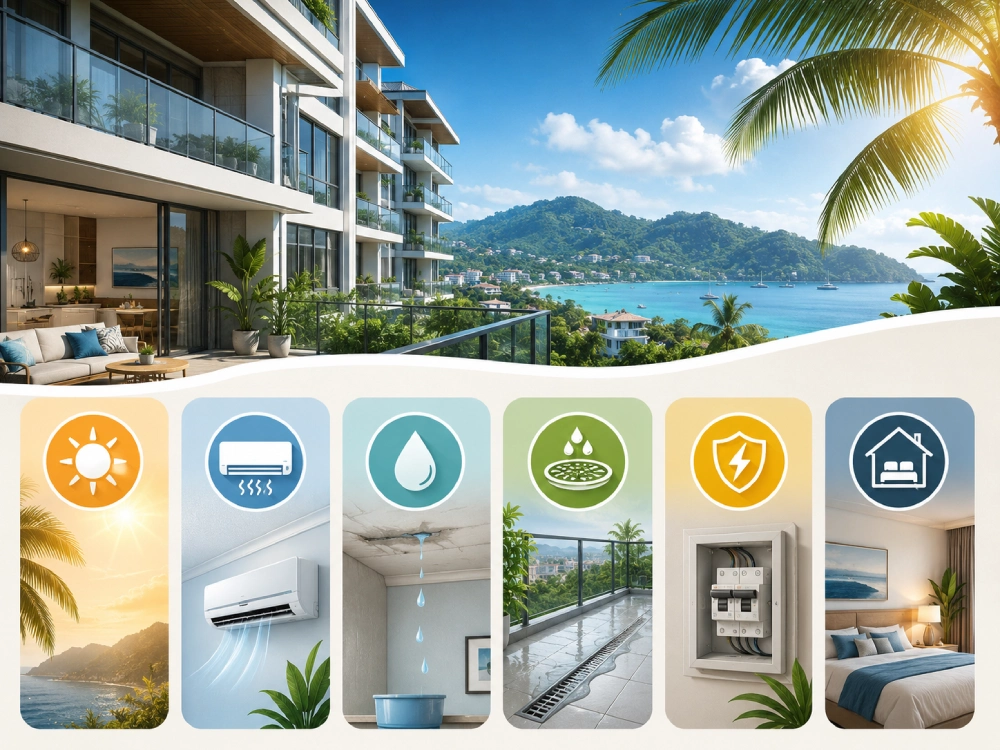
This is the core reason owners should care. Phuket condos do not fail from one single problem. They fail when climate, shared plumbing, poor reporting, and delayed repairs meet at the same time.
Condo maintenance checks matter because Phuket is hot, wet, salty, and rental-driven. A small AC leak, blocked balcony drain, rusty railing, or damp smell can quickly become a guest complaint or repair dispute. Owners who use structured property management services get clearer reporting before small issues become expensive.
The most important point is prevention, not panic repair. A condo check should find weak signals before damage spreads. That includes AC drainage, bathroom leaks, balcony water, salt corrosion, mold odor, appliance failure, and building-rule problems.
| Risk Area | What Usually Starts It | What Owners Should Check | Why It Matters |
| AC system | Heat, humidity, clogged drain | Cooling, filter, leak, noise | Protects comfort and reviews |
| Plumbing | Hidden pipe or seal failure | Sink, toilet, heater, ceiling stains | Prevents neighbor damage |
| Mold | Closed rooms and poor airflow | Odor, walls, wardrobes, vents | Protects rental confidence |
| Salt corrosion | Coastal air and moisture | Hinges, rails, locks, AC brackets | Prevents safety and repair issues |
| Balcony drainage | Rain, debris, weak slope | Drains, grout, door tracks | Stops rainwater entry |
| Juristic rules | Shared systems and access control | CAM, permits, contractor rules | Avoids delays and disputes |
Top Reasons Why Maintenance Checks are Essential
This section explains the real owner impact. Maintenance checks are not a luxury service. They protect comfort, income, safety, and asset value in one connected process.
The Top Reasons Why Maintenance Checks are Essential start with Phuket’s climate. Heat makes AC systems work harder, humidity feeds mold, and rain exposes weak seals. Salt air then speeds up corrosion on fittings, balcony rails, locks, hinges, and outdoor AC parts.
The second reason is condo structure. Units sit above, below, and beside other units. A leak from one bathroom, kitchen, balcony, or AC drain can affect another owner’s ceiling, furniture, or electrical system.
The third reason is rental pressure. Guests do not wait calmly when cooling fails, Wi-Fi drops, hot water stops, or a bathroom smells damp. Owners using airbnb management phuket need checks before check-in, not after bad feedback arrives.
Preventing Salt Corrosion and Plumbing Leaks
This is where hidden damage usually begins. Salt corrosion and water leaks often stay invisible until the repair becomes urgent. A proper check turns hidden risk into visible action.
Preventing Salt Corrosion and Catching Plumbing Leaks is one of the most important inspection goals in Phuket condos. Salt air attacks metal surfaces slowly, especially near balconies, windows, locks, railings, screws, hinges, and exposed AC brackets. Owners should look for rust marks, stiff locks, loose rails, swollen fittings, and bubbling paint.
Plumbing leaks need the same attention because water travels downward. A small pipe leak under a sink can damage cabinetry first, then flooring, then the ceiling below. Bathroom seal failure, toilet valve issues, water heater leaks, and AC drain overflow should be checked before rainy season and before high occupancy periods.
This is also useful for owners with mixed property portfolios. Condo checks focus on shared building systems, while villa inspection phuket helps owners compare larger asset risks such as roofs, gardens, pools, drainage, and exterior structures. The principle stays the same: detect moisture and corrosion early.
AC Checks Decide Guest Comfort Fast
This section focuses on the system guests notice first. In Phuket, weak cooling creates immediate frustration. AC checks protect comfort, energy use, and rental reputation.
Air conditioning is one of the most important condo systems in Phuket. Guests expect fast cooling when they arrive from the airport, beach, or street heat. Tenants also expect quiet cooling at night, especially in compact condos where noise travels easily.
A proper AC check should include filter cleaning, drain-line clearing, cooling-speed testing, leak checks, remote-control testing, and noise inspection. A blocked condensate drain can push water back into the room and create wall stains. Dirty filters can reduce airflow and increase damp odor inside the unit.
Owners should also check outdoor compressor areas. Salt air, poor drainage, and heat can affect brackets, coils, and vibration points. AC checks should be part of every high-season preparation, checkout inspection, and scheduled property management services report.
Mold Smells Warn Owners Before Damage
This section explains why odor is a serious signal. A damp smell is not just a cleaning issue. In Phuket, it often points to trapped moisture, poor ventilation, or hidden leaks.
Mold and damp smells are common in closed tropical units. Many overseas owners leave condos locked during low season. Without airflow, soft furnishings, wardrobes, curtains, mattresses, and bathroom corners can absorb moisture.
The warning signs are simple but important. Owners should watch for musty odor, black spots near ceilings, swollen cabinet panels, damp wardrobe backs, stained walls, and AC-related condensation. These signs should trigger inspection before repainting or perfume-based cleaning is used.
Mold also affects booking confidence. A guest may forgive a small scratch, but they rarely ignore a damp smell in the bedroom. For deeper operational context, owners can read this maintenance issue prevention in Phuket rentals guide.
Balcony Drains Fail Hard in Rainy Season

This section focuses on rain entry points. Balcony problems often look small during dry weather. During monsoon rain, blocked drains and weak seals can quickly become indoor water damage.
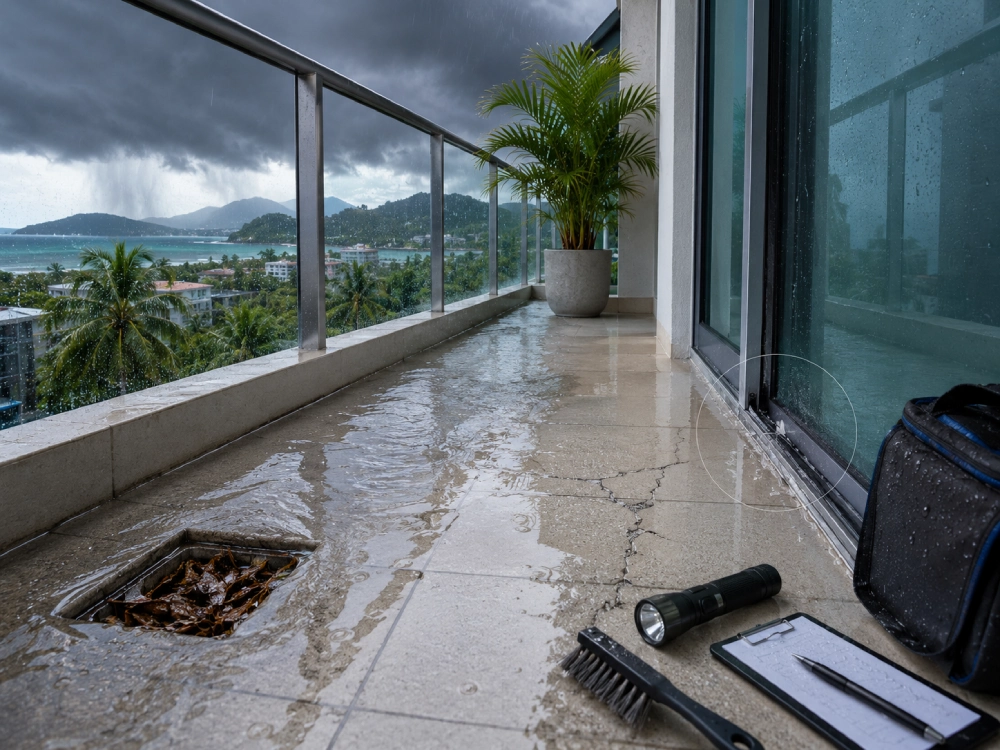
Phuket rainy-season checks should always include balcony drains. Leaves, dust, sand, and small debris can block narrow outlets. When heavy rain hits quickly, water can pool and move under sliding door tracks.
Balcony checks should include drain clearing, tile grout inspection, railing rust checks, sliding door seal checks, and floor-slope observation. Cracked grout can allow water to sit below tiles. Rust around railing anchors can become both a safety issue and a building appearance issue.
This is where prevention is cheaper than reaction. A small drain issue can damage flooring, curtains, walls, and neighboring units. Owners who want a wider operational view can compare this with a Phuket property care operation process.
Juristic Rules Shape Every Condo Repair
This section connects private maintenance with building control. A condo owner cannot treat repairs like a detached house. Juristic rules affect access, timing, permits, and common systems.
Every Phuket condo has building rules that affect maintenance work. The juristic office may control contractor access, parking, elevator use, work hours, waste disposal, key cards, and renovation permission. Owners who ignore these rules can face delays or disputes.
This matters when repairs involve plumbing, AC replacement, drilling, electrical work, balcony work, or any job that affects shared areas. A contractor may need approval before entering the building. The juristic manager may also need notice if water, electricity, or common areas are affected.
For condo owners, Condo Management should connect private unit care with building procedures. It should also track CAM fee records, access rules, repair permissions, and communication with the Condominium Juristic Person. For basic background, see this property management introduction.
How Owners Manage Phuket Properties Remotely?
This section explains remote owner control. Overseas owners need more than repair contacts. They need visibility, proof, timing, and local decision support.
How Owners Manage Phuket Properties depends on routine inspection and clear reporting. A remote owner cannot smell dampness, hear AC noise, see balcony pooling, or check a slow shower drain. Local checks close that visibility gap.
A strong remote system should include photo reports, issue notes, urgency level, repair options, contractor coordination, and owner approval. This helps owners decide quickly without guessing. It also prevents small problems from staying hidden until the next guest, tenant, or owner visit.
Owners should link maintenance checks with rent strategy, guest care, and asset protection. For villa owners, the remote villa oversight workflow explains the same control problem in a larger property setting. For condo owners, condominium care updates in Phuket gives a closer fit.
Rental Turnovers Need a System Check
This section covers rental-ready inspections. Every checkout creates a chance to catch damage. Every check-in creates pressure to make the unit work perfectly.
A Phuket rental condo should be checked between guests. The most important items are AC cooling, hot water, bathroom drainage, Wi-Fi, smart lock, key card, fridge, washing machine, cooktop, linens, and odor. These are the items guests notice immediately.
Turnover checks should also record damage. Scratches, broken items, stained fabric, missing utensils, weak door locks, and damp linen storage should be documented. This protects the owner during platform disputes and deposit discussions.
Rental operations are connected. Pricing brings bookings, but maintenance protects the stay. Owners can connect checks with guest arrival coordination in Phuket, guest messaging structure in Phuket stays, and occupancy stability in Phuket rentals.
Maintenance Records Stop Costly Disputes
This section explains why proof matters. A repair without a record is hard to defend later. Good documentation protects owners, tenants, guests, and managers.
Maintenance records should include photos, dates, repair notes, invoices, warranty details, and before-and-after proof. This makes it easier to track repeat problems. It also helps owners identify whether the issue is climate-related, tenant-caused, contractor-related, or building-related.
Records matter during tenant move-in and move-out. They show whether stains, leaks, scratches, broken appliances, or missing items were already present. They also help avoid emotional disputes because the timeline is clear.
Good records also help resale confidence. Buyers trust a condo more when AC service, leak repairs, appliance replacement, balcony maintenance, and juristic communication are organized. For wider owner strategy, remote villa security concerns in Phuket shows why proof and oversight matter when owners are away.
Step-by-Step Phuket Condo Check Plan
This section turns the idea into action. Owners need a repeatable checklist, not random visits. The goal is to inspect the highest-risk points first.
Step 1: Start with smell, airflow, and moisture. Check the entrance, bedroom, bathroom, wardrobes, curtains, and AC vents. A musty smell should be treated as a warning sign, not just a cleaning issue.
Step 2: Test water and drainage. Run sinks, shower, toilet flush, bidet spray, kitchen drain, and water heater. Look below cabinets and near walls for stains, swelling, or hidden pooling.
Step 3: Test cooling, power, and appliances. Run AC long enough to confirm cooling and leaks. Check sockets, breakers, hot water, fridge, washing machine, Wi-Fi, TV, stove, smart lock, and key card.
Step 4: Inspect the balcony and exterior opening points. Clear drains, check door tracks, look for rust, inspect grout, and watch for weak seals. This step becomes more important before and during rainy season.
Step 5: Report everything clearly. Use photos, urgency labels, repair recommendations, and owner approval notes. For owners who need a practical route, property management services should turn inspections into organized action.
Common Mistakes That Create Big Bills
This section removes the most expensive habits. Most condo problems become costly because owners wait too long. The mistake is usually delay, not lack of knowledge.
The first mistake is waiting for guest complaints. By the time guests mention AC failure, damp smell, hot water problems, or Wi-Fi dropout, the stay is already affected. The better approach is to check before the guest enters.
The second mistake is closing the condo for months without airflow. This can trap humidity inside fabrics, wardrobes, bathrooms, and walls. Owners should use scheduled ventilation, humidity control, and photo checks during vacant periods.
The third mistake is using unverified repair workers. Cheap repairs can create repeat leaks, poor wiring, damaged finishes, and warranty problems. Owners with houses as well as condos can also review Houses for Management to keep maintenance standards consistent across different property types.
Final Guidance for Phuket Condo Owners
This section gives the practical conclusion. Condo maintenance checks protect money because they protect systems. In Phuket, the best owner is the one who finds problems early.
The strongest maintenance plan checks AC, plumbing, balcony drainage, mold, salt corrosion, appliances, electrical points, juristic rules, and documentation. These are the areas most likely to affect comfort, rental value, safety, and repair cost. They are also the areas where early action works best.
Owners should not treat maintenance as a once-a-year task. Short-term rental condos need checks around guest turnover, while long-term rentals need scheduled inspections with tenant notice. Vacant units need airflow, moisture control, and periodic reporting.
Maintenance also supports revenue. Good inspection habits protect reviews, reduce refunds, and keep the unit rental-ready. For rental strategy, connect maintenance with listing visibility planning for Phuket rentals and seasonal villa revenue logic in Phuket.
Frequently Asked Questions
Why does a closed Phuket condo smell damp?
A closed condo traps humid air inside rooms, wardrobes, bathrooms, and soft furnishings. Without airflow, moisture can collect behind furniture and inside fabrics. The smell often points to poor ventilation, hidden moisture, or early mold growth.
How often should a Phuket condo be checked?
Short-term rental condos should be checked around every guest turnover. Long-term rental condos should usually receive scheduled inspections every few months with proper notice. Vacant overseas-owned condos need routine checks because problems can grow silently.
What is the first sign of a plumbing leak?
The first sign is often not running water on the floor. It can be bubbling paint, swollen cabinet panels, ceiling stains, damp odor, or slow drainage. Owners should inspect bathrooms, kitchen sinks, water heaters, and AC drain areas first.
Do condo owners need juristic office approval?
Many repairs need coordination with the juristic office. This is especially true for contractor access, noisy work, AC replacement, plumbing work, waste removal, and shared-system issues. Approval avoids delays, complaints, and building-rule problems.
Can poor maintenance reduce rental income?
Yes, poor maintenance can reduce rental income through guest complaints, lower confidence, refunds, bad reviews, and downtime. AC failure, mold odor, Wi-Fi problems, hot water failure, and drainage issues hurt the stay experience fast. Preventive checks help keep the unit bookable.