Can a condo access card be duplicated? Yes, some condominium access cards can technically be copied, but the answer depends on the card’s technology, the building’s security configuration, and its permission rules. Older or basic RFID cards may be easier to duplicate, while encrypted credentials may require authorised reissuing through building management.
In Phuket, making an unauthorised copy can create security problems, violate condominium regulations, and complicate tenant move-out procedures.
Pearl Property Management Company helps owners and rental managers coordinate access-card records, guest registration, key handovers, replacement requests, and communication with condominium juristic offices so building entry remains properly controlled.
Quick Check: Before copying or replacing a Phuket condo access card, confirm the authorised procedure, resident registration, and building restrictions through Pearl Property Management Company’s local property-management verification support.
Can a Condo Access Card Be Duplicated? Key Facts
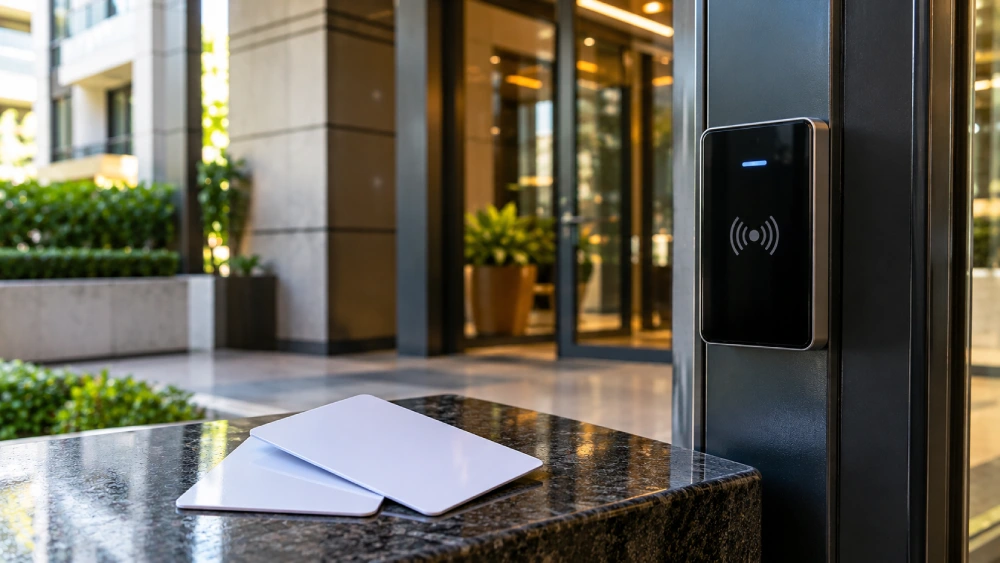
Some condo access cards are technically duplicable, but that does not mean residents have permission to copy them.
Condominium access systems use different credential technologies. Some rely on basic RFID identifiers, while others use encrypted authentication or building-controlled registration.
An access card may operate the lobby entrance, lifts, parking barriers, shared facilities, or selected floors. Copying the physical credential does not necessarily create valid access to every area.
Even when a copy works, it may conflict with the building’s security rules or access-card registration requirements.
Condo Access Card Comparison
| Card Type | Duplication Consideration | Appropriate Action |
| Basic proximity card | Some older systems are technically copyable | Request an authorised additional card |
| RFID card | Depends on technology and security configuration | Confirm requirements with the juristic office |
| Encrypted smart card | May resist ordinary copying | Use building-approved issuance |
| Registered key fob | Controlled by building access records | Request registration or replacement |
| Lift access card | Permissions may be linked to specific floors | Confirm approved access rights |
| Parking access credential | May use a separate vehicle-registration system | Contact building security |
| Mobile access credential | Usually depends on system administration | Request an authorised digital credential |
| Lost or damaged card | Security record may need updating | Report, deactivate, and replace |
The technical distinction matters because access systems vary considerably. Simple credentials may rely on identifiers, while stronger systems use cryptographic authentication to reduce unauthorised copying.
For Phuket property owners, Pearl Property Management Company can coordinate condominium guest-access controls by helping document authorised credentials, resident changes, and communication with building administrators.
Why Condo Access Cards Are Controlled?
Access cards protect residents, visitors, private units, and common facilities.
A building may restrict entry to residents, approved guests, maintenance contractors, cleaning staff, or registered vehicles.
Without proper access controls, cards can circulate beyond the people authorised to use them.
For example, a former tenant could retain a working credential after moving out if the card is never returned or deactivated.
A visitor may also receive a copied credential without being recorded through the building’s registration process.
The condominium access restrictions and resident obligations explain why entry permissions need to follow the property’s governing rules.
Pearl Property Management Company helps private owners coordinate access requirements with the condominium office rather than treating entry cards as ordinary household keys.
Is Duplicating A Condo Access Card Allowed?
Technical possibility and permission are separate questions.
The fact that a locksmith or electronic device can reproduce a card does not establish that duplication is authorised.
A condominium may prohibit copying, require written approval, or allow residents to request additional credentials only through the juristic office.
Building regulations may also limit how many active cards can be assigned to a unit.
Before requesting another card, residents should check the property’s access policy.
Questions To Ask Building Management
- Are residents allowed to request additional cards?
- Must the unit owner authorise the request?
- Does the building issue cards directly?
- Are additional cards limited by unit size or occupancy?
- Does each credential need individual registration?
- Is there an approved replacement fee?
- Can a tenant receive another card without the owner present?
- What happens if a card is lost or not returned?
A real condominium may have separate limits for building entry, lift access, vehicle barriers, and additional users.
The private-unit management and building-office authority boundaries help clarify why a unit manager cannot independently override building access rules.
The safest approach is to request permission first and obtain a credential through the authorised channel.
Who Can Authorise An Additional Access Card?
Access-card issuance is generally administered according to the condominium’s registered rules and security procedures.
The condominium juristic person or designated building office may control registration, activation, replacement, and deactivation.
The private unit owner may need to verify the occupant’s identity or approve an additional credential request.
For rented units, a tenant should contact the landlord or authorised property manager before asking for a replacement or extra card.
The tenant identity confirmation and building liaison process is relevant when several parties are involved in a resident’s access request.
Pearl Property Management Company can help owners submit accurate requests and maintain a record of approved credentials.
Final access authority remains with the condominium’s designated administrators.
How RFID Technology Affects Duplication?
RFID access cards do not all use the same security system.
Some older proximity credentials transmit a fixed identifier that a compatible reader recognises.
Other credentials use more complex authentication, including encrypted communication between the card and reader.
Consequently, two cards that look identical may have very different security properties.
Card frequency alone also does not determine whether a credential can be copied. The card type, encryption, reader configuration, and building access controller all matter.
For residents, detailed copying methods are unnecessary.
The practical requirement is to identify the approved replacement or issuance process.
Security Differences Between Access Systems
| System Characteristic | Operational Implication |
| Fixed identifier | May provide limited protection against unauthorised copies |
| Encrypted authentication | Can provide stronger protection against copying |
| Central registration | Building can maintain a list of approved credentials |
| Individually assigned permissions | Different residents may receive different access rights |
| Deactivation function | Lost or unreturned credentials can be disabled |
| Access logs | May help authorised staff investigate security incidents |
| Temporary visitor access | Can limit the duration or purpose of entry |
Pearl Property Management Company can help owners understand the building’s card administration process without attempting to bypass its access controls.
Can Condo Tenants Request Extra Cards?
Tenants may need additional access cards when several approved occupants share one unit.
Families, couples, and other authorised residents may have legitimate reasons for requesting individual credentials.
However, the number of permitted cards depends on the building’s rules and registration procedures.
A tenant should not assume that an extra card can be obtained from an outside copying service.
Instead, the landlord or appointed manager should verify the request and obtain the building’s instructions.
The rental occupant registration and access administration checklist explains why resident information and building requirements need to remain consistent.
Pearl Property Management Company helps owners coordinate tenant enquiries and access documentation within the agreed management scope.
What If A Condo Access Card Is Lost?
A lost access card should be reported promptly.
Even if the resident believes the card was misplaced inside the property, another person could potentially find it and attempt to use it.
Building management should be informed so it can determine whether the credential needs to be disabled or replaced.
The relevant process depends on whether the card is individually registered and whether the building’s system supports deactivation.
Lost Card Response Checklist
- Notify the landlord or authorised property manager.
- Report the missing credential to the condominium office.
- Confirm which doors, lifts, or facilities the card could access.
- Request deactivation where supported by the system.
- Ask about authorised replacement arrangements.
- Record any replacement charge or deposit.
- Register the new credential to the correct occupant.
- Update the unit’s access-card inventory.
A missing card may require a different response from a physically damaged card that remains in the resident’s possession.
The property security incident reporting sequence offers related context for recording and escalating urgent building-access concerns.
Pearl Property Management Company can help owners communicate incidents to the responsible administrators.
Why Access Cards Matter During Tenant Move-Out?
Tenant move-out is one of the most important times to review building access.
When a rental agreement ends, the landlord should confirm that all issued keys, cards, fobs, parking credentials, and other access items have been returned or appropriately deactivated.
Without that check, former occupants may retain entry permissions.
The risk becomes more complicated when an unauthorised duplicate exists because an inventory of physical cards may not reveal every working credential.
The access-card reconciliation at tenancy handover provides a useful approach for tracking cards alongside keys, furniture, appliances, and meter readings.
Access Inventory Example
| Record | Information To Maintain |
| Credential type | Card, fob, parking tag, physical key |
| Identifier | Building-approved reference where available |
| Assigned occupant | Registered user |
| Issue date | Date given to resident |
| Access permissions | Lobby, lift, parking, facilities |
| Replacement status | Active, lost, damaged, or replaced |
| Return date | Collected at departure |
| Deactivation confirmation | Confirmed by authorised building office |
Pearl Property Management Company can coordinate these private-unit records and request confirmation from building management.
Can A Copied Card Create Security Problems?
Yes. An unauthorised copy may weaken the building’s ability to control who can enter.
In some systems, a duplicate may use the same credential identity as the original.
If both are accepted as the same credential, building records may not reliably establish which physical card was used.
That can complicate incident investigations, tenant departures, and access reviews.
The rental property entry-risk prevention measures provide related context for maintaining controlled access and documenting security concerns.
Owners should discourage unauthorised copying and ensure occupants understand the official procedure for obtaining extra cards.
Where a building suspects uncontrolled duplicates, access-system administrators may need to review credential registration and deactivation procedures.
Condo Access Card Replacement Costs
Replacement charges vary between buildings.
The cost may depend on the credential type, building administration, programming, registration, and whether the original card was lost or damaged.
An encrypted or individually programmed credential may involve different procedures from a basic proximity card.
Owners and tenants should request the actual building fee schedule rather than rely on general estimates.
The tenancy agreement should also explain who pays for lost cards and which charges may be deducted from a deposit where legally permitted.
The access-related building expense allocation provides related information about distinguishing regular shared-building expenses from individual administrative charges.
A replacement-card charge should not automatically be confused with monthly condominium maintenance fees.
Building Access And Visitor Parking
Condominium access systems frequently manage more than apartment doors.
A building may use separate credentials for entrances, lifts, parking barriers, gyms, swimming pools, and other shared facilities.
Vehicle entry may require a parking sticker, registered vehicle plate, separate RFID tag, or another authorised method.
A duplicated lobby card may not provide parking access because the permissions can be managed independently.
The resident parking permission and visitor registration procedure explains why parking should be treated as a separate access-control issue.
Pearl Property Management Company can help owners share correct building instructions with residents and authorised guests.
Condo Access Cards And Airbnb Guests
Short-stay occupancy can create additional card-management challenges.
Guests may arrive at different times, leave early, lose cards, or fail to return access credentials.
However, owners must first verify that the intended short-stay activity is lawful and permitted by the condominium’s regulations.
Where rentals are authorised, Pearl Property Management Company can coordinate managed Airbnb booking controls to connect guest records, arrival arrangements, authorised entry procedures, and departure checks.
Access cards should be issued according to the building’s requirements.
A property manager should not create unofficial duplicates to work around registration limits or restricted guest-entry policies.
How Property Managers Handle Access Records?
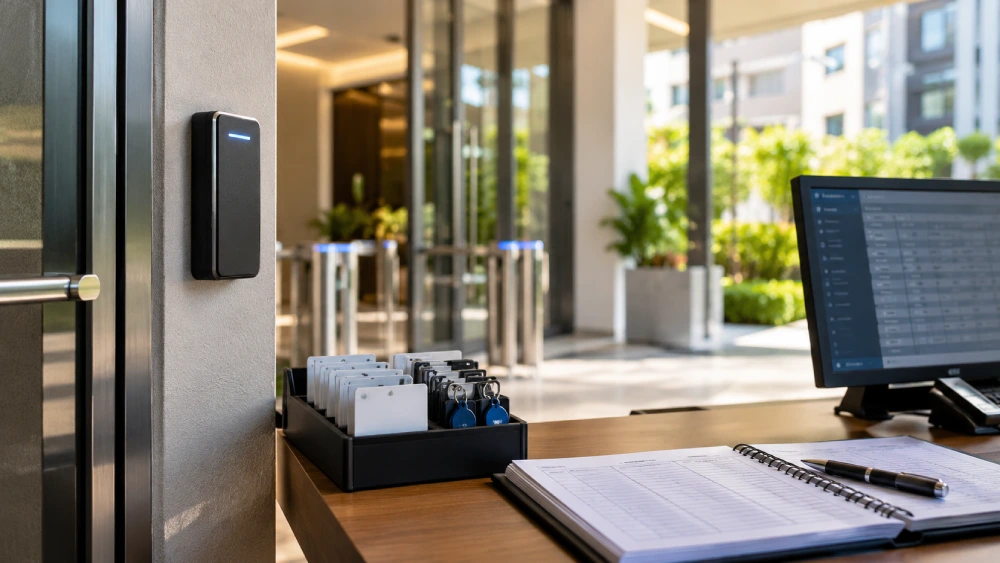
A private property manager may coordinate cards and keys for units under an agreed management contract.
Typical responsibilities can include recording issued credentials, notifying building management about incoming residents, arranging authorised handovers, and confirming card returns.
However, the specific authority of the manager depends on the contract and condominium rules.
The property manager credential custody responsibilities help explain why access items should be controlled through clear procedures.
The management agreement permissions for keys and cards is also relevant when determining who can hold, issue, or request replacements on behalf of an owner.
Pearl Property Management Company can help coordinate these records while respecting the condominium’s control over its access system.
Why Check-In Planning Matters?
An otherwise well-prepared rental can produce guest complaints when the access process is unclear.
A resident may arrive after normal office hours, discover that a card does not open the lift, or find that the building requires additional identification.
These situations are easier to manage when arrival procedures are confirmed before the occupant reaches the property.
Pearl Property Management Company provides tenant key handover and check-in inspection service in Phuket as a relevant way to coordinate access, handover details, and property readiness within the agreed scope.
The arrival plan should establish who issues the credential, who authorises access, and what happens if the office is closed.
A check-in service cannot override building restrictions or guarantee access without the necessary permissions.
Condo Access Systems vs Private Villas
Condominium buildings generally control entry through shared security infrastructure.
Private villas may have different arrangements, including mechanical keys, remote gates, electronic locks, and individually managed access systems.
For villa owners, Pearl Property Management Company supports villa check-in readiness planning to coordinate guest access information, property preparation, and authorised handovers.
Private houses also have different recordkeeping requirements.
The company’s local house management records can help owners monitor access items, occupancy changes, and maintenance-related visits.
The distinction is important because private-property control does not necessarily extend to the shared entrance systems of a condominium.
Are Apartment Access Cards Different?
An apartment building may use the same RFID or smart-card technologies as a condominium.
The main difference is often administrative.
In a conventional single-owner apartment building, access credentials are generally administered by the building landlord or appointed operator.
In a registered condominium, the juristic office may manage common-entry permissions while individual owners manage their tenants.
The single-landlord apartment access administration structure offers a useful comparison.
The card technology should not be assumed from whether a property is advertised as an apartment or condominium.
Residents should ask the appropriate building administrator about additional credentials in either arrangement.
Housekeeping Staff And Building Entry
Housekeeping access should be controlled as carefully as tenant access.
A cleaning team may need entry to an occupied or vacant unit, but that does not justify distributing permanent copies of resident credentials without authorisation.
Property owners should establish approved staff entry arrangements, access times, and credential custody procedures.
Pearl Property Management Company provides common-area cleaning standards as a service keyword relevant to distinguishing cleaning responsibilities; within condominiums, common-area cleaning is normally administered by the juristic person, while Pearl’s housekeeping support can apply to privately managed units.
Access arrangements should therefore follow the specific cleaning assignment and the building’s permission rules.
Cleaning staff should report missing or damaged access items rather than independently requesting duplicates.
Pool And Garden Access Requires Separate Permission
Some condominiums use access cards to control shared swimming pools, gyms, gardens, and recreation areas.
Entry permissions may be limited to residents, registered guests, or specific hours.
The fact that a card opens a common facility does not establish an individual tenant’s authority to issue additional credentials.
Shared pool maintenance is also a separate responsibility from access-card administration.
Pearl Property Management Company provides shared pool maintenance controls as a relevant comparison with private pool-care work; communal condo pool maintenance ordinarily remains with the condominium’s designated management arrangements.
Similarly, shared landscaping maintenance should be distinguished from privately contracted garden maintenance.
These distinctions help owners avoid confusing physical access, common-property management, and independently arranged services.
Can A Condo Access Card Be Duplicated? Area Coverage
Across Bang Tao, Laguna Phuket, Cherng Talay or Choeng Thale, Surin, and Kamala, condominium residents should confirm whether additional access cards must be issued through the juristic office or another authorised building administrator. Developments may use different arrangements for entrance doors, lifts, parking areas, and shared facilities. The appearance of a card does not establish whether duplication is technically possible or permitted, so owners and tenants should follow the building’s registered access procedures.
In Patong, Kata, Karon, Chalong, and Kathu, rental properties can involve multiple occupants, visitor requests, contractor access, and changing tenancy arrangements. Reliable entry management requires accurate resident records, authorised card issuance, and confirmation when credentials are lost or returned. Landlords should clarify card limits, replacement charges, and visitor registration before occupancy, particularly where a building has separate permissions for lifts and vehicle barriers.
For properties in Rawai, Nai Harn, Ya Nui, Friendship Beach, and Saiyuan, access-card administration should be included in move-in and move-out inspections, tenant handovers, and property security reviews. Long-term rentals need clear records of assigned cards, while permitted short-stay arrangements may require more frequent credential checks. Owners should also confirm who can request new cards and whether the building supports deactivation of missing or unreturned credentials.
Pearl Property Management Company’s coverage also extends to Mai Khao, Thalang, and surrounding Phuket areas. Its property operations can help owners coordinate authorised guest check-ins, tenant registration, card inventory records, handover inspections, and communication with condominium management. The correct procedure should follow credential technology, building permissions, resident identity, access rights, replacement policies, security records, and tenancy status, rather than assuming every condo card can be copied or used interchangeably.
Final Advice On Condo Access Card Duplication
Can a condo access card be duplicated? Some cards can be copied technically, but residents should never assume duplication is authorised. The correct decision depends on the credential technology, building security configuration, and condominium regulations.
Before obtaining another card, confirm the authorised issuance procedure and whether the building requires owner approval, registration, or replacement charges.
Pearl Property Management Company can support owners through local property-management verification support, including access records, tenant coordination, authorised key handovers, and communication with building administrators. Following the proper process helps protect residents, keep entry records accurate, and prevent complications when occupants change.
FAQs
Can a Condo Access Card Be Duplicated in Phuket?
Some Phuket condo access cards can technically be duplicated, depending on the card type and security system. However, condominium regulations may prohibit copying or require additional cards to be issued through the juristic office. Residents should confirm building permission and request an authorised credential rather than assume a working copy is acceptable.
Is It Legal To Copy A Condo Access Card?
There is no single answer that applies to every card and situation. Permission, ownership, applicable law, and condominium rules all matter. An unauthorised duplicate used to enter restricted property can create serious legal and security problems. Residents should obtain building approval and independent legal guidance if the rules or their rights are disputed.
Can RFID Condo Access Cards Be Copied?
Some basic RFID credentials are technically copyable, while encrypted credentials and systems using stronger authentication may resist ordinary copying. Frequency alone does not determine the answer. The appropriate way to obtain an additional credential is through the building’s authorised card-issuance process.
Can A Tenant Request Another Condo Key Card?
A tenant may be able to request another card, subject to building rules, occupancy limits, owner permission, and registration requirements. Some buildings limit credentials by unit size or authorised occupant count. The landlord or property manager should confirm the procedure with the juristic office.
What Happens If I Lose My Condo Access Card?
Report the loss to the condominium office and landlord or property manager. Building administrators can explain whether the old card can be deactivated and how a replacement is issued. Replacement charges and identification requirements vary by building, so the official procedure should be confirmed.
Can A Building Deactivate A Duplicated Card?
That depends on the access-control system. Some systems allow individual credentials to be disabled. If an unauthorised copy shares the same credential identity as the original, revoking that identity may also disable the original card. Building administrators should evaluate the system rather than assume every copy can be individually identified or removed.
Can My Condo Access Card Open Parking And Pool Areas?
Possibly. Some buildings use one credential for several facilities, while others manage entrance doors, lifts, vehicle barriers, and recreation areas separately. Access permissions depend on the building’s configuration and resident registration. Owners and tenants should confirm exactly which areas their authorised cards can access.
Who Pays For A Replacement Condo Access Card?
Payment responsibility depends on the building’s fee schedule, rental agreement, and reason for replacement. A tenant who loses a card may be responsible for an agreed replacement charge, subject to applicable law. Owners should confirm the actual fee and document any authorised deduction or reimbursement.
Can Airbnb Guests Use Condo Access Cards?
Only where guest occupancy is permitted and the building authorises the relevant access. Condominium rules and applicable accommodation laws must be checked before accepting short-stay bookings. Owners should use registered or otherwise authorised guest credentials rather than unofficial duplicates.
Can Pearl Property Management Company Manage Condo Access Records?
Pearl Property Management Company can help Phuket condo owners coordinate authorised key handovers, tenant registration information, card inventory records, check-in procedures, and communication with condominium administrators within the agreed management scope. The condominium juristic person or designated building office retains control of shared access permissions.