Centralized villa check-in and concierge management in Phuket connects booking confirmation, guest details, property readiness, secure access, local support, concierge requests, and checkout control inside one operating workflow.
Without that connection, guests may arrive before the villa is ready, access instructions may fail, and requests can disappear between booking agents, housekeeping teams, and local vendors. PEARL Phuket Property keeps shared records centrally while local Phuket teams remain responsible for inspections, arrivals, emergencies, and practical guest assistance.
The system should reduce missed handovers without replacing human judgement. That is where reliable guest management begins.
Quick Check: Before confirming guest arrivals, choose a 24-hour villa check-in service in Phuket with verified booking records, property-readiness checks, secure access procedures, and local backup support.
Centralized Villa Check-In and Concierge Management in Phuket: Workflow

A centralized workflow should follow the guest from confirmed booking to final checkout. Each stage needs a named owner, current information, completion evidence, and a local escalation route when bookings, access systems, vendors, or property conditions do not match the record.
Four-Stage Villa Guest Workflow
| Guest stage | Central responsibility | Local responsibility | Required control |
| Pre-arrival | Verify booking, guest details and requests | Check the property and arrival conditions | Complete guest record |
| Arrival | Send directions and access information | Confirm entry or attend when needed | Access log and backup contact |
| Active stay | Record and route guest requests | Deliver support, repairs and local services | Named task owner |
| Checkout | Close access and trigger turnover | Inspect, clean and report defects | Dated checklist and photographs |
| Next arrival | Confirm open tasks are resolved | Recheck readiness | Final readiness approval |
Verify Every Booking Locally
A booking-platform confirmation should not be treated as proof that the local villa team received the reservation. The central record should confirm the property, dates, guest name, payment status, guest count, arrival time, and contact details.
The Phuket short-term rental operating workflow should connect enquiries, booking channels, guest screening, pre-arrival messages, check-in, housekeeping, maintenance, checkout, and owner reporting.
The Phuket Airbnb rental management structure should also ensure that booking updates reach the people preparing and attending the property.
PEARL’s booking and guest coordination system should give the booking team and local villa team the same reservation status. A mismatch should trigger immediate checking before access details are released.
Build One Verified Guest Record
Guest information should not be spread across personal messages, booking-platform inboxes, spreadsheets, and separate vendor conversations.
The central guest record should include:
- Guest names
- Verified contact details
- Number of adults and children
- Arrival and departure times
- Flight or transport information
- Payment status
- Approved occupancy
- Access method
- Early or late check-in request
- Dietary or mobility requirements
- Child equipment requests
- Airport-transfer details
- Concierge bookings
- House rules
- Emergency contacts
- Open property issues
Strong Phuket villa guest-management safeguards should connect identity, arrival instructions, access, deposits, house rules, local assistance, complaints, checkout, and damage records.
The guest should receive one complete arrival message. The local team should see the same information and any later changes.
Confirm the Villa Is Ready
A scheduled clean does not prove that the villa is ready for check-in. Housekeeping may finish its work while an air conditioner, lock, pool pump, water supply, or electrical fixture remains faulty.
PEARL’s villa turnover readiness coordination should connect the final guest count, room setup, linen, amenities, cleaning, missing items, visible damage, and maintenance escalation.
A readiness check should cover:
- Entrance and access
- Keys or access cards
- Electricity and water
- Air-conditioning
- Wi-Fi
- Beds and linen
- Bathrooms
- Kitchen equipment
- Guest supplies
- Pool condition
- Garden condition
- Safety concerns
- Open maintenance
- Photographic evidence
The villa preparation and operating controls should keep readiness checks connected to bookings, inspections, housekeeping, maintenance, and owner instructions.
For pool villas, pool readiness checks before arrival should confirm water condition, cleanliness, visible equipment faults, and any restrictions that may affect guests.
The same rule applies to garden readiness and safety checks. Overgrowth, irrigation faults, storm debris, damaged branches, or pest concerns should be identified before the arrival status changes to ready.
Control Early and Late Arrivals
Early check-in should remain pending until the local team confirms that cleaning, maintenance, and access preparation are complete. A booking agent should not approve it based only on the departure time of the previous guest.
Late-night arrivals require:
- Confirmed arrival time
- Accurate map location
- Clear entrance directions
- Working access method
- Local contact number
- Backup responder
- Transport status
- Escalation instructions
A delayed flight should update the driver, local check-in contact, and any staff waiting at the property. The guest should not have to repeat the change to several departments.
Keep Access Secure With Local Backup
Smart locks and digital codes may reduce physical key handovers, but they do not remove the need for a local response plan.
Access can fail because:
- A code activates at the wrong time
- The booking dates are wrong
- A battery fails
- The code reaches the wrong telephone number
- Internet or mobile coverage is weak
- The guest cannot find the entrance
- A previous code remains active
- The lock or gate is physically damaged
The Phuket villa asset-protection controls should connect guest verification, keys, access cards, codes, deposits, inventories, arrival records, and post-stay inspections.
Every automated access method needs a physical backup and a named local responder. Guests should not be left outside while the booking platform, property team, and support provider argue over responsibility.
Route Every Guest Request
All guest requests should enter one shared history, even when they arrive through WhatsApp, telephone, email, or a booking platform.
Each request needs:
- Property
- Guest
- Request category
- Urgency
- Assigned person
- Time received
- Expected response
- Current status
- Vendor where relevant
- Completion evidence
- Guest confirmation
The Phuket property manager responsibility scope includes guest communication, check-ins, checkouts, deposits, housekeeping, complaints, concierge-style assistance, maintenance, and owner updates.
The good Phuket property manager operating standards should prevent tasks from remaining unassigned or disappearing during a staff shift change.
Separate Emergencies From Routine Requests
Restaurant recommendations should not share the same priority as a lockout, water leak, electrical fault, security concern, or air-conditioning failure.
| Priority | Typical request | Required response |
| Critical | Fire, flooding, unsafe access or security threat | Immediate local escalation |
| Urgent | Lockout, water loss or major AC failure | Rapid assessment and attendance |
| Time-sensitive | Airport transfer or reservation change | Confirm before the deadline |
| Routine | Restaurant advice or additional supplies | Place in normal service queue |
| Planned | Tour, chef or mid-stay service | Confirm availability and price |
The Phuket property emergency response process should define the first responder, backup responder, spending authority, local contractor, owner notification, and incident record.
Fast acknowledgement is not enough. The system should show whether the problem was assessed, assigned, completed, and accepted by the guest.
Connect Checkout to Turnover
Checkout should trigger several connected actions:
- Confirm guest departure
- End guest access at the approved time
- Start the inspection
- Record damage or missing items
- Notify housekeeping
- Escalate maintenance defects
- Review deposits where relevant
- Prepare for the next arrival
The Phuket Airbnb villa management support should connect checkout, cleaning, inspection, repairs, reviews, revenue records, and owner reporting.
The villa should not return to ready status until the local team verifies cleaning and unresolved problems. The next booking team should see any defect that may affect the next guest.
Centralized Villa Check-In and Concierge Management in Phuket: Systems
The technology should create one reliable record for bookings, arrivals, access, tasks, vendors, and owner updates. It should support local teams rather than make staff depend on software that cannot recognise an emergency or inspect a physical property.
Essential Operating Layers
| System layer | Main purpose | Human control still required |
| Reservation record | Dates, guest names, payments and channel data | Verify local booking receipt |
| Guest profile | Arrival details, preferences and requests | Confirm changes and special needs |
| Access control | Codes, keys and access history | Provide physical backup |
| Task routing | Housekeeping, maintenance and concierge work | Prioritise and assign exceptions |
| Vendor record | Availability, prices and past performance | Approve and review providers |
| Communication history | Guest messages, updates and confirmations | Take control of sensitive issues |
| Readiness record | Inspection, photographs and open defects | Physically approve the villa |
| Owner reporting | Incidents, costs, complaints and performance | Explain unusual results |
Maintain One Source of Truth
The purpose of centralization is to stop different teams working from different versions of the guest record.
PEARL’s coordinated property operations in Phuket should connect:
- Bookings
- Guest details
- Arrival times
- Housekeeping
- Access
- Maintenance
- Pool and garden work
- Concierge requests
- Vendors
- Owner approvals
- Incidents
- Checkout results
A change made by the booking team should reach the local villa team. A defect found by housekeeping should reach maintenance and the next arrival record.
Support Different Property Types
A centralized structure can use the same task and reporting standards across several property types. Physical arrival procedures still need to reflect the property.
For condominiums, condominium arrival and access controls may need to include building security, reception registration, access cards, parking, juristic-office rules, lifts, and shared-area restrictions.
For houses, holiday house arrival coordination may focus more on gates, keys, utility status, neighbourhood access, tenant records, gardens, and vacant-property checks.
The system should standardize the record without pretending that a condominium, private villa, and rental house use identical physical procedures.
Protect Guest Information
Centralization creates risk when too many people can view passports, telephone numbers, access codes, travel details, payment status, and property information.
Controls should include:
- Role-based permissions
- Controlled document storage
- Access logs
- Two-factor authentication where available
- Restricted code visibility
- Staff-access reviews
- Immediate access removal after employment ends
- Data-sharing limits for vendors
- Backup procedures
- Incident reporting
Guest information should be shared with a vendor only when the vendor needs it to complete an approved task.
Owners evaluating a provider should use clear Phuket property manager selection criteria covering access control, staff permissions, response coverage, housekeeping, reporting, emergency procedures, and local team strength.
Keep Trained Local Staff in Control
Centralized villa check-in and concierge management in Phuket should not replace the people needed to inspect the villa, attend a lockout, verify a repair, manage a complaint, or help a guest who cannot find the property.
The luxury villa management service inclusions show why check-in, concierge assistance, privacy, housekeeping, staff coordination, maintenance, safety, and owner communication must remain connected.
The beachfront villa management operating workflow may also require local knowledge of coastal maintenance, access, staffing, guest expectations, and property-specific risks.
Central records create visibility. Local people confirm what is actually happening at the villa.
Give Overseas Owners Clear Visibility
Remote owners need more than a message saying that the guest checked in successfully.
Useful overseas-owner villa management controls may include:
- Arrival confirmation
- Property-readiness status
- Check-in problems
- Guest complaints
- Emergency incidents
- Vendor work
- Repair costs
- Damage evidence
- Checkout inspection
- Unresolved issues
- Owner approvals
The owner should see important exceptions without managing every routine guest request.
Track Service Performance
Centralization should make delays and failures easier to identify.
Track:
- Booking mismatches
- Failed access attempts
- Arrival delays
- Unconfirmed early check-ins
- Overdue readiness checks
- Guest-request response time
- Guest-request completion time
- Emergency attendance
- Vendor cancellations
- Repeat complaints
- Unresolved defects
- Late housekeeping handovers
- Checkout inspection delays
A dashboard that hides overdue work is not a control system. PEARL should use exception reporting to show what requires attention, who owns it, and what happens next.
Centralized Villa Check-In and Concierge Management in Phuket: Revenue
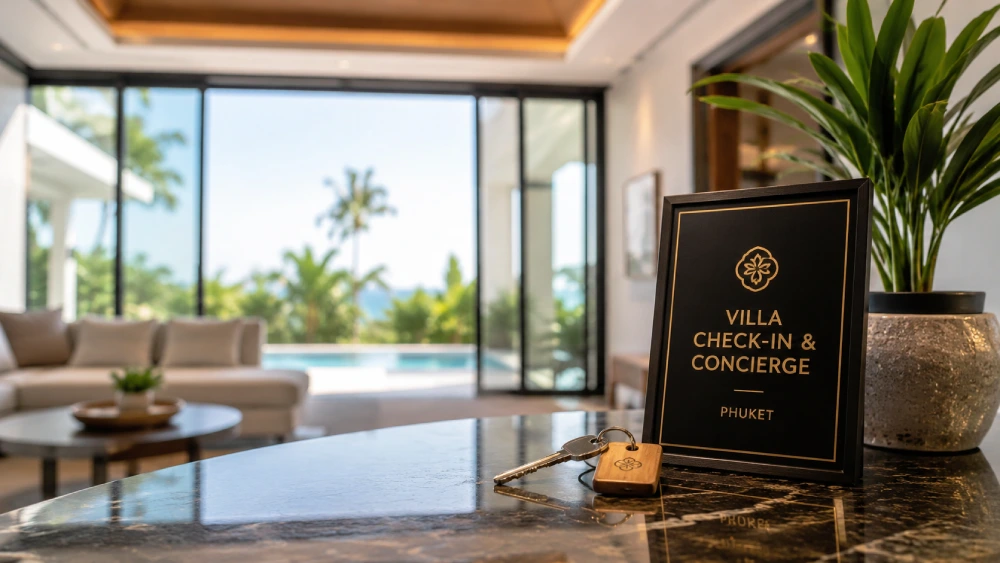
Concierge services may create additional income, but revenue should come from useful, clearly priced services rather than pressure, hidden commissions, or fixed tourist packages. Guest trust and reliable delivery must remain the first controls.
Offer Useful Services Before Arrival
Pre-arrival services may include:
- Airport transfers
- Grocery stocking
- Child equipment
- Additional housekeeping
- Private chef coordination
- Vehicle arrangements
- Local activities
- Restaurant reservations
- Celebration preparation
- Early check-in where operationally possible
- Late checkout where availability allows
The villa property manager benefits in Phuket include arrival preparation, guest communication, welcome setup, local recommendations, issue handling, checkout checks, and late-arrival support.
The service should solve a real guest need. A catalogue should not advertise options that local teams or vendors cannot provide.
Control Concierge Service Offers
| Service type | Guest value | Main risk | Required control |
| Airport transfer | Reliable arrival logistics | Driver misses schedule change | Confirm flight and driver |
| Grocery stocking | Supplies ready at arrival | Substitutions or unclear charges | Approve list and price |
| Private chef | In-villa dining | Availability or dietary error | Confirm menu and requirements |
| Extra housekeeping | Mid-stay property care | Schedule conflict | Confirm time and scope |
| Local activity | Easier planning | Biased recommendation | Disclose provider relationship |
| Early check-in | Faster villa access | Property not ready | Require readiness approval |
| Late checkout | More flexible departure | Delays next turnover | Confirm next booking |
| Equipment rental | Family or mobility support | Wrong item or late delivery | Verify specifications |
No universal commission percentage, convenience fee, or service price should be published without verified Phuket-specific evidence.
Avoid Biased Recommendations
Guests value concierge staff who know local options and can solve difficult requests. They lose trust when staff repeat generic search results or promote only commission-paying partners.
Recommendations should consider:
- Guest location
- Budget
- Dietary needs
- Accessibility
- Children
- Transport time
- Current opening hours
- Availability
- Guest preferences
- Seasonal conditions
- Previous complaints
The concierge should offer alternatives when the first choice is unavailable. Staff should explain whether a recommendation involves a commercial partnership where that affects the guest’s decision.
Separate Assistance From Sales Pressure
Check-in should not force guests through a sales presentation before they receive keys, directions, or basic support.
Optional services should be:
- Clearly described
- Separately priced
- Easy to decline
- Confirmed before booking
- Delivered by an identified provider
- Recorded in the guest history
- Reported accurately to the owner
A guest who asks for help should receive help. The request should not become an opportunity to pressure them into unrelated purchases.
Verify Every Vendor
Drivers, chefs, cleaners, tour operators, maintenance providers, and equipment suppliers should not enter the concierge directory without review.
Vendor records should show:
- Service offered
- Coverage area
- Current contact
- Availability
- Agreed prices
- Booking terms
- Cancellation process
- Insurance or licensing information where relevant
- Guest feedback
- Complaints
- Previous reliability
- Information-access requirements
The vendor should accept the task before the guest receives final confirmation. A cancellation should trigger an alternative and an immediate guest update.
Report Concierge Activity to Owners
Owners should be able to see how concierge activity affects guest service and property operation.
A practical owner summary may include:
- Number of guest requests
- Request categories
- Urgent incidents
- Vendor bookings
- Service charges
- Refunds
- Complaints
- Access failures
- Property damage
- Maintenance generated by the stay
- Outstanding issues
This reporting allows owners to distinguish useful guest support from uncontrolled selling or untracked vendor activity.
Centralized Villa Guest Support Across Phuket
A central system can coordinate island-wide guest operations, but physical service must remain close enough to the property for check-ins, inspections, housekeeping, maintenance, emergencies, pool care, and garden work.
West Coast Villa Arrivals
PEARL can coordinate guest arrivals and concierge support across Bang Tao, Laguna Phuket, Cherng Talay, Surin, Kamala, Patong, Kata, and Karon.
West coast operations should account for property access, peak traffic, different villa layouts, coastal conditions, guest-transfer timing, and local vendor availability.
Southern Phuket Guest Support
Coverage extends across Rawai, Nai Harn, Ya Nui, Friendship Beach, Chalong, and Saiyuan.
Guest records can connect villa access, local check-in support, housekeeping, pool readiness, garden condition, transfers, maintenance, and concierge requests.
Central and Northern Phuket Coverage
PEARL can also coordinate properties across Kathu, Thalang, Mai Khao, and surrounding Phuket areas.
The central record should still assign a local responder and backup contact based on the property’s location, arrival time, and service needs.
Available across Bang Tao, Rawai, Nai Harn, Kamala, Surin, Patong, Chalong, Kata, Karon, Mai Khao, Laguna, Kathu, Thalang, Cherng Talay, and surrounding areas in Phuket.
Keep Every Arrival Locally Accountable
Centralized villa check-in and concierge management in Phuket works when one accurate guest record supports trained local people. Before accepting the next reservation, use a 24-hour villa check-in service in Phuket that connects property readiness, secure access, late arrivals, local assistance, and emergency escalation. PEARL keeps owners informed while guests receive practical support at the villa. We manage. You relax.
FAQs About Centralized Villa Check-In
Can Centralized Villa Check-In and Concierge Management Work Without Smart Locks?
Centralized villa check-in and concierge management can work with physical keys, staffed arrivals, reception access, lockboxes, access cards, or digital locks. Centralization refers to the shared booking, arrival, responsibility, and reporting process rather than one access technology. Whatever method is used should have a verified handover, an access record, and a local backup when the guest cannot enter.
How Does Centralized Villa Check-In and Concierge Management Protect Guest Data?
Centralized villa check-in and concierge management should protect guest data through limited staff permissions, controlled document storage, access logs, restricted code visibility, secure communication, and immediate removal of former staff access. Passport details, telephone numbers, travel plans, and access instructions should be shared only with people who need them for an approved operational purpose.
Should Centralized Villa Check-In and Concierge Management Disclose Vendor Commissions?
Centralized villa check-in and concierge management should disclose commercial relationships when they may influence a recommendation or the price paid by the guest. The guest should understand which provider will deliver the service, the final approved price, cancellation terms, and whether the manager receives a fee. A commission should never replace vendor-quality checks or suitable alternatives.
How Can Owners Measure Centralized Villa Check-In and Concierge Management?
Owners can measure centralized villa check-in and concierge management through booking mismatches, readiness delays, failed access attempts, request-response times, request-completion times, emergency attendance, vendor cancellations, complaints, unresolved defects, and checkout-inspection speed. The report should show both successful operations and exceptions rather than using quick replies as proof that every guest problem was solved.
Can Centralized Villa Check-In and Concierge Management Support Multiple Villas?
Centralized villa check-in and concierge management can support multiple villas when every property has its own verified profile, access instructions, readiness checklist, service history, local contacts, and escalation rules. Shared systems may standardize booking and task records, but staff should not assume that each villa has the same access, equipment, guest rules, maintenance needs, or emergency response time.
What Happens When Centralized Villa Check-In Software Fails?
When software used for centralized villa check-in and concierge management fails, the operator should have offline contact details, current arrival lists, backup access instructions, local responder numbers, and a manual escalation procedure. Guests should not lose support because a platform, internet connection, mobile application, or smart lock is unavailable. Critical arrival information needs a controlled backup.
Does Centralized Villa Check-In and Concierge Management Replace Local Staff?
Centralized villa check-in and concierge management should not replace local staff responsible for inspections, access problems, housekeeping, repairs, guest complaints, pool checks, garden issues, and emergencies. Centralization gives those people one accurate record and clearer priorities. Removing local capacity may reduce staffing costs, but it can also