Condo: Who Is Responsible for the Roof? In most registered condominiums in Phuket, the roof is part of the building’s common property, so its maintenance and repair are generally coordinated by the condominium juristic person. Individual unit owners contribute toward shared maintenance through common-area fees, while owners may remain responsible for private fixtures, unauthorised alterations, or damage linked to their own units. The difficulty arises when roof leaks affect ceilings, electrical systems, furniture, or rental occupants.
Pearl Property Management Company helps condo owners report defects, document water damage, coordinate inspections, communicate with building management, and monitor repair progress without confusing private-unit responsibilities with shared-building obligations.
Quick Check: If a Phuket condo has roof leaks, damp ceilings, or unresolved maintenance work, Pearl Property Management Company’s property renovation oversight and coordination in Phuket can help owners document the problem, communicate with responsible parties, and monitor approved work.
Condo: Who Is Responsible for the Roof?
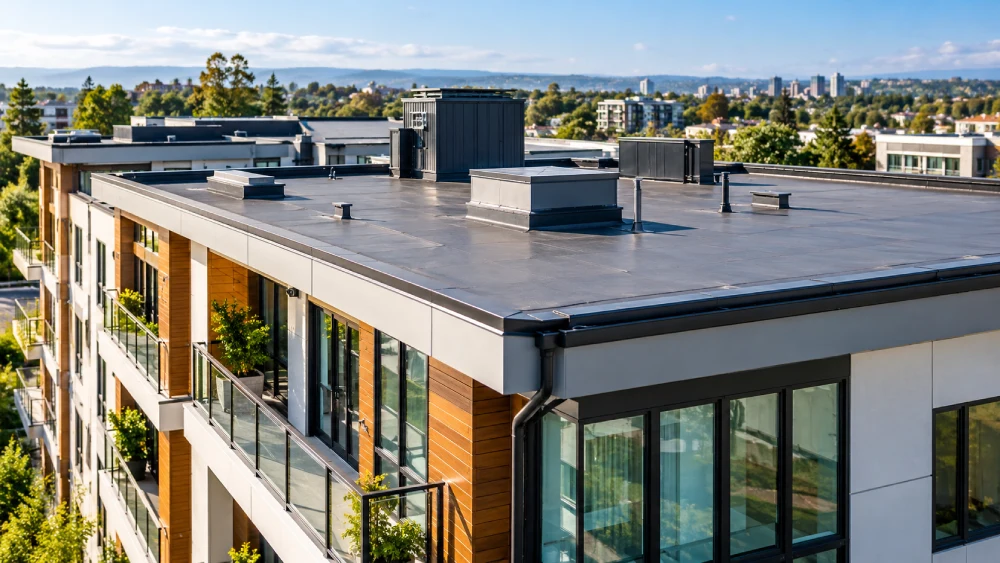
The condominium juristic person is generally responsible for maintaining and arranging repairs to a roof classified as common property.
Thailand’s Condominium Act identifies structural elements and property used for the building’s shared protection or benefit as common property. Under Sections 15 and 18, common-property maintenance is administered collectively and funded through owners’ contributions.
However, not every roof-related defect is automatically the responsibility of the building.
A private terrace modification, an unauthorised installation, or damage caused by an individual owner may create different responsibilities.
The correct approach is to establish which part of the building has failed, whether it is designated common property, what caused the damage, and which party has legal or contractual responsibility.
Condo Roof Responsibility Comparison
| Roof-Related Problem | Usual Responsible Party | What To Check |
| Main shared roof structure | Condominium juristic person | Common-property classification |
| Shared roof waterproofing | Usually juristic person | Title documents and building regulations |
| Common roof drainage | Building management | Maintenance records and drain condition |
| Roof damage caused by an unauthorised private installation | Potentially responsible owner or party | Evidence and alteration approval |
| Water damage inside a unit | Depends on cause and liability | Leak source and extent of damage |
| Private ceiling finishes | Responsibility depends on cause | Repair obligations and evidence |
| Shared roof access | Juristic office or authorised contractor | Safety and access procedures |
| Roof repair funding | Common-property budget where applicable | Approved fees, reserves, assessments |
| Damage affecting a rented unit | Owner, juristic person, or liable party as applicable | Inspection and tenancy records |
The condominium structural maintenance responsibility framework helps distinguish the building’s common-property duties from individual unit maintenance.
Pearl Property Management Company can provide condominium repair oversight to help private owners record defects, communicate with the juristic office, and follow up on work affecting their units.
Is A Condo Roof Common Property?
In a typical registered condominium, the principal roof forms part of the shared building structure.
Its purpose is to protect the building from rain, sunlight, and environmental exposure rather than serve one private unit alone.
Thailand’s Condominium Act, Section 15, includes building structures necessary for stability and protection among common property.
That is why roof repairs are normally administered through the condominium’s collective management arrangements.
However, the precise classification should be checked against the registered condominium plans, ownership documents, and building regulations.
Roof Areas That May Need Classification
Different roof features can create different questions.
The main structural slab may be common property, while additions installed by a private owner may fall outside ordinary shared maintenance responsibilities.
A rooftop terrace, privately modified deck, air-conditioning installation, or altered drainage arrangement may require closer examination.
The shared-building maintenance budget and reserve structure explains how common-property maintenance is funded and why roof repair costs should be recorded separately from private-unit work.
Owners should request written confirmation from the juristic office when responsibility is unclear.
What Does The Condo Juristic Person Handle?
The condominium juristic person administers common property on behalf of the co-owners.
For roof-related matters, that can include inspection arrangements, contractor appointments, maintenance planning, repair approvals, access coordination, and shared-budget administration.
A building manager may also maintain defect reports and communicate repair schedules to affected residents.
The scope of these duties depends on the governing documents, applicable law, and decisions made through the condominium’s management structure.
The building defect reporting and contractor authorisation process helps explain how repair requests can move from initial inspection to approved work.
Pearl Property Management Company can communicate with the juristic office on behalf of an individual owner.
However, a private unit manager does not automatically have authority to order structural repairs to common property.
That authority normally remains with the appropriate condominium management body.
Who Pays For Condo Roof Repairs?
When a roof is common property, repairs are generally paid from the condominium’s approved maintenance funds, reserves, or other properly authorised common-property contributions.
Individual owners support those costs through their obligations to the condominium.
This means an owner whose unit sits directly beneath the damaged roof is not necessarily the only person financially responsible for the roof’s repair.
The funding arrangement follows the building’s governing rules and applicable legal requirements.
Roof Repair Funding Checklist
| Cost Category | Typical Funding Consideration |
| Routine roof inspection | Building maintenance budget |
| Common roof waterproofing | Common-property repair budget |
| Shared drainage cleaning | Building maintenance arrangements |
| Major roof replacement | Reserves or approved additional contributions |
| Private ceiling repainting | Depends on cause and liability |
| Damage to private furniture | Requires evidence and liability assessment |
| Unauthorised private modifications | May fall to the responsible party |
| Contractor inspection report | Depends on who commissions the work |
A building’s sinking fund or reserve may help finance major work, but owners should not assume that sufficient funds are available.
The juristic office should confirm the approved financial arrangements before extensive work begins.
Pearl Property Management Company can help affected owners retain invoices, inspection records, and correspondence relating to roof-related expenses.
What Happens When The Condo Roof Leaks?
A roof leak should be reported promptly because the visible water stain may not reveal the full extent of the problem.
Water can travel through structural joints, service openings, ceilings, or drainage routes before appearing inside a private unit.
The location of the stain does not necessarily establish where the failure began.
For example, water entering through a shared roof may appear around a ceiling light or inside a wall below the roofline.
Alternatively, a leak that looks like a roof problem may originate from a private plumbing connection, air-conditioning drainage line, or another unit.
Immediate Roof Leak Response
- Photograph the visible leak, damp surfaces, and damaged belongings.
- Record the date, weather conditions, and affected rooms.
- Notify the condominium juristic office and the unit owner or manager.
- Keep occupants away from affected electrical fittings.
- Arrange appropriate professional inspection.
- Request written findings about the source of water entry.
- Confirm who has authority to approve each repair.
- Keep records of completed work and follow-up inspections.
The water-damage inspection observations explain why visual checks, maintenance histories, and photographic evidence matter when identifying property defects.
Pearl Property Management Company can help owners organise the initial report and maintain records while the responsible building parties investigate.
Who Fixes Water Damage Inside The Condo?
Roof repair responsibility and interior damage responsibility are related, but they are not always identical.
The juristic person may be responsible for fixing a defective common roof. Whether it must also pay for damaged ceilings, flooring, furniture, or other private-unit losses depends on the cause, legal responsibility, insurance arrangements, and available evidence.
Owners should avoid assuming that every interior repair automatically belongs to the building or that every damaged item is their own expense.
The first step is identifying the source.
The second is determining which property component failed.
The third is establishing whether negligence, inadequate maintenance, an alteration, or another cause contributed to the damage.
Internal Damage Assessment
| Damage | Inspection Priority |
| Ceiling stains | Locate water entry and assess moisture |
| Peeling paint | Check whether the underlying surface is dry |
| Damp walls | Inspect for concealed moisture |
| Damaged lighting | Arrange qualified electrical assessment |
| Swollen cabinetry | Document affected materials |
| Mould growth | Identify and stop moisture before remediation |
| Wet flooring | Check subfloor and surface condition |
| Damaged furnishings | Record condition and supporting evidence |
The rental home water-damage prevention measures provide additional context for inspections, moisture monitoring, and maintenance follow-up.
Pearl Property Management Company can help coordinate private-unit assessments once the source and repair responsibilities are established.
Can The Top-Floor Condo Owner Be Responsible?
Living on the top floor does not automatically make an owner responsible for maintaining the building’s common roof.
The roof may protect the unit directly beneath it, but its common-property status generally means maintenance falls under the condominium’s collective arrangements.
Responsibility may differ when an owner has made alterations that affect waterproofing, drainage, structural components, or approved access arrangements.
For example, a privately installed fixture that punctures waterproofing may create a different liability question from ordinary deterioration of the building’s shared roof.
The juristic office should review alteration approvals, inspection findings, and relevant documents before assigning responsibility.
The condominium alteration and resident compliance requirements are relevant because building rules often govern work that could affect common property.
Owners should obtain written permission before modifying roof-adjacent areas or shared building components.
How Roof Leaks Affect Rental Tenants
Roof leaks can disrupt tenants even when the structural repair is the condominium’s responsibility.
Residents may experience damp ceilings, restricted room access, unpleasant odours, damaged belongings, or temporary safety concerns.
The tenant’s first contact is usually the landlord or appointed property manager, who can then notify the appropriate building office.
The owner should keep the tenant informed about inspection dates, contractor visits, safety instructions, and expected disruption.
The condo tenant repair communication sequence explains how tenant concerns can be documented and escalated through the proper channels.
Where repair work affects occupancy, the landlord should also review applicable tenancy obligations and any relevant contractual arrangements.
Pearl Property Management Company can coordinate tenant updates and private-unit access while the responsible contractor addresses the defect.
Why Inspection Records Matter
A successful roof repair often begins with accurate documentation.
Owners who discover water damage after a long period of vacancy may not know when the defect started.
Without inspection reports or photographs, it can be difficult to distinguish new damage from an earlier unresolved problem.
Routine inspections help establish a record of ceiling condition, wall moisture, drainage performance, windows, balcony surfaces, and visible signs of leakage.
The unit handover moisture and damage evidence checklist is relevant when identifying whether dampness existed before a tenancy or developed during occupancy.
Pearl Property Management Company can help coordinate inspection records and report defects to the relevant parties.
Inspection records do not replace technical investigation, but they provide useful evidence when repair responsibilities are disputed.
Phuket Weather And Roof Maintenance
Phuket’s tropical conditions make roof maintenance an important consideration for residential buildings.
Seasonal rainfall, humidity, wind-driven rain, and environmental exposure can affect roof coverings, waterproofing systems, drainage points, exterior sealants, and related building components.
Roof-related maintenance becomes particularly important before and during periods of heavier rainfall.
The condominium’s maintenance programme should consider roof drains, gutters, waterproofing defects, expansion joints, and reported water entry.
Seasonal Roof Maintenance Priorities
| Inspection Point | Reason For Checking |
| Roof drains | Blockage can cause water accumulation |
| Gutters | Debris may obstruct drainage |
| Waterproofing | Cracks or deterioration can allow water entry |
| Roof penetrations | Poor seals may admit rainwater |
| Expansion joints | Movement can affect weatherproofing |
| Exterior walls | Water may enter near roof connections |
| Previous repair areas | Defects can recur if the cause was unresolved |
| Ceiling areas below roof | Early staining can reveal moisture problems |
Roof access and technical inspection should be performed only by properly authorised and qualified personnel.
For condominium owners, Pearl Property Management Company can help record visible symptoms and communicate with the juristic office, while specialist contractors assess structural and waterproofing conditions.
What If The Juristic Office Delays Roof Repairs?
Delayed repairs can cause frustration when water continues entering a unit.
Owners should first report the defect in writing and retain dated photographs, inspection findings, and relevant communication.
The report should identify the affected areas, observed water damage, and any immediate safety concerns.
If the issue remains unresolved, the owner can request a written update about the inspection, proposed work, approval process, and responsible contractor.
The building emergency escalation and response stages help explain why serious maintenance issues need defined reporting and follow-up.
Owners may also need to review condominium regulations, committee procedures, insurance documents, and legal remedies if the responsible party fails to act.
Pearl Property Management Company can support communication and documentation, but enforcement of legal obligations may require independent legal advice.
How Condo Roof Repair Contracts Should Work
Roof repair work should have a clearly defined scope.
A contractor’s proposal should identify the suspected source of leakage, inspection method, proposed repair, materials, affected areas, access requirements, and any warranty or follow-up provisions.
Owners should avoid approving repairs based only on a brief description such as “fix roof leak” without understanding which defect is being addressed.
For common-property work, the authorised condominium representatives should approve the relevant contractor arrangements.
The maintenance work order and approval clauses explain why authority, scope, payment arrangements, and reporting expectations need to be documented.
Pearl Property Management Company can help private owners follow the progress of approved repair work affecting their units.
The company should not be confused with the contractor performing specialist roof waterproofing or structural engineering work.
Who Monitors Roof Repair Progress?
Roof repair coordination can involve several parties.
The juristic person may authorise the common-property repair.
The specialist contractor performs the relevant work.
An engineer or other qualified professional may be needed to assess structural conditions or complex defects.
The individual owner or appointed property manager monitors the effect on the private unit and communicates access requirements.
The property manager maintenance coordination responsibilities explain how owner communication, contractor follow-up, and work records fit into property operations.
Pearl Property Management Company can assist owners with progress updates, documenting completed work, and identifying any remaining interior problems requiring separate attention.
Clear responsibilities reduce duplicated instructions and confusion during repairs.
How Roof Problems Affect Airbnb Rentals
A water leak can cause serious disruption when a condominium is being rented to guests.
Visible dampness, closed rooms, damaged ceilings, and electrical safety concerns can affect whether the accommodation is suitable for occupancy.
Before accepting bookings, owners must confirm that the intended rental use is lawful and permitted under building rules.
Where rental activity is authorised, Pearl Property Management Company can support guest repair coordination by organising guest communication, maintenance notifications, and property-readiness checks.
The correct response depends on the defect’s severity.
Minor cosmetic damage and active water penetration should not be treated as equivalent problems.
If an affected area cannot be occupied safely, guest safety and applicable booking obligations must take priority over maintaining the reservation.
After-Hours Roof Leak Reporting
Roof leaks can become visible outside normal office hours, particularly during heavy rain.
If water enters a guest-occupied property at night, the immediate concern is reducing exposure to unsafe conditions.
Occupants should avoid electrical fixtures and affected areas where water may be present.
A manager can help relay the report to the building’s emergency contact and coordinate safe access where authorised.
Pearl Property Management Company provides after-hours guest repair support as a relevant guest-access and communication function, subject to the agreed service scope.
However, 24-hour guest assistance should not be interpreted as a guarantee that structural roof repairs can be completed at any hour.
Actual repair timing depends on safety, contractor availability, building access, and technical conditions.
Housekeeping Can Help Detect Water Damage
Housekeeping teams may notice early signs of roof-related defects during normal property preparation.
These can include ceiling discolouration, damp smells, stained curtains, peeling paint, wet flooring, or unusual moisture around walls.
A cleaner is not expected to diagnose roof failures, but reporting visible symptoms can help owners request a professional inspection sooner.
Pearl Property Management Company can incorporate housekeeping damage checks into agreed unit cleaning and property-preparation routines.
The practical goal is to identify visible changes, photograph them, and notify the responsible manager.
Cleaning or repainting a stain before identifying the cause can conceal evidence without solving the underlying leak.
Condo Roof Responsibilities vs Houses And Villas
Roof maintenance works differently in a condominium and a standalone residential property.
A condominium’s common roof is generally administered collectively.
The owner of a standalone house or villa, by contrast, usually has direct responsibility for arranging maintenance of the property’s roof and exterior structure, subject to applicable agreements and other circumstances.
For villa owners, Pearl Property Management Company provides villa repair supervision as part of coordinating maintenance needs and monitoring approved work.
The company’s house maintenance coordination is relevant when owners need inspections, contractor communication, and repair records for independent residential properties.
Responsibility By Property Type
| Property Type | Roof Maintenance Arrangement |
| Registered condominium | Common roof generally managed through juristic person |
| Standalone private villa | Owner or authorised manager coordinates repairs |
| Privately owned house | Owner normally arranges roof upkeep |
| Single-owner apartment building | Building landlord generally manages roof maintenance |
| Rented condominium unit | Owner coordinates with juristic office when common roof affects the unit |
For rental apartment buildings, the single-landlord building maintenance administration provides a comparison with the condominium’s collective ownership structure.
The distinction matters because a private unit manager cannot simply take over a building-wide repair responsibility.
Do Pool And Garden Repairs Follow Similar Rules?
Roof maintenance is part of a wider question: which facilities are common property and which belong to an individual owner?
In a condominium, shared pools and communal gardens are generally managed through the building’s common-property arrangements.
The juristic office normally coordinates their maintenance and related repairs.
For independently owned villas and houses, the owner may need separate specialist services.
Pearl Property Management Company can coordinate pool service repairs in Phuket for privately managed swimming pools where servicing, equipment problems, and maintenance work need monitoring.
Likewise, owners arranging outdoor upkeep may use a landscaping repair company in Phuket for relevant garden restoration or maintenance needs.
These services are distinct from condominium common-property repair authority.
The responsible party must be identified before work is ordered or billed.
Condo: Who Is Responsible for the Roof? Area Coverage
Across Bang Tao, Laguna Phuket, Cherng Talay or Choeng Thale, Surin, and Kamala, condominium owners should confirm how their building manages roof structures, waterproofing, drainage, and shared maintenance budgets. Developments with rooftop facilities, terraces, or complex building layouts may require additional technical assessment when water leaks appear. The roof’s common-property classification, rather than the unit’s location or floor level, normally determines which management body should arrange repairs.
For properties in Patong, Kata, Karon, Chalong, and Kathu, roof-related problems should be documented through inspection photographs, maintenance records, and written reports to the juristic office. Residents may experience leaks around ceilings, walls, or exterior openings without knowing the original source. Prompt technical investigation helps distinguish defective common roofing from private plumbing, air-conditioning drainage, or owner modifications, allowing repair responsibility to be assigned more accurately.
In Rawai, Nai Harn, Ya Nui, Friendship Beach, and Saiyuan, property owners should pay attention to roof waterproofing, stormwater drainage, ceiling dampness, and recurring moisture after heavy rain. Coastal exposure and seasonal weather can place additional demands on exterior building materials, although the condition of each development must be assessed individually. For rented condos, clear tenant communication and documented inspections are especially important when repairs affect access or occupancy.
Pearl Property Management Company’s island-wide coverage also includes Mai Khao, Thalang, and surrounding Phuket areas. Its property management support can help owners report roof damage, communicate with juristic offices, coordinate private-unit inspections, document moisture problems, and monitor authorised repair follow-up. The correct response should depend on common-property status, leak origin, structural condition, repair approval, tenant safety, insurance arrangements, and documented responsibility, rather than assuming every roof-related expense belongs to the nearest unit owner.
Final Advice On Condo Roof Responsibility
Condo: Who Is Responsible for the Roof? In most registered condominiums, the condominium juristic person manages the common roof, while the co-owners collectively contribute toward applicable maintenance costs.
Responsibility can become more complicated when private alterations, concealed leaks, or damage inside individual units are involved. Owners should document the problem, identify the affected property component, and obtain appropriate technical findings before assigning costs.
Pearl Property Management Company helps owners coordinate these practical steps through property renovation oversight and coordination in Phuket. By organising inspections, communication, repair records, and follow-up, owners can address roof-related problems without confusing common-building work with private-unit responsibilities.
FAQs
Condo: Who Is Responsible for the Roof in Thailand?
The condominium juristic person is generally responsible for managing and arranging maintenance of a roof classified as common property. Thailand’s Condominium Act recognises shared structural and protective building elements as common property. Responsibility for a specific defect should be confirmed using the registered building documents, inspection findings, and applicable legal requirements.
Does The Top-Floor Condo Owner Pay For Roof Repairs?
Not automatically. A top-floor owner is generally not solely responsible for repairing a common roof merely because their unit is directly beneath it. Common-property maintenance is ordinarily funded collectively. Liability may differ if the owner caused damage through an unauthorised alteration, negligence, or another legally relevant act.
Who Pays When A Condo Roof Leak Damages A Ceiling?
Payment responsibility depends on the source of the leak, the classification of the defective building component, evidence of fault, insurance arrangements, and applicable law. The juristic person may be responsible for repairing a defective common roof, but liability for private-unit damage requires separate assessment. Owners should document the damage and obtain technical findings before proceeding.
Is Roof Waterproofing Common Property In A Condo?
Waterproofing associated with the main common roof is usually treated as part of the building’s shared protective system. However, private terraces, modified roof areas, and particular installation details may create exceptions. The building’s registered documents and relevant technical evidence should be reviewed before deciding who must maintain or repair the waterproofing.
Can A Condo Owner Repair The Roof Without Permission?
Owners should not independently alter or repair common roofing without the appropriate authorisation. Work affecting shared waterproofing, drainage, or structural components may require approval from the condominium juristic person and, where relevant, qualified professionals. Unauthorised repairs can create additional damage, legal disputes, and liability questions.
Who Handles Roof Leaks In A Rented Condo?
A tenant should normally notify the landlord or appointed property manager as soon as the leak is discovered. The landlord or manager can then report suspected common-roof defects to the condominium juristic office. Repairs affecting common property are handled through the authorised building process, while private-unit safety and tenancy concerns require appropriate landlord follow-up.
Are Condo Roof Repairs Paid From Common Fees?
Routine common-roof maintenance may be funded through the condominium’s approved operating budget, while major repairs may use reserves or require authorised additional contributions. The exact funding method depends on the development’s financial arrangements, registered regulations, and relevant decisions. Owners should request budget and repair information from the juristic office.
How Often Should A Condo Roof Be Inspected In Phuket?
Inspection frequency should follow the building’s condition, roof type, maintenance plan, professional recommendations, and exposure to seasonal weather. Phuket’s rainy season makes drainage and waterproofing checks particularly important. Inspections should be carried out by authorised personnel, with defects recorded and followed up before they develop into more extensive damage.
Can A Property Manager Arrange Condo Roof Repairs?
A private property manager can report defects, coordinate inspections, communicate with the condominium juristic person, and monitor authorised work. However, common-property repair authority normally belongs to the appropriate condominium management body. Specialist roofing and structural work should be completed by qualified contractors working under the necessary approvals.
Can Pearl Property Management Company Help With Condo Roof Problems?
Pearl Property Management Company can help Phuket condo owners document visible damage, coordinate private-unit inspections, communicate with building representatives, organise relevant maintenance records, and follow up on authorised repairs within the agreed service scope. The company does not replace the condominium juristic person’s statutory responsibility for common-property administration.