How Airbnb Earn Money? Booking Fees And Owner Payouts Explained
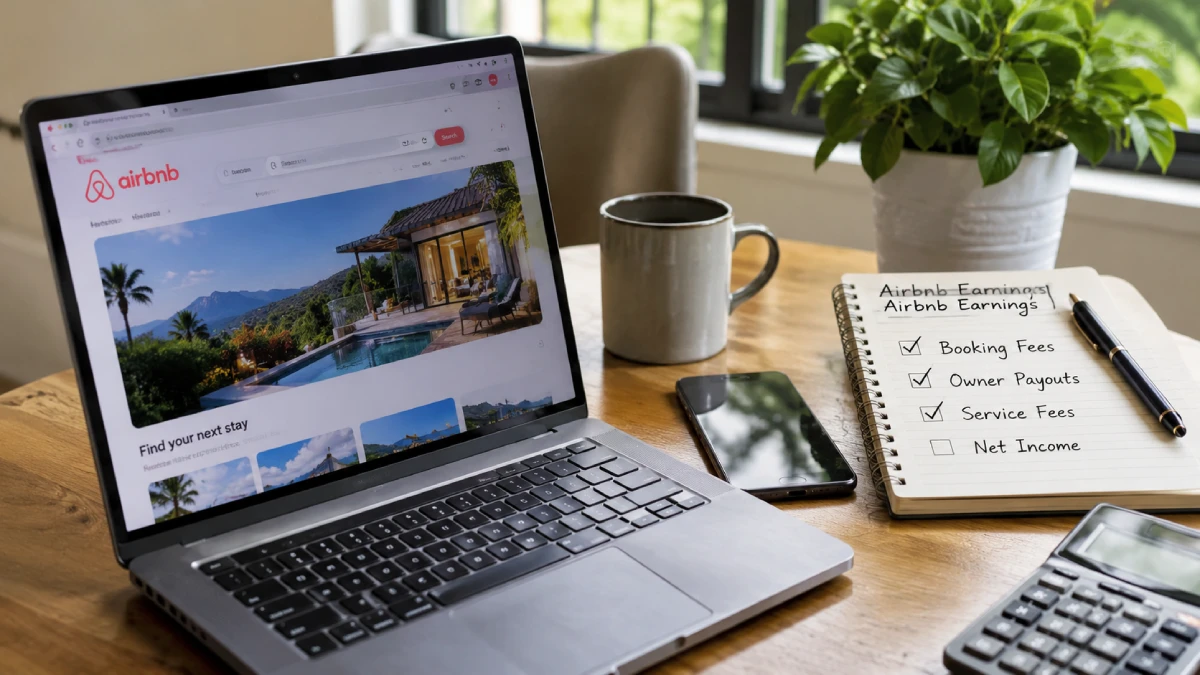
Airbnb's booking total is different from the money the business earns. A reservation combines accommodation charges with platform deductions and any applicable taxes, so its full value can overstate Airbnb's income.
For a Phuket owner, mixing platform deductions with an operator's commission can also distort the expected payout. The same reservation may involve separate payments to different recipients.
Start with the transaction record and identify who receives each amount before comparing percentages. Follow the money first, using the record to separate the platform deduction from host receipts before checking the applicable fee arrangement.
Airbnb earns most of its revenue from fees on reservations. It connects guests with independent hosts and retains the applicable platform charge. The host's accommodation receipts are a separate money flow. Airbnb also charges experience and service hosts, while reported company profit accounts for expenses beyond those booking fees.
Table Of Contents8 Sections ·
How Airbnb Earn Money? Trace The Booking Money Flows
Understanding Airbnb's earnings starts with separating the business's transaction role from the host's rental operation. A booking record shows the agreed accommodation amount, deductions, and resulting payments. This section explains how to read that evidence without treating every outgoing amount as a platform charge. You can then connect each figure to the correct agreement, date, and reporting category.
Locate The Platform Charge On The Reservation
Airbnb identifies its service fee within the booking or earnings breakdown. Start with that record rather than calculating backwards from the amount deposited into a bank account. Record the listing, reservation reference, currency, and fee line before comparing it with a separate owner's statement.
Separate The Records Used In Each Calculation
A guest receipt, a channel transaction, and an operator's invoice answer different questions. Compare the documents before deciding that a deduction has been applied twice. The table below identifies the evidence needed for each part of the booking trail.
| Record | What To Identify | Why It Matters |
|---|---|---|
| Guest receipt | Agreed reservation total | Shows what the guest paid |
| Platform transaction | Fee and payout entries | Identifies channel deductions |
| Operator invoice | Contracted work and fee base | Separates local management charges |
| Owner statement | Receipts, expenses and transfers | Connects the records to owner funds |
Identify Who Performs The Paid Work
- Platform versus operator: Compare the rental management fees explained with the separately identified Airbnb deduction.
- Local responsibilities: The manager and co-host differences matter when deciding which person receives an agreed operational payment.
- Written authority: Check the property management contracts before approving a new deduction category.
Match The Reservation With Its Payment Events
A reservation date and a bank transaction date describe different events in the payment trail. Keep guest credit card charge timing separate from the owner's settlement date. When a property uses several channels, multi-platform calendar coordination helps identify which booking belongs to each statement entry.
Check Changes To The Accommodation Amount
The same property can produce different booking subtotals because its nightly amounts and stay lengths vary. Review demand-based nightly adjustments when comparing two reservations. Keep rainy season rental operations in the comparison when the bookings cover different trading periods.
Reconcile The Owner's Financial Records
- Match the documents: Connect rental income and expenses to identifiable reservations, supplier invoices, and transfers.
- Keep the period clear: Use the monthly owner statement breakdown to check the opening balance and subsequent movement of funds.
- Resolve differences: Ask for the supporting transaction when a figure cannot be matched, rather than entering an unexplained balancing adjustment.
Costs Around A Phuket Airbnb Booking
Airbnb's charge sits within a wider rental operation for Phuket property owners. Local housekeeping, laundry, management arrangements, and payment processing can create other entries around the same stay. Those entries need their own evidence and recipient. This section helps you distinguish the channel's earnings from property expenses without assuming that every deduction follows the same calculation rule.
Separate The Guest Cleaning Contribution From Work
A guest cleaning contribution and the expense of preparing a villa are not automatically equal. Compare cleaning payment responsibilities before treating the full guest charge as a cleaner's payment. Check linen and laundry logistics separately when supplier invoices include washing, replacement stock, or other textile handling.
Read Tax Entries Using The Relevant Invoice
A tax entry can relate to a different transaction from the property's rental receipt. Keep the question of VAT collection in Thailand separate from the platform's underlying commission. Use the actual invoice and appropriate tax advice for your circumstances instead of adding an assumed percentage to every booking.
Check The Currency Route To Your Bank
A bank credit can differ from the platform's displayed payout because payment processing and currency conversion have their own entries. Review foreign bank payout transfers when the settlement crosses currencies or banking systems. Retain the original payout reference so the receiving-bank record can be matched to its source.
Related Support For Phuket Rental Owners
A platform fee pays for a booking channel, while owners still need to decide who handles the property itself. Broader oversight, villa operations, and housekeeping involve different local responsibilities. The service options below address those practical needs. Choose according to the work you want delegated, then confirm which responsibilities and reporting arrangements belong in your own management agreement.
Mistakes When Comparing Airbnb And Owner Earnings
The wrong category can make a correct deduction look like an unexplained loss. A practical comparison needs consistent records, a defined reporting period, and a clear distinction between ordinary booking activity and exceptional transactions. These mistakes identify where that comparison can break down. Correct the category first so the follow-up question reaches the party responsible for the amount.
- Misclassifying incident money: Keep guest damage payment responsibilities separate from the platform's ordinary booking-income calculation.
- Mixing statement periods: A later adjustment can relate to an earlier stay, making a single-month comparison misleading.
- Comparing unconfirmed forecasts: An expected booking value does not establish that the corresponding funds have reached the owner.
- Ignoring the calculation base: An agreed management percentage needs its written definition before two operator proposals can be compared.
Related Guides For Rental Earnings Decisions
A clear view of Airbnb's income can lead to separate decisions about booking channels, management proposals, or property performance. Those decisions use different comparisons from the platform's own fee schedule. These guides provide focused next reading for the question you are considering. Choose the relevant subject rather than treating one channel deduction as a complete measure of rental performance.
Discuss Your Phuket Rental Reporting Needs
Useful owner reporting connects the documents behind a reservation with the local work required to operate the property. An overseas owner may need a team that coordinates that work and explains the resulting records. Pearl supports rental operations in Phuket. Use a property enquiry to discuss your reporting priorities and the responsibilities you want included in a management arrangement.
Questions About Airbnb's Revenue And Fees
The questions below address the platform's business model directly, including fee percentages, a worked booking example, and company financial reporting. They distinguish a host's receipts from the business's revenue and explain important exceptions. Use the relevant answer to check the assumption behind your calculation. For a particular reservation, its actual transaction breakdown remains the starting point.
How Does Airbnb Earn Money From Every Booking?
Airbnb earns a fee for facilitating a reservation through its marketplace. It retains the applicable platform deduction rather than keeping the whole accommodation payment. Hosts receive the amount due to them under the booking arrangement. This separates Airbnb's business income from the property owner's rental receipts and from any taxes collected alongside the stay.
Why Does Airbnb Charge Hosts A 15.5% Service Fee?
The fee supports Airbnb's payment processing, listing marketing, customer support, and other platform operations. Airbnb says its move toward a single host-paid fee combines charges previously shared between hosts and guests. Most hosts on that structure pay 15.5%, although exceptions apply. The reservation's actual fee line determines the amount charged to a particular listing.
Does Airbnb Charge Both Guests And Hosts?
It can under the split-fee structure, which Airbnb is phasing out. Most eligible split-fee hosts pay 3%, while guest charges generally range from 14.1% to 16.5%, with booking-specific variation. Under the single-fee structure, the platform deduction comes from the host's payout instead. Do not apply both arrangements to the same reservation.
How Much Does Airbnb Make From A $200 Booking?
On an illustrative USD 200 booking subtotal using a 15.5% single fee, Airbnb's deduction is USD 31. The remaining USD 169 is the host's receipt before separate operating expenses. This example excludes taxes and other adjustments. If USD 200 instead means the guest's final total under another fee structure, the calculation may differ.
Does Airbnb Take A Percentage Of Cleaning Fees?
Yes, Airbnb includes host-added cleaning charges when calculating the applicable home service fee. For an illustrative USD 50 cleaning charge at 15.5%, that component contributes USD 7.75 to the platform deduction. The remaining cleaning contribution is not automatically the cleaner's invoice amount. Actual cleaning expenses and any local management arrangements need separate checking.
How Does Airbnb Earn Without Owning Properties?
Airbnb operates a marketplace rather than earning rent as the owner of every listed home. Independent hosts supply the accommodation, while the platform provides booking and payment functions. Its income comes from facilitating those transactions. That structure allows the business to earn across many properties without purchasing each building or managing every property's physical operations.
Does Airbnb Record Revenue At Booking Or Check-In?
For home stays, Airbnb generally recognises revenue at check-in under its published accounting policy. Money collected before then can include amounts owed to hosts and unearned platform fees. Monthly stays have additional recognition rules across later periods. The booking date, cash collection date, and reported revenue date therefore should not be treated as interchangeable.
How Does Airbnb Earn From Experiences And Services?
Airbnb also deducts fees from hosts offering experiences and services. Its current guidance typically specifies 20% for experiences and 15% for services, with a USD 6 minimum for services or the local equivalent. These are separate schedules from accommodation fees. Airbnb withholds the applicable charge from those host payouts after completion of the booking.
How Much Revenue Does Airbnb Make In A Year?
Airbnb reported USD 12.241 billion in revenue for the year ended 31 December 2025, approximately USD 12.2 billion. That is a completed full-year figure, not the value of all guest bookings or the company's profit. Annual revenue varies between reporting periods. A quarterly release or forecast should not be presented as a completed annual result.
How Do Cancellations And Changes Affect Airbnb Revenue?
A cancellation or adjustment can change the final fees retained on a reservation. Airbnb reports revenue net of relevant incentives and repayments, so an initial booking record is not necessarily its final earnings figure. Cancellation terms determine the applicable treatment. For a changed stay, compare the revised transaction with the original before counting the platform's final income.
Understand Your Booking Income
Choose one recent reservation and keep its booking breakdown, operator invoice, and owner statement together. Identify the question you still need answered and the record that should resolve it. Send a focused enquiry with the reservation reference, rather than an unexplained difference between two totals. That gives your Phuket property team a clear starting point for reviewing the transaction with you.