Overseas villa owners in Phuket face one serious problem: the property keeps moving even when they are not there. Guests arrive, rain damages surfaces, AC units fail, pool water changes, staff need payment, and legal records still matter. The experienced solution is to combine On-Ground Property Management Companies and Digital Property Technology, strong rental-channel control, and reliable financial and legal networks.
The short answer is simple. Remote owners stay in control by using local people for physical work, technology for visibility, and professional reporting for legal, guest, and financial decisions.
Overseas Owner Tip: Managing a Phuket villa from abroad needs local eyes, clear reports, and fast action. See how our property management services help overseas owners manage Phuket villas with inspections, maintenance, guest support, and reliable updates.
How Overseas Owners Manage Phuket Villas Remotely?
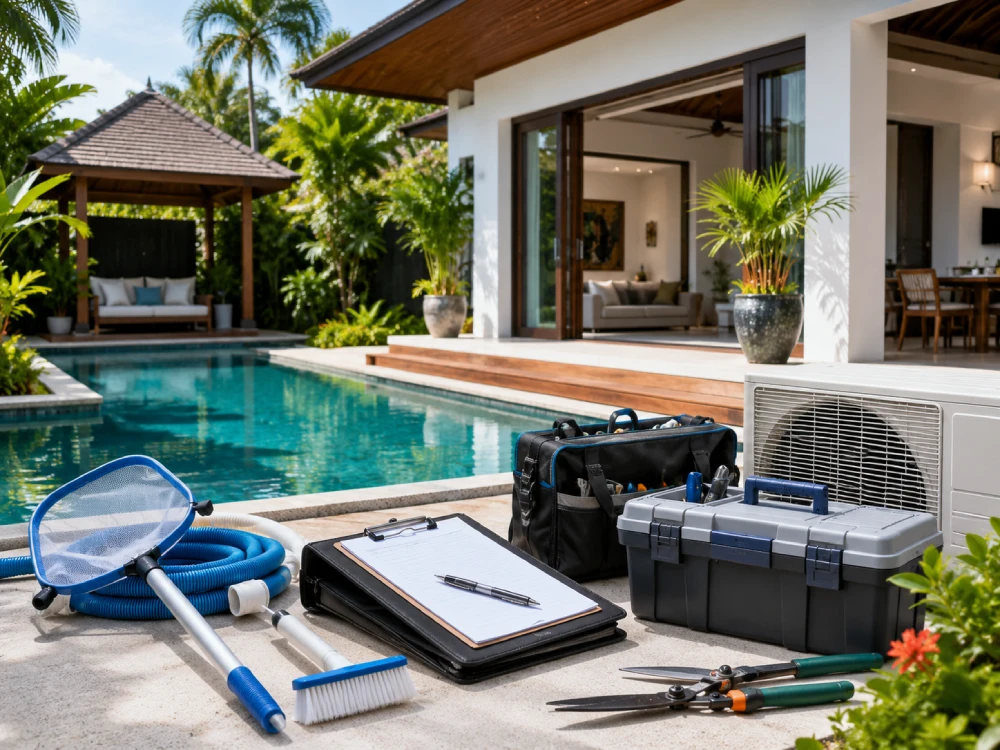
Remote villa management is not about watching cameras from another country. It is a structured operating system that joins local inspections, smart access, guest reporting, rental calendars, maintenance schedules, vendor payments, and legal checks. Owners who need direct local support can start with trusted property management services to build the control layer first.
| Remote Owner Risk | What Can Go Wrong | Control Method |
| No local eyes | Hidden leaks, poor cleaning, missed damage | Scheduled inspections with photo reports |
| Weak legal setup | Rental rule issues, lease confusion, tax gaps | Lawyer, accountant, and documented structure |
| Guest access failure | Lockouts, lost keys, unsafe handovers | Smart locks with local backup |
| Booking confusion | Double bookings, wrong pricing, missed messages | Central channel manager and owner dashboard |
| Climate damage | Mould, AC leaks, roof issues, pool algae | Preventive maintenance plan |
| Hidden costs | Vendor overbilling, unclear repairs, weak records | Monthly statements and receipt tracking |
| Emergency delay | Water damage, power faults, guest complaints | Pre-approved repair limits and vendor list |
Remote Control Map for Phuket Villa Owners
A remote owner needs three control layers. The first is a local villa manager who can enter the property, check the condition, coordinate staff, and respond to guests. The second is digital oversight through calendars, smart locks, cameras, sensors, and reports.
The third layer is professional structure. This includes a lawyer, accountant, bank setup, insurance review, rental compliance checks, and spending rules. Without this structure, owners may receive bookings but still lose control over risk.
The best setup does not rely on blind trust. Owners should see photos, videos, receipts, booking data, guest reviews, inspection notes, and maintenance records. This turns remote ownership into a managed process instead of guesswork.
Build Local Control Before Using Tech
Remote management starts with people, not apps. A smart lock cannot clean a pool, check a roof leak, remove mould, calm a guest, or inspect storm damage. Overseas owners need local control before digital tools can become useful.
On-ground teams handle daily villa risk
A local villa manager becomes the owner’s hands on the ground. They coordinate cleaning, pool care, gardening, pest control, AC servicing, inspections, guest questions, and urgent repairs. This is why villa inspection phuket matters more than occasional online updates.
The manager should follow written duties. The agreement should cover inspection frequency, photo reporting, guest handling, vendor access, repair approval, emergency spending, and monthly updates. Owners can compare this with a clear Phuket management agreement overview.
Daily villa care also depends on trusted workers. Cleaners, gardeners, pool technicians, electricians, plumbers, AC teams, and pest teams must be coordinated. The owner should never depend on random messages without proof of completed work.
Digital tools give owners live visibility
Digital tools help owners see what is happening from abroad. Smart locks, exterior CCTV, energy monitoring, water-leak sensors, noise alerts, owner portals, and shared dashboards can reduce uncertainty. These tools support the manager, but they do not replace the manager.
Smart locks are useful for controlled access. Temporary PIN codes can help guests, cleaners, technicians, and inspectors enter at specific times. Still, local backup is needed when batteries fail, guests enter the wrong code, or a lock jams.
Owner dashboards can show bookings, income, occupancy, expenses, inspection notes, and repair status. This gives remote owners cleaner visibility than scattered chat messages. The strongest systems combine digital records with real local action.
Control Bookings Without Losing Oversight
Bookings create income, but they also create risk. Overseas owners need one system for calendars, guest messages, pricing, check-ins, cleaning, deposits, and reviews. Without control, one villa can quickly suffer double bookings, rushed cleaning, bad reviews, and weak damage tracking.
Online rental channels need one system
Online Rental and Marketing Channels should not be managed separately by guesswork. A channel manager can connect Airbnb, Booking.com, direct enquiries, luxury villa platforms, and calendar availability. This reduces double booking and helps owners track performance from abroad.
Dynamic pricing can support high and low season planning. Phuket demand changes by season, location, villa quality, and travel patterns. Pricing still needs human review because software cannot fully understand villa condition, guest profile, or local disruption.
Guest reviews are also part of remote quality control. Reviews reveal problems with cleaning, check-in, Wi-Fi, AC, pool condition, noise, and response time. Owners running holiday rentals can connect this with airbnb management phuket when bookings need stronger operational handling.
Guest access needs local backup
Remote check-in needs both technology and people. Smart locks, lockboxes, digital guides, and automated messages help guests arrive smoothly. Local staff must still handle late arrivals, lost keys, access failures, and urgent questions.
Guest communication should start before arrival. The manager sends check-in details, villa rules, rubbish instructions, parking guidance, AC use notes, pool safety points, and emergency contact details. This connects well with guest arrival villa preparation guide.
Short-term stays need tighter control than private owner use. Guests use AC heavily, cook, swim, move luggage, invite visitors, and create turnover pressure. Owners can study short-term rental steps for villas for deeper booking-flow planning.
Protect the Villa From Phuket’s Climate
Phuket’s tropical climate makes remote neglect expensive. Heavy rain, humidity, heat, and coastal exposure can damage roofs, walls, timber, metal, AC units, soft furnishings, pool areas, and gardens. Preventive checks are not optional for serious overseas owners.
Inspection routines stop hidden damage
A proper inspection routine checks the villa before problems become visible. Managers inspect roofs, gutters, drains, ceilings, walls, bathrooms, kitchens, AC units, pool decks, garden runoff, doors, locks, and outdoor furniture. This supports strong rental property protection steps in Phuket.
Humidity needs special attention during vacant periods. Closed rooms can develop damp smells, mould marks, swollen wood, and fabric damage. Managers should ventilate rooms, run AC when needed, inspect wardrobes, and check bathroom seals.
Inspection reports should be photo-based. Owners need date-stamped images, repair notes, urgency levels, and clear recommendations. A useful manager does not only say “everything is fine” without proof.
Pool, garden, and vacancy checks matter
Pool care is one of the biggest remote-management needs. Water balance, filtration, pumps, tiles, decking, pool lights, and algae control all need routine checks. A neglected pool can quickly damage guest experience and create repair costs.
Gardens also grow quickly in Phuket. Branches, roots, leaves, blocked drains, irrigation issues, and pest shelters can cause hidden damage. Managers should trim, clear, and inspect outdoor areas before storms and after heavy rain.
Vacant villas still need active care. Staff should check water supply, power, windows, doors, alarms, ventilation, pool systems, garden condition, and signs of intrusion. Owners should treat vacancy as a risk stage, not a quiet stage.
Use Financial and Legal Networks Early
Professional Financial and Legal Networks protect owners from mistakes that cleaners and booking apps cannot solve. Overseas owners must understand ownership structure, rental permissions, tax records, guest reporting, insurance, and vendor payments. Remote control starts with documented responsibility.
Legal clarity comes before rental income
Foreign owners should not treat villa rental as a simple upload to a booking platform. Land ownership, leasehold structure, Thai company setup, building ownership, tax duties, and rental licensing can affect risk. A qualified lawyer should review the structure before income plans become active.
Short-term rentals also need compliance checks. Minimum stays, guest capacity, Hotel Act concerns, local registration, rental documents, and TM30 support can all matter. For deeper rental structure context, owners can review a Phuket short-term rental management guide.
Owners should avoid informal shortcuts. Nominee arrangements, vague company structures, and undocumented rental operations can create long-term exposure. The safer path is written advice, clear documents, and a manager who follows the approved structure.
Financial reports prevent hidden costs
Remote owners need clean monthly financial reports. These should show rental income, platform payouts, cleaning costs, pool care, garden care, repairs, utilities, staff payments, taxes, and vendor receipts. The goal is visibility, not just a final number.
Spending limits should be agreed in advance. A manager may need authority for urgent repairs under a set amount, while larger repairs need owner approval. This protects the villa without allowing uncontrolled spending.
Vendor records also matter. Owners need invoices, photos, payment proof, and repair history for every recurring cost. Strong records help owners compare performance and spot unusual spending early.
Emergency Rules for Overseas Owners
Emergencies are where remote ownership becomes most exposed. A leak, storm, AC failure, power fault, guest lockout, or broken pump cannot wait for a long email chain. Owners need clear rules before the first urgent problem appears.
Pre-approved limits speed up repairs
Emergency handling should be written into the management agreement. The owner should approve spending limits, preferred vendors, reporting steps, and when the manager can act first. This avoids delays when water, power, or security issues appear.
The vendor list should be ready before emergencies. Plumbers, electricians, AC technicians, locksmiths, pool teams, security contacts, and builders should already be known. This connects directly with a Phuket villa emergency management process.
Emergency reports should include facts, photos, cost, cause, action taken, and prevention notes. This lets owners understand what happened without being present. It also helps with insurance, guest communication, and future planning.
Quality control keeps trust strong
Remote owners need quality control beyond trust. They should review inspection reports, guest reviews, maintenance logs, financial records, and response times. These checks show whether the manager is protecting the villa or only reacting to complaints.
Performance reviews should happen regularly. Owners can compare occupancy, repair costs, guest ratings, cleanliness scores, maintenance issues, and communication speed. This helps identify property management accountability risks before they damage the villa.
A strong manager welcomes verification. They can provide photos, receipts, reports, guest logs, booking summaries, and repair records. Owners can also use property management verification points in Phuket before appointing a team.
Match Management to Property Type

Not every Phuket property needs the same remote system. A private villa, managed house, condo unit, and apartment each carry different access, legal, maintenance, and guest-control needs. Owners should match the structure to the property.
Villas, houses, condos, and apartments
Villas need deeper exterior and guest control. Pool systems, gardens, roofs, staff access, outdoor furniture, storm preparation, and guest-ready checks are central. Owners can compare long-term value through Phuket villa management value.
Houses need local oversight for security, repairs, gardens, bills, and tenant condition. Detached homes may sit vacant longer and require more physical checking. Owners with private homes can review Houses for Management when remote care goes beyond villa rentals.
Condos and apartments depend more on juristic rules, access cards, tenant records, and building notices. Owners with mixed portfolios can study Condo Management, condo tenant coordination in Phuket, and apartment management meaning in Phuket.
Choose the Right Management Structure
Choosing the wrong manager can cost more than choosing no manager. Remote owners need a team that understands Phuket climate, guest expectations, legal limits, reporting, vendors, and emergency work. The decision should be based on systems, not promises.
Selection should focus on proof
Owners should ask how inspections are done, how photos are shared, how repairs are approved, how vendors are paid, and how emergencies are handled. They should also check reporting samples and communication response times. This supports a practical villa rental management evaluation guide.
A reliable manager explains limits clearly. They do not promise guaranteed income, instant fixes, or risk-free rental operations. They explain what they control and what depends on market demand, property condition, legal structure, and guest behaviour.
Good managers also understand service boundaries. A villa rental manager should not encourage owners to personally run restricted tourism work or informal legal shortcuts. The safer route is a documented operating model with local professionals around it.
Frequently Asked Questions
Can overseas owners manage a Phuket villa alone?
They can monitor parts of the villa remotely, but full control is difficult without local help. Cleaning, pool care, garden work, inspections, repairs, emergencies, and guest issues need people on the ground. Technology helps visibility, but it cannot replace physical property care.
What should a remote villa manager report monthly?
A monthly report should show bookings, income, expenses, repairs, cleaning, pool care, garden work, guest issues, and inspection photos. It should also include receipts and notes on upcoming maintenance. The best reports help owners make decisions without asking for every detail.
Do smart locks make remote villa management easier?
Smart locks make access easier, especially for guests, cleaners, and maintenance teams. They reduce key handover problems and allow temporary codes. A local backup is still needed when guests struggle, batteries fail, or urgent access is required.
What legal checks matter before renting a villa?
Owners should check ownership structure, lease terms, rental permissions, tax duties, short-stay rules, guest reporting, insurance, and management authority. A lawyer and accountant should review the setup. This is especially important for overseas owners who cannot correct problems quickly in person.
How often should a remote villa be inspected?
A rented villa should be checked before and after guest stays. Vacant villas also need scheduled checks for humidity, water, power, security, pool condition, garden growth, and pests. Beachfront, older, or high-use villas may need more frequent inspection.