A Phuket garden can look healthy one month and become difficult to manage the next. Intense sun, monsoon rain, fast tropical growth, poor drainage, pool debris, and irregular watering all turn small design choices into recurring work. So, How Do I Create A Low-Maintenance Garden In Phuket? Start with the site, not the plant list.
A low-maintenance garden in Phuket is built around sun mapping, drainage, seasonal irrigation, manageable planting, reduced lawn, and practical upkeep systems that still work when owners are overseas, or the villa is empty.
Quick Check: If you want the garden planned as part of wider villa, house, pool, and grounds upkeep, Pearl Property Management can support low-maintenance property care planning in Phuket with practical coordination across your Phuket property.
How Do I Create A Low-Maintenance Garden In Phuket?
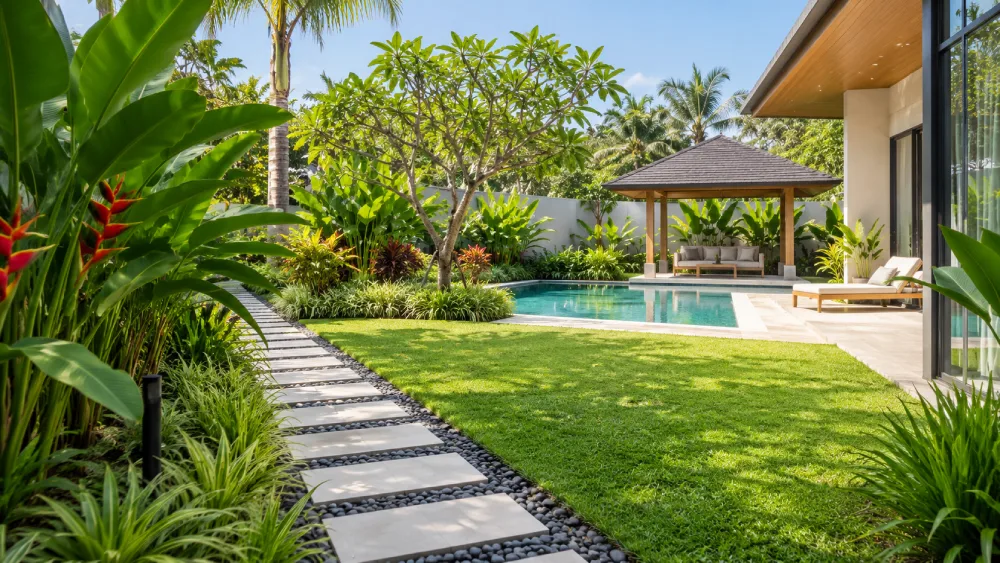
The answer is to reduce the work the garden creates before it starts. In Phuket, the biggest maintenance problems usually come from the wrong plant in the wrong place, poor drainage, overwatering, fast wet-season growth, and hardscape that was installed without proper preparation.
A low-maintenance Phuket garden should be designed around location, water movement, future growth, and access for upkeep. Plants matter, but drainage, irrigation, spacing, and seasonal checks often matter more.
Low-Maintenance Garden Planning Breakdown
| Garden Factor | What Creates Extra Work | Lower-Maintenance Approach |
| Sun exposure | Leaves burn, flowering stops, plants decline | Map full sun, afternoon sun, partial shade, and shade |
| Drainage | Beds flood during heavy rain | Grade the site and keep drainage routes clear |
| Irrigation | Hand watering becomes inconsistent | Use zoned timers with seasonal adjustments |
| Plant choice | Fast growers need constant cutting | Choose manageable mature size and pruning needs |
| Lawn | Frequent mowing and edge work | Keep grass only where it has a purpose |
| Poolside planting | Leaves, flowers, soil, and runoff enter the pool | Use pool-aware planting and drainage control |
| Overseas ownership | Problems go unnoticed | Combine automation with scheduled inspections |
Map Sun Before Choosing Phuket Garden Plants
A low-maintenance garden in Phuket starts by separating the property into sun zones. Morning sun, strong afternoon sun, partial shade, and full shade create very different growing conditions, even within one villa garden.
This matters because a plant described as “tropical” may still struggle in a hot, exposed position. Some plants cope with strong sun, while others need protection from afternoon heat. The practical step is to observe where sunlight hits walls, pool decks, paths, and planting beds before anything is planted.
For owners trying to understand why gardens suddenly grow too fast or become hard to control, a useful next step is reviewing the tropical garden growth pattern that affects Phuket properties during wet and hot periods.
Fix Drainage Before Planting A Phuket Garden
Drainage is one of the main reasons a garden becomes high-maintenance in Phuket. Heavy rainfall can leave water sitting around roots, wash soil into paths or pools, and make planting beds unstable.
Before buying plants, check where water collects after rain. Low areas may need levelling, drainage channels, raised beds, gravel zones, or better soil structure. A low-maintenance Phuket garden should move water away from buildings, pool edges, walkways, and root zones without creating erosion.
Poor drainage also makes watering harder to judge. If the soil stays wet for one or two days after watering, adding more water on a fixed schedule may damage plants instead of helping them.
Choose Plants By Position, Not Appearance
The easiest Phuket garden is not the one with the most impressive plant list. It is the one where every plant fits its exact position.
Choose plants according to sun exposure, drainage, wind, mature size, root behaviour, pruning needs, and leaf drop. Avoid buying only for flowers, colour, or a “tropical” look. A beautiful plant that needs constant shaping, replacing, pest checks, or watering will not create a low-maintenance garden.
A simple planting plan usually works better than a crowded one. Repeating reliable plants in suitable zones often reduces pruning, replacement, and irrigation problems compared with mixing many plant types with different needs.
For villa owners, this is where low-upkeep villa garden management in phuket can connect planting decisions with wider villa care, pool upkeep, guest readiness, and seasonal maintenance.
Improve Soil Before A Low-Maintenance Garden
Soil condition decides whether plants establish well or keep struggling. Compacted, poor, or badly draining soil can turn an otherwise suitable plant into a recurring maintenance problem.
Before planting, loosen compacted areas, improve growing medium where needed, and check whether water drains through the soil or sits on top. The goal is not to add the same material everywhere. The goal is to create soil conditions that match the planting zone.
For Phuket gardens, soil work should support drainage as much as growth. If the ground holds water during rainy periods, adding plants without correcting the base problem may simply create root stress, plant decline, and repeated replacement costs.
Use Seasonal Irrigation, Not One Fixed Schedule
Automatic irrigation can reduce daily work, especially for owners who travel or manage the property remotely. But irrigation is not maintenance-free.
A low-maintenance garden in Phuket needs irrigation zones. Sunny beds, shaded beds, pots, lawn, and poolside planting should not always receive the same amount of water. During hotter, drier spells, some areas may need more support. During the rainy season, fixed watering can cause overwatering if the soil is already saturated.
For a deeper look at this issue, the seasonal watering framework explains why watering should be adjusted rather than left permanently on one timer setting.
Phuket Irrigation Risk Table
| Irrigation Choice | Maintenance Risk | Better Practice |
| Hand watering only | Missed watering when owners are away | Timed irrigation for key zones |
| One timer for all beds | Overwatering some plants and underwatering others | Separate zones by plant and sun needs |
| No seasonal adjustment | Wet-season saturation or dry-season stress | Review settings through the year |
| Hidden drip lines only | Blockages go unnoticed | Inspect emitters and plant response |
| No backup checks | Power cuts or timer drift cause failures | Include irrigation in property inspections |
Reduce Lawn Where It Adds Work
Grass can be useful in some Phuket gardens, but large lawns often create recurring mowing, edging, watering, and drainage work. Low-maintenance design does not mean every lawn must be removed. It means grass should justify its place.
Keep lawn where it has a clear function, such as usable outdoor space, visual openness, or guest enjoyment. Replace low-use grass strips, awkward corners, and narrow edges with planting beds, paving, gravel, stepping stones, or controlled groundcover where appropriate.
The key is to reduce unnecessary maintenance, not remove greenery. A smaller, better-positioned lawn can be easier to manage than a larger lawn that struggles with shade, drainage, or heavy foot traffic.
Install Gravel And Hardscape Properly
Gravel, stone, and paving can reduce mowing and watering, but only when installed correctly. Gravel poured directly over soil may still develop weeds as organic debris builds up on top.
A low-maintenance Phuket garden should use hardscape with correct grading, suitable underlay where needed, stable edges, and drainage planning. Stone areas should direct water away from buildings and pools rather than trap it.
Hardscape is most useful in low-use spaces, side paths, utility areas, pool approaches, and zones where lawn or dense planting would demand too much recurring upkeep. It should support the garden’s function, not just cover problem soil.
Control Wet-Season Tropical Growth
Phuket’s wet season can turn a neat garden into a high-maintenance one quickly. Plants that thrive may grow fast, block paths, crowd walls, shed debris, or obstruct drainage.
A low-maintenance Phuket garden should use plants with manageable mature sizes and sensible spacing. Avoid dense planting that looks full on day one but becomes crowded after a growth cycle.
Wet-season preparation should include pruning, debris removal, drainage clearance, and inspection of larger trees or palms. The wet-season garden control checklist is especially relevant for villa owners who want the garden to remain manageable through heavier rain.
Design Poolside Gardens To Reduce Cleaning
Poolside planting needs extra care because garden debris can quickly become a pool maintenance issue. Leaves, flowers, seed pods, soil, mulch, and fertiliser runoff can all enter the water.
A low-maintenance garden beside a pool should avoid plants that shed heavily, drop large flowers, send roots toward structures, or need frequent cutting over the pool edge. Irrigation should not spray into the pool, and surface water should not carry soil or fertiliser toward the water.
Owners planning pool-adjacent landscaping should also think about the garden debris and pool care connection because garden design affects pool cleaning, safety, and maintenance workload.
Prepare The Phuket Garden For Storms
A low-maintenance garden in Phuket should be designed for heavy weather, not just calm days. Storms can bring falling branches, blocked drains, shifted soil, broken irrigation lines, and plant damage.
Keep drainage routes accessible. Avoid overplanting around gutters, channels, inspection points, and pool edges. Larger trees and palms should be monitored so falling material does not create repeated cleanup or safety concerns.
After severe weather, the priority is not only making the garden look tidy. It is checking drainage, damaged branches, loose hardscape, irrigation function, and areas where soil or mulch may have moved. The storm garden recovery process is useful for understanding what should be checked after heavy rain or wind.
Build Low-Maintenance Gardens For Absent Owners
A low-maintenance Phuket garden is especially important for overseas owners, seasonal residents, and investment-property owners. A timer can water plants, but it cannot notice a blocked drip line, a fallen branch, a flooded bed, or a fast-growing plant blocking access.
For remote owners, the right approach is automation plus inspection. Irrigation should be checked, drainage should remain clear, pruning should be seasonal, and plant health should be reviewed before small problems become expensive repairs.
The overseas owner garden inspection workflow connects this issue with the wider reality of managing a Phuket property when the owner is not on the island.
Coordinate Garden Care With Property Management
Garden maintenance rarely exists on its own. In Phuket villas and houses, garden decisions affect pools, paths, guest presentation, pest risk, drainage, storm cleanup, and repair planning.
That is why garden care should be part of a wider property management plan. If pruning is ignored, debris can block drainage. If irrigation fails, plants decline. If runoff reaches the pool, cleaning work increases. If growth hides damage, inspections become less effective.
For occupied houses and rental properties, residential garden upkeep coordination in phuket helps connect garden work with house checks, repairs, cleaning, and practical property oversight.
Owners comparing wider asset protection can also review the villa asset protection inspection process to see how garden, building, and exterior checks work together.
Use Inspections To Keep The Garden Simple
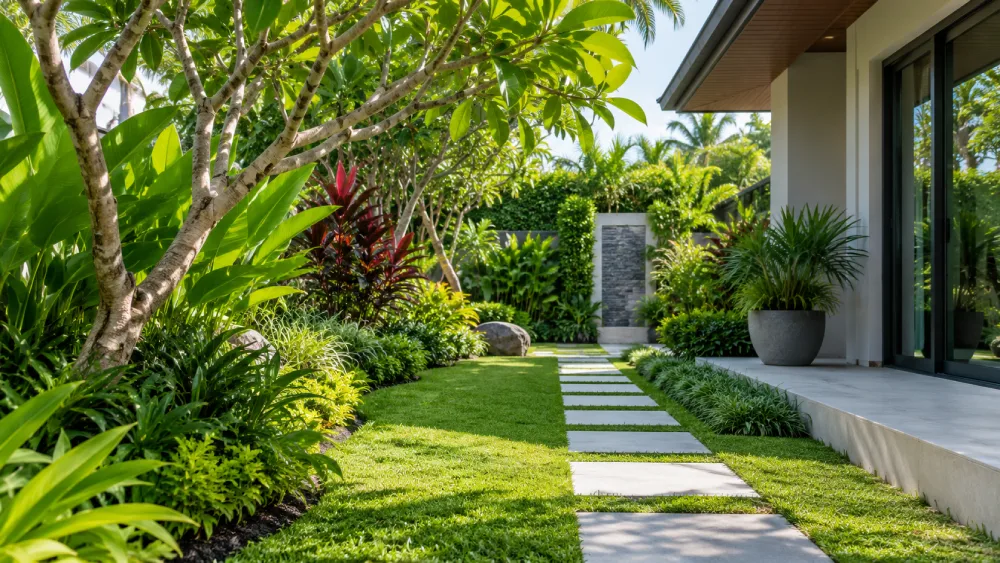
A low-maintenance garden does not mean a garden with no maintenance. It means fewer preventable problems and clearer routines.
Inspections should check plant health, irrigation, drainage, pests, storm damage, pruning needs, lawn condition, gravel areas, poolside debris, and access routes. Small issues are usually easier to correct when they are noticed early.
The property inspection checklist framework is useful because garden issues often show up as part of broader exterior and property checks, not as isolated gardening problems.
If repair work is needed after drainage failure, storm damage, irrigation problems, or hardscape movement, the property repair coordination process explains how maintenance issues can be handled without the owner managing every contractor directly.
Low-Maintenance Garden Area Coverage
Local knowledge matters because Phuket gardens face different site conditions across coastal, hillside, villa, condo, and residential areas. A low-maintenance garden in Phuket should reflect sun exposure, drainage, pool placement, property use, and how often the owner is present.
Pearl Property Management Company provides island-wide support across Bang Tao, Rawai, Nai Harn, Kamala, Surin, Patong, Chalong, Kata, Karon, Mai Khao, Laguna, Kathu, Thalang, Cherng Talay, and surrounding areas in Phuket.
For owners with high-end villas, rental properties, or larger outdoor areas, luxury villa garden maintenance standards can help connect garden upkeep with presentation, guest readiness, and wider villa management.
Closing CTA
A low-maintenance garden in Phuket works best when the design and upkeep are connected to the full property, not handled as a separate afterthought. Drainage, irrigation, pruning, poolside planting, storm checks, and inspections all affect how much work the garden creates over time. Pearl Property Management can help owners plan and coordinate low-maintenance property care planning in phuket so the garden supports the property instead of adding constant avoidable tasks.
FAQs About Low-Maintenance Gardens In Phuket
What makes a garden low-maintenance in Phuket?
A low-maintenance garden in Phuket is one that reduces recurring work by matching plants, drainage, irrigation, and hardscape to the site. The goal is not to create a maintenance-free garden. Phuket’s sun, monsoon rain, fast growth, and storm debris still require seasonal checks. The difference is that the garden is planned so problems are less frequent, easier to spot, and easier to correct.
Which garden problems create the most maintenance in Phuket?
The most common maintenance problems in a Phuket garden are poor drainage, wrong sun exposure, overwatering, fast wet-season growth, large lawns, poolside debris, and irrigation faults. These issues often overlap. For example, dense planting can increase pruning, block drains, and drop more debris into the pool. A low-maintenance design reduces these problems before they become routine work.
How often should I water plants in a Phuket garden?
A Phuket garden should not be watered on one fixed schedule all year. Watering depends on sun exposure, soil moisture, plant type, drainage, and season. During hotter, drier periods, some plants may need more support. During rainy periods, automatic watering may need to be reduced or paused. The better approach is to check actual moisture and adjust irrigation zones seasonally.
Is automatic irrigation worth using in Phuket?
Automatic irrigation can be very useful in a Phuket garden, especially for overseas owners or properties that are not occupied every day. It reduces dependence on hand watering and helps protect plants during drier spells. However, irrigation still needs inspection. Timers can drift, power interruptions can affect settings, and drip lines can block, so automation should be paired with scheduled checks.
Should I remove all lawn to make the garden easier?
You do not always need to remove all lawn to create a low-maintenance garden in Phuket. Grass can still be useful when it provides usable outdoor space or visual openness. The key is to remove or reduce lawn where it creates more work than value, such as narrow strips, awkward edges, shaded areas, or spaces that require frequent mowing without being used.
Do weeds still grow through gravel in Phuket gardens?
Yes, weeds can still appear in gravel areas if the installation is poor or organic debris builds up over time. Gravel is lower-maintenance than grass in some areas, but it is not a permanent weed solution by itself. A better Phuket garden approach uses correct grading, suitable underlay where needed, stable edging, and periodic debris removal so gravel areas remain practical.
What should I avoid planting beside a swimming pool?
Beside a swimming pool, avoid plants that drop large amounts of leaves, flowers, seed pods, or messy debris. Also be careful with plants that need frequent pruning over the pool edge, roots that may interfere with structures, and irrigation that sprays into the water. Poolside garden choices should reduce cleaning work, runoff, and blocked drainage rather than create extra pool maintenance.
How can overseas owners keep a Phuket garden low-maintenance?
Overseas owners should combine low-maintenance design with regular local inspections. Automatic irrigation, sensible plant choices, reduced lawn, clear drainage, and storm preparation all help, but someone still needs to check for blocked drip lines, water pooling, pest issues, fast growth, fallen branches, and poolside debris. Low-maintenance garden planning works best when it is part of full property care.