A severe Phuket storm can leave a garden with fallen branches, blocked drains, exposed roots, flooded beds, unstable trees, and damaged irrigation. Treating everything as routine cleanup can make the damage worse, especially when saturated soil is compacted or unsafe trees are handled without proper assessment.
Experienced storm damage garden recovery management starts by controlling hazards, restoring drainage, and separating recoverable plants from confirmed losses. The work must then continue through soil checks, selective pruning, system testing, and follow-up inspections. The order of recovery decides what can still be saved.
Quick Check: Before appointing a provider, get gardening maintenance in Phuket that includes hazard checks, drainage clearance, and safe tree assessment.
Storm Damage Garden Recovery Management Steps
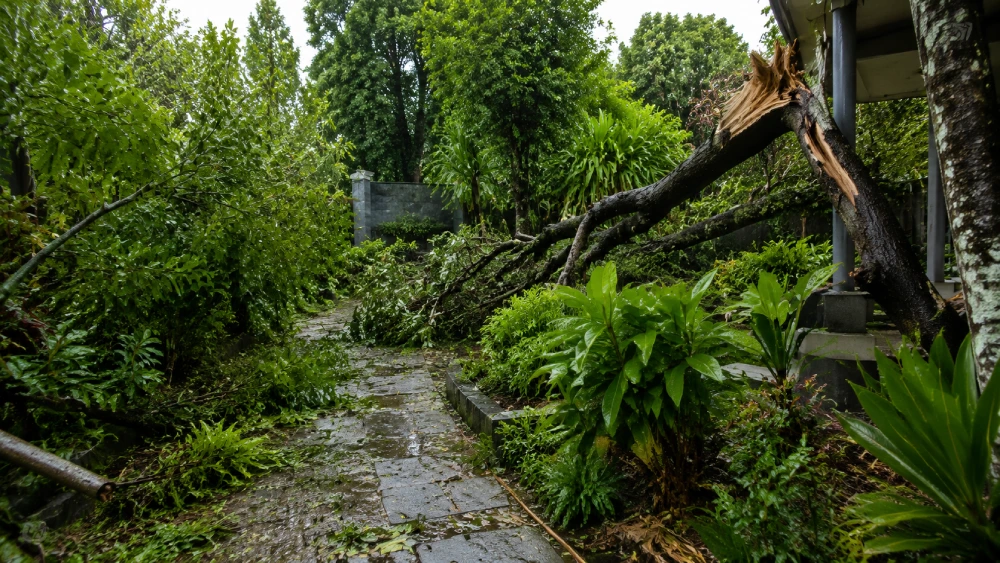
Storm damage garden recovery management works best when each task follows a clear priority. Safety comes first, drainage follows, and plant treatment starts only after the garden can be entered without creating more damage.
Storm Recovery Priority Map
This breakdown separates urgent hazards from later restoration work. It prevents cosmetic tasks, such as replanting or shaping shrubs, from delaying drainage repairs, tree assessment, and other work that protects the property.
| Recovery priority | Problem to identify | Correct first action | Work that should wait |
| 1. Immediate danger | Exposed cables, unstable trees, hanging limbs, broken glass | Isolate the area and contact the correct specialist | Debris hauling and planting |
| 2. Water movement | Blocked drains, standing water, redirected runoff | Clear accessible grates, channels, and drainage routes | Fertilising and mulching |
| 3. Structural condition | Damaged fences, paths, lighting, retaining edges | Record damage and prevent unsafe access | Decorative repairs |
| 4. Plant survival | Broken stems, uprooted shrubs, shredded foliage | Sort plants by root, stem, and branch condition | Full replacement decisions |
| 5. Soil condition | Compaction, erosion, exposed roots, sediment | Restore support and allow oxygen into the root zone | Heavy feeding |
| 6. Follow-up risk | Wilting, rot, pest activity, irrigation failure | Reinspect after drainage and recovery begin | Declaring the work complete |
A proper recovery plan should follow documented inspection checkpoints for managed properties rather than relying on a quick visual walk-through. Trees, planting beds, drains, irrigation, lighting, pathways, fences, and nearby pool areas must be checked separately.
Owners also need a clear property management company operating process for reports, approvals, contractor access, and completion checks. A trusted property management company in Phuket should show what is urgent, what can be monitored, and what can be repaired later.
Recovery costs can rise when every damaged plant is replaced immediately or contractors work in the wrong order. Applying practical property management expense-reduction methods means controlling hazards and water movement before spending money on cosmetic restoration.
Immediate Safety and Cleanup: First Response
Immediate safety and cleanup should make the garden safe without disturbing evidence or damaging saturated ground. The first visit is for isolation, documentation, drainage access, and controlled debris removal rather than complete restoration.
Isolate Hazards Before Anyone Enters
Storm-damaged gardens may contain partially uprooted trees, split limbs, exposed wiring, unstable walls, sharp debris, and contaminated water. Keep residents, guests, cleaners, pets, and maintenance staff away until the main hazards have been identified.
Do not stand beneath hanging branches or attempt to pull a mature leaning tree upright. Follow established Phuket property emergency response procedures and contact the appropriate arborist, electrician, utility provider, or structural contractor.
Small branches lying on open ground may be removable once access is safe. Heavy limbs under tension, root plates lifting from the soil, and trees leaning towards buildings require controlled professional work.
Record Damage Before Clearing It
Take wide photographs first, followed by close images of fallen trees, blocked drains, erosion, standing water, broken pipes, damaged plants, and affected structures. Record where the water entered, where it collected, and which routes remain inaccessible.
Documentation helps remote owners understand the scale of the work. It also reduces the remote Phuket villa ownership risks caused by delayed reporting, unclear contractor instructions, and work approved without evidence.
Good Phuket villa support for overseas owners should include dated images, a prioritised defect list, contractor recommendations, and completion updates. Owners should be able to distinguish urgent safety work from optional replacement planting.
For villas managed from abroad, vacation villas property management in Phuket should also include secure access control. Contractors must know where they may work, which damaged items they may remove, and which decisions still need owner approval.
Clear Drains Before Cosmetic Cleanup
Leaves, mulch, mud, twigs, and broken plant material can block surface grates, channels, culverts, and garden runoff routes. Clearing accessible drainage points prevents trapped water from continuing to saturate the garden after the rain stops.
Do not drive machinery over soaked lawns or beds to reach blocked areas. Wet soil compacts easily, which reduces the air available to already stressed roots and can leave long-term drainage problems.
The recovery plan should connect with normal Phuket villa maintenance during rainy season. Repeated flooding usually points to a drainage weakness, not simply an unusually messy storm.
Coastal properties need extra attention because wind, runoff, salt exposure, and erosion can occur together. Effective beachfront villa management in Phuket should check low beds, exposed roots, washed-out soil, and damaged coastal planting.
Remove Debris Without Stripping the Garden
Begin with material that blocks access, drainage, or safe movement. Keep intact branches, supported stems, viable shrubs, and undamaged ground cover in place until their condition has been assessed properly.
Do not treat every torn leaf as waste. Plants still need healthy tissue for recovery, and excessive clearing can turn repairable storm damage into permanent loss.
A professional garden care company in Phuket should separate debris into broken plant material, reusable supports, damaged hard materials, and items requiring specialist disposal. This makes the cleanup easier to verify.
Mud carried into entrances, patios, outdoor kitchens, and internal access areas may require professional housekeeping services in Phuket. Garden debris should be controlled first so cleaned areas are not contaminated again.
Coordinate Repairs in the Correct Order
Storm damage may affect irrigation pipes, pumps, lighting, drains, pathways, gates, fences, trellises, retaining edges, and garden structures. These systems should be tested before replacement plants are installed around them.
Use a documented property management repair handling process for inspection, quotation, approval, supervision, and completion photographs. Repairing a path before fixing the failed drain beneath it may result in duplicate work.
Rental houses must remain closed to normal access while outdoor hazards are unresolved. Where viewings or guest arrivals are planned, open house property management in Phuket should include a final route check from the gate to every occupied entrance.
A property management service for Airbnb in Phuket should also confirm that listing photographs and guest instructions match the current condition. Damaged gardens, closed paths, or unusable outdoor facilities should not be hidden from arriving guests.
Plant and Tree Recovery: Save or Remove
Plant and tree recovery depends on structural condition rather than appearance alone. Shredded foliage can look severe while roots and main stems remain viable, but split trunks and failed root systems may leave little recovery potential.
Plant Recovery Decision Table
This table provides a practical save, monitor, or remove framework. It avoids automatic replacement while ensuring that dangerous trees and plants with irreversible structural damage are not left untreated.
| Observed condition | Initial decision | Immediate action | Reason to escalate |
| Torn leaves with intact main stem | Monitor | Preserve usable foliage and remove only broken material | Continued decline or stem rot |
| Bent young shrub with firm roots | Potentially recoverable | Straighten carefully and support if suitable | Root tearing or poor stability |
| Small newly planted tree leaning | Assess for restaking | Check root movement before repositioning | Split root ball or major trunk damage |
| Mature tree with exposed root plate | High risk | Isolate the surrounding area | Arborist assessment required |
| Split trunk or major scaffold limb | Possible removal | Prevent access beneath the tree | Structural failure may continue |
| Waterlogged plant with no visible rot | Monitor | Restore drainage and reduce disturbance | Persistent wilting or crown decay |
| Completely uprooted plant with dried roots | Likely replacement | Record condition before removal | Low recovery potential |
| Root crop with damaged foliage | Wait and reassess | Preserve the root zone and viable leaves | Crown damage or prolonged flooding |
Use Roots and Main Stems as Evidence
Gardeners often assume that a plant without leaves is dead. Real recovery experiences show that intact roots, viable crowns, and undamaged main stems can sometimes support new growth after the original foliage has been shredded.
Community Recovery Signals
The figures below show which recovery concerns received the strongest public interaction. They identify recurring questions, but plant decisions still require inspection because community experiences cannot guarantee the same result for every species or site.
| Community discussion | Engagement | Practical signal |
| Garden destroyed by wind, hail, and intense rain | 116 upvotes, 31 comments | Owners struggle to decide what can recover |
| Tomato recovery after severe leaf loss | 79 upvotes | Waiting and selective pruning may preserve viable plants |
| Potato recovery after hail | 29 upvotes | Underground crops may survive foliage damage |
| Root vegetables continuing after damage | 16 upvotes | Above-ground damage may not show root condition |
| Reports of complete garden loss | Lower individual engagement | Recovery cannot be promised in every case |
These experiences support a wait-and-assess approach for plants with intact roots and stems. They do not support leaving dangerous trees, rotting crowns, or unstable branches untreated.
Some plants recover quickly, while others decline over several weeks. Reassessment should focus on new shoots, bud development, stem firmness, crown condition, and whether wilting continues after the soil begins to drain.
Prune Only What Cannot Recover
Remove cleanly broken branches, dead stems, diseased tissue, and limbs that create a hazard. Use clean tools and cut back to a sound branch junction or healthy section rather than leaving torn material.
Do not remove every bruised leaf simply because it looks untidy. Remaining foliage may still produce energy while the root system rebuilds.
Heavy reshaping should wait until the plant shows its recovery pattern. New growth reveals which stems remain active and which parts have died back permanently.
Handle Leaning Trees by Size and Risk
Small, recently planted trees may sometimes be repositioned if the roots remain largely intact. The soil should be stable enough to work without further tearing the root ball.
Mature trees require a different decision. A lifting root plate, split trunk, hanging scaffold limb, or lean towards a house, road, pool, or power line requires a qualified arborist.
Staking is not a substitute for structural stability. Improvised ropes, tight wires, and supports fixed to weak branches can create new failures during the next period of strong wind.
Restore Rental and Pool Areas Safely
A damaged garden can affect the property even when the building itself remains usable. Fallen vegetation may block exits, hide broken paving, damage pool fencing, or send soil and organic debris into the water.
Following Phuket rental home protection practices means checking every guest route and outdoor facility before reopening. A tidy photograph does not confirm that the garden is safe.
The connection between gardens and pools is particularly important for pool villa management needs in Phuket. Runoff can carry soil, leaves, fertiliser residue, and damaged mulch into the pool system.
A pool maintenance company in Phuket should inspect filtration, water condition, skimmers, surrounding drains, and equipment after garden runoff enters the pool. Garden teams and pool teams should coordinate rather than treating the areas separately.
Soil and Pest Management: Stop Hidden Damage
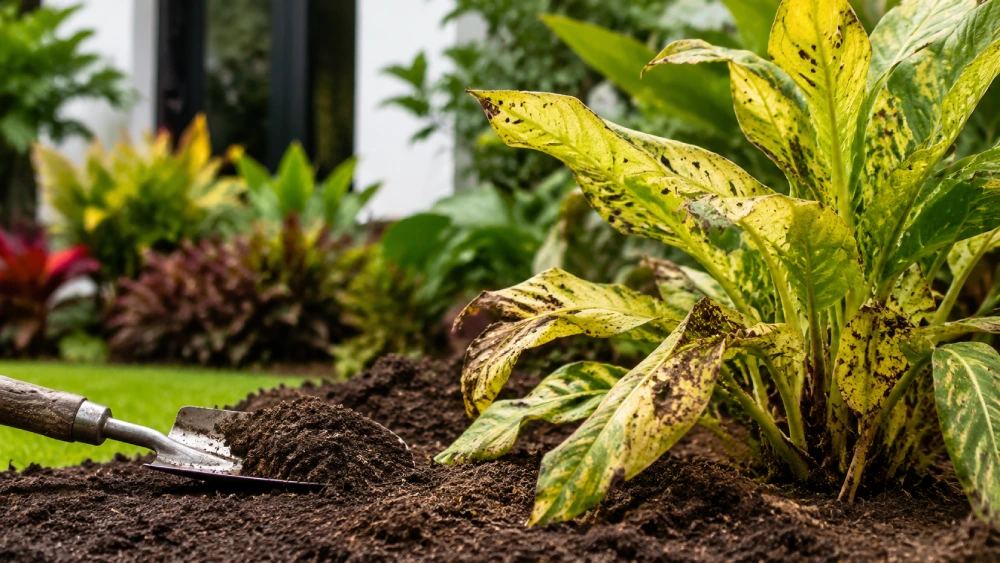
Soil and pest management addresses problems that may appear after the visible cleanup is finished. Waterlogging, compaction, erosion, root injury, disease, and pest activity can continue damaging plants unless the site is monitored.
Restore Oxygen Before Adding Products
Saturated soil contains less usable oxygen for plant roots. Prolonged waterlogging may lead to yellowing, wilting, weak growth, branch dieback, crown deterioration, and root decline.
Restore drainage and reduce foot traffic before applying fertiliser. A damaged or oxygen-starved root system may not use added nutrients effectively, and forced growth can place more demand on weakened roots.
Do not dig aggressively around wet roots to “air” the soil. This can cut feeder roots and collapse the wet soil structure around the plant.
Repair Erosion and Exposed Roots
Heavy runoff can remove topsoil, mulch, organic matter, and support around roots. It may also deposit mud against trunks, crowns, drains, and low garden walls.
Replace washed-out soil carefully around exposed roots without burying the trunk flare or plant crown. Redirect the water path and stabilise the affected bed so the same area does not wash out during the next storm.
These measures support wider Phuket villa asset protection measures. Uncontrolled garden erosion can undermine paths, boundaries, drains, retaining edges, and outdoor equipment.
Diagnose Disease Before Treatment
High moisture and damaged plant tissue can increase the risk of disease, but fungicide should not be the automatic response. Treatment should follow identifiable symptoms and a diagnosis that matches the plant and problem.
Watch for continuing wilt after drainage improves, darkened crowns, soft stems, lesions, unusual odour, spreading dieback, and discoloured roots. Record when the symptom appeared and whether it is getting worse.
Removing healthy foliage or applying unnecessary chemicals may delay recovery. Treat only the confirmed problem and follow the product label or qualified horticultural advice.
Check Irrigation and Pest Activity
Turn irrigation zones on separately after the soil is no longer saturated. Look for broken emitters, leaking pipes, uneven pressure, exposed lines, blocked outlets, and controllers that continued watering during heavy rain.
Storm-damaged plants may attract borers, sap-feeding insects, ants, snails, or other pests, especially where stems are split or plant material is decaying. Remove dead debris that shelters pests, but do not apply broad pesticide treatments without identifying the cause.
Shared gardens require coordinated decisions. A condominium property management company in Phuket should confirm responsibility for common drains, trees, walls, irrigation, and access before authorising work.
Follow-Up Recovery Checkpoints
Storm recovery should not end with debris removal. These checkpoints show when the garden needs to be reviewed and what each review should decide.
| Recovery checkpoint | What to inspect | Decision required |
| Once safe access is restored | Hazards, blocked routes, standing water | Whether specialist work is required |
| After drainage begins working | Soil saturation, runoff direction, erosion | Whether drainage repair is needed |
| When plants start responding | New shoots, wilting, stem condition | Save, prune further, or replace |
| After irrigation testing | Leaks, pressure, controller settings | Repair or reset the system |
| After the next heavy rainfall | Repeated flooding, washout, blocked drains | Add permanent prevention work |
| Before guests or residents return | Paths, lighting, fencing, trees, pool area | Confirm safe reopening |
Each inspection should update the original damage record. The final report should state what recovered, what was removed, which systems were repaired, and what still needs monitoring.
Storm Recovery Coverage Across Phuket
Storm damage can differ between coastal gardens, hillside plots, low-lying grounds, dense rental areas, and inland residential properties. Recovery planning should account for drainage routes, exposure, soil movement, access, and nearby structures.
Garden recovery and maintenance support is available across Bang Tao, Patong, Surin, Kamala, Rawai, Nai Harn, Mai Khao, Ya Nui, Friendship Beach, Chalong, Saiyuan, Laguna Phuket, Kata, Karon, Kathu, Thalang, Cherng Talay or Choeng Thale, and surrounding Phuket areas.
Local assessment matters because a low garden in Rawai may face different water movement from an exposed coastal property or a sloped site near Kata. The recovery method should respond to the actual damage rather than applying the same cleanup package to every garden.
Get the Garden Assessed Before Damage Spreads
Blocked drainage, unstable trees, and waterlogged roots become harder to correct when the first response is delayed. Get gardening maintenance in Phuket to assess the hazards, restore drainage, and identify which plants can still recover. Request a written priority list before approving replacement work. This keeps the first budget focused on safety and preventable secondary damage.
Storm Damage Garden Recovery Management FAQs
What records should remote owners receive?
Storm damage garden recovery management for remote owners should include dated photographs, a marked defect list, contractor quotations, approval records, and completion images. Reports should separate immediate hazards from recoverable plant damage and optional cosmetic work. Owners should also receive notes on drainage performance, removed plants, repaired systems, and the items that still require follow-up.
Can recovery work be completed in budget stages?
Storm damage garden recovery management can be staged when the available budget is limited, but the order must follow risk. Safety hazards, blocked drainage, unstable trees, exposed wiring, and active system leaks come first. Plant replacement, decorative pruning, new pots, and visual improvements can wait until the garden is stable and secondary damage has been controlled.
Does recovery include irrigation system testing?
Storm damage garden recovery management should include irrigation testing when the property has automatic watering, pumps, buried pipes, or exposed emitters. Storm movement may crack pipes, shift heads, block outlets, or leave the controller operating while the soil is already saturated. Each zone should be tested separately, with leaks repaired before normal watering resumes.
How does recovery affect rental reopening?
Storm damage garden recovery management affects rental reopening because outdoor areas form part of the guest access and safety route. Paths, lighting, gates, trees, pool fencing, steps, and drains must be checked before guests return. A garden may look clean while still containing loose branches, undermined paving, concealed holes, or unstable supports.
Who handles damaged shared condominium gardens?
Storm damage garden recovery management in a condominium may involve the unit owner, juristic management, common-area contractors, and insurers. Responsibility depends on whether the damaged tree, drain, wall, irrigation line, or planting bed belongs to the private unit or common property. Written approval should be obtained before removing shared trees or altering common drainage routes.
How should pool runoff be handled?
Storm damage garden recovery management should treat garden runoff entering a pool as a connected maintenance problem. Soil, leaves, mulch, and organic waste can affect skimmers, filtration, water balance, and surrounding drains. The garden team should stop further runoff while the pool team removes contamination and confirms that the equipment is working correctly.
When is recovery management actually complete?
Storm damage garden recovery management is complete only when hazards are controlled, drainage works, damaged systems have been tested, and plant decisions are supported by follow-up observations. The absence of debris is not enough. The garden should also remain stable after further rainfall, with no continuing erosion, standing water, dangerous tree movement, or unexplained plant decline.