How much are condo management fees in Phuket? The answer depends on what type of fee you mean. Condo owners may pay building-level common area fees to the condominium juristic person, plus separate rental or property management fees if the unit is rented out.
A rental condo also has practical operating costs such as cleaning, guest access, repairs, utility reconciliation, inspections, and owner reporting.
Pearl Property Management Company helps condo owners understand these costs clearly through property management, condominium management, Airbnb support, housekeeping, guest access coordination, maintenance oversight, and rental reporting across Phuket.
Quick Check: Before estimating rental income from a condo, compare common fees, rental management, guest support, cleaning, repairs, and reporting with Pearl Property Management Company’s property manager to rent my home.
How Much Are Condo Management Fees In Phuket? Start With Fee Types
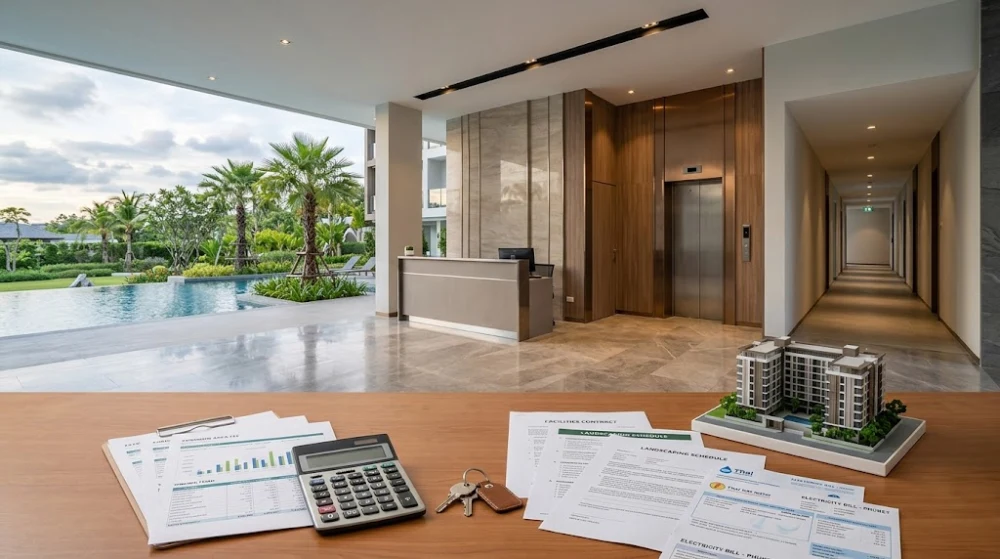
Condo management fees in Phuket are not one single charge. Owners should separate building-level fees from rental management fees. Building fees usually support shared spaces, building staff, lifts, security, pools, gardens, common lighting, cleaning, and maintenance. Rental management fees are separate and relate to finding guests, handling bookings, coordinating cleaning, reporting income, and managing tenant or guest issues.
In Thailand, condominium co-owners contribute to common expenses for shared property, and common area fees are generally allocated according to the ownership ratio or unit area under the condominium’s rules. A sinking fund may also exist for larger repairs or reserves.
| Fee Type | Paid To | What It Usually Covers |
| Common area fee | Condo juristic person | Security, lifts, shared cleaning, pool, lighting, common upkeep |
| Sinking fund | Condo juristic person | Major repairs, reserves, large building works |
| Rental management fee | Property manager | Guest or tenant handling, booking support, reporting |
| Housekeeping | Cleaner or manager | Turnover cleaning, linen, unit preparation |
| Repairs | Contractor or manager | Appliances, plumbing, air-conditioning, small fixes |
| Utilities | Utility provider or manager | Electricity, water, internet, reconciliation |
| Move-in / move-out support | Manager | Access, inspection, inventory, handover |
Pearl Property Management Company supports owners through condo management companies in Phuket so condo operations are separated clearly from rental support and owner reporting.
Common Area Fees vs Rental Management Fees
Common area fees are tied to the condominium building. Even if the unit is empty, the owner usually still pays these charges because the building continues to maintain shared areas. These fees are not the same as hiring a manager to rent the unit.
Rental management fees are tied to the owner’s income plan. If the unit is rented, the owner may need help with guest messages, tenant screening, check-in, cleaning, repairs, inspections, income reporting, and expense tracking. These services are separate from the building’s juristic management.
Owners should review condo management service components and common area charge structure before assuming one fee covers everything.
Why Fee Amounts Vary by Building?
Condo fees vary because buildings are different. A small low-rise condo with limited facilities will not have the same cost structure as a luxury beachfront development with pools, gyms, gardens, lifts, security, parking, and reception areas.
Fees may also change based on building age, maintenance backlog, staffing needs, number of units, shared facilities, insurance, utility costs, repair history, and whether the sinking fund is healthy. A building with low fees may not always be cheaper in practice if it has weak reserves or delayed repairs.
Owners should ask for the current common fee rate, sinking fund rules, recent financial statements, annual general meeting notes, repair history, and any planned special assessments before buying or renting out a condo.
Foreign Owners Should Check Condo Rules First
Foreign buyers can own condominium units in Thailand within the legal foreign ownership limit. Thailand’s official government information explains that foreign ownership in a condominium project cannot exceed 49% of the total unit area.
This matters for buyers, but it also matters for management planning. A foreign owner who does not live in Phuket may need local help with inspections, guest access, cleaning, repairs, income reports, utility reconciliation, and communication with the juristic office.
Pearl Property Management Company supports owners through property manager to rent my home services that connect rental activity with practical local oversight.
What Rental Condo Management Usually Includes?
Rental condo management can include guest communication, listing support, pricing coordination, booking follow-up, check-in instructions, key handling, cleaning coordination, inspection notes, utility tracking, maintenance reporting, and owner statements.
For Airbnb-style rentals, the work is usually more active because turnover is frequent. For monthly or long-term rentals, the work may focus more on tenant communication, rent tracking, repairs, inspections, and lease-related coordination.
Pearl Property Management Company supports owners with airbnb property management in Phuket when a condo is used for short-stay or platform-based rental activity. Owners can also review property management fee comparison and manager commission models before choosing a structure.
Utility Reconciliation and Owner Reporting
Utility costs can affect the real return from a Phuket condo rental. Owners should know whether electricity, water, internet, and other charges are paid directly by the guest, tenant, owner, or manager. If this is unclear, the owner may lose money or create disputes at checkout.
Utility reconciliation is especially important for short stays, monthly rentals, and high air-conditioning use. A manager should track bills, payments, deductions, and owner statements so expenses are not mixed with rental income.
Useful supporting topics include condo utility tracking process, rental income statement workflow, and rent roll tracking use.
House Rules, Tenants, and Move-In Costs
Condo rentals must follow building rules. Some buildings have restrictions on short stays, pets, noise, parking, pool use, rubbish, visitor access, and moving furniture. Owners should check these rules before advertising the condo.
Move-in and move-out processes also create management work. A manager may need to inspect the unit, record meter readings, check inventory, hand over keys, explain building rules, coordinate elevator bookings, and report damage.
Owners can review condo rule compliance steps, unit handover inspection process, and tenant handling for condos before renting the unit.
Repairs and Inspection Costs
Condo owners should budget for repairs even when the unit is new or lightly used. Air-conditioning, plumbing, appliances, locks, curtains, internet, bathroom fittings, kitchen equipment, and furniture can all need attention during rental periods.
A good inspection routine helps identify problems before guests complain. Inspections are also useful after checkout, before long-stay tenant move-in, and after maintenance work.
Pearl Property Management Company can coordinate repairs and inspections through local property oversight. Helpful supporting topics include repair coordination basics and inspection checklist points.
Housekeeping and Turnover Costs
Housekeeping is one of the most important operating costs for a rental condo. Even if the building common areas are maintained by the juristic office, the owner’s private unit still needs cleaning, linen handling, bathroom preparation, kitchen checks, and guest-ready presentation.
Short-stay rentals usually need more frequent cleaning than long-term rentals. Owners should check whether housekeeping is billed per stay, per month, by unit size, or through a custom arrangement.
Pearl Property Management Company provides full service housekeeping in Phuket for rental properties that need consistent preparation. Strong cleaning helps protect reviews, guest comfort, and repeat bookings.
Guest Access and Check-In Support
A condo may look easy to rent, but guest access still needs planning. Guests may arrive late, need building instructions, parking details, key cards, lift access, Wi-Fi information, and rules for pool or gym use.
If the building has strict security, owners need a clear access process. Poor check-in can lead to complaints even when the condo is clean and well located.
Pearl Property Management Company supports the villa guest access process for guest arrivals and access planning. For condos, the same principle applies: the arrival process should be clear, secure, and documented.
Taxes, Ownership Costs, and Legal Checks
Condo owners should not treat management fees as the only recurring cost. Thailand’s official government information states that foreign condominium owners are subject to land and building tax rules at the same rates as Thai individuals, depending on use and registration conditions.
Thailand’s official information also explains that transfer-related fees can apply when buying property, including a transfer fee based on the appraised price. Buyers and owners should ask a qualified lawyer or tax adviser for current obligations before purchase or rental planning.
Useful supporting reading includes condominium tax questions and property management contract terms.
How Owners Can Control Condo Management Costs?
Owners cannot control every building fee, but they can control many operating costs. Good systems reduce waste, missed repairs, cleaning confusion, duplicate supplier visits, and unclear guest charges.
Cost control starts with clear reporting. Owners should know what was collected, what was spent, what is pending, and what maintenance is coming. A lower management fee is not always better if reporting is weak or repairs are delayed.
Owners can review management cost control methods, property management operating model, and investor management planning before choosing a manager.
Condos vs Houses and Villas
Condo management fees are different from house or villa costs. A condo owner usually pays building common fees, while the juristic office handles shared spaces. A villa or house owner often carries more direct responsibility for the whole property, including garden, pool, security, exterior care, and larger maintenance items.
That makes condos easier in some ways, but not free from management needs. A rental condo still needs cleaning, guest access, inspections, repairs, utility tracking, rental reporting, and tenant handling.
Pearl Property Management Company supports both condos and landed properties through property management for houses in Phuket, vacation villa property management in Phuket, residential pool service in Phuket, and garden property management in Phuket.
Condo Management Fee Checklist
Use this checklist before buying, renting, or hiring a manager:
| Cost Area | What to Ask |
| Common area fee | Rate, billing cycle, what it covers |
| Sinking fund | One-time or ongoing reserve requirements |
| Special assessments | Any upcoming major repairs or extra charges |
| Rental management | Percentage, fixed fee, or hybrid model |
| Housekeeping | Per stay, monthly, or custom schedule |
| Utilities | Who pays electricity, water, internet, and how tracked |
| Repairs | Approval limit, supplier process, reporting |
| Check-in | Key cards, late arrivals, building rules |
| Inspections | Frequency, photo reports, move-in and move-out checks |
| Owner reporting | Income, expenses, deductions, statements |
Owners comparing condo and apartment-style rentals can also review apartment management basics and apartment rental management flow.
How Much Are Condo Management Fees In Phuket? Area Coverage
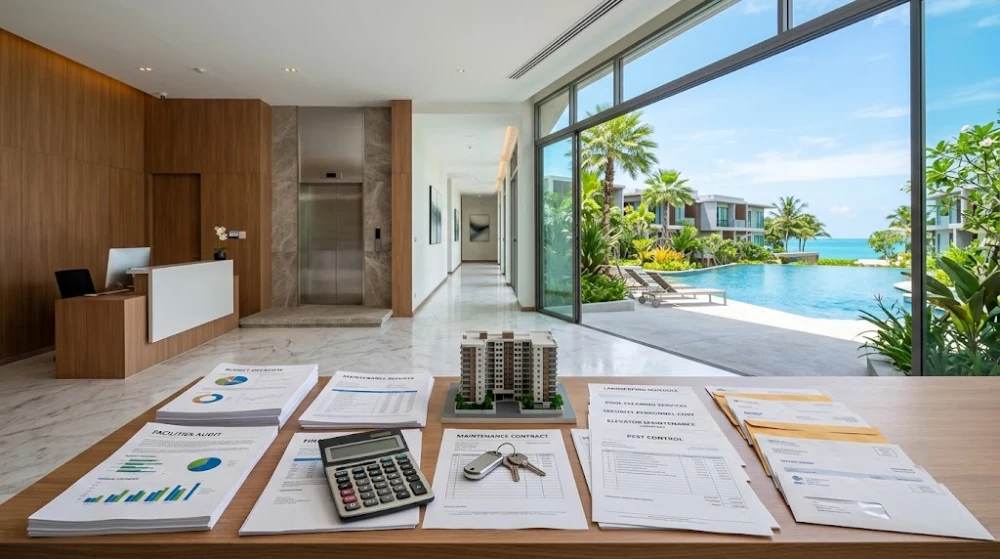
Condo management costs vary across Phuket because building type, guest demand, facilities, and rental style change by area. Bang Tao, Laguna Phuket, Surin, Kamala, Cherng Talay or Choeng Thale, and Mai Khao often include resort-style residences, luxury condo buildings, and larger shared facilities, so owners should check common fees, sinking fund strength, rental rules, and service access before buying or renting out a unit.
Patong, Kata, Karon, Chalong, Kathu, and Thalang can suit owners focused on guest movement, beach access, shopping, transport, or practical long-stay demand. Patong may involve heavier turnover and guest support, while Kata and Karon can suit holiday renters. Chalong, Kathu, and Thalang may work for longer rentals where utility tracking, inspections, and tenant handling matter more.
Rawai, Nai Harn, Ya Nui, Friendship Beach, Saiyuan, and surrounding Phuket areas often fit long-stay renters, remote workers, family stays, and residential-style condo use. Owners should compare building rules, common area condition, internet reliability, parking, housekeeping availability, utility reconciliation, and local management coverage before estimating net returns.
Final Advice on Condo Management Fees
The answer to how much are condo management fees in Phuket depends on whether you mean building common fees, rental management fees, housekeeping, utilities, repairs, or owner reporting. A clear budget should separate each cost instead of treating management as one line item.
Before buying or renting out a condo, check the building’s common fee, sinking fund, rules, tax obligations, rental permissions, utility process, and management agreement. Pearl Property Management Company’s property manager to rent my home helps condo owners connect fees with practical rental operations, including guest access, housekeeping, inspections, repairs, reporting, Airbnb support, and owner communication.
FAQs
How Much Are Condo Management Fees In Phuket?
Condo management fees in Phuket depend on the building, facilities, unit size, rental plan, and management scope. Owners should separate building common area fees from rental management fees, housekeeping, repairs, utilities, inspections, and reporting. The exact fee should be confirmed from the condo juristic office and the property manager before purchase or rental planning.
What do condo common area fees cover?
Common area fees usually cover shared building costs such as security, lifts, lighting, common cleaning, pool areas, gardens, parking areas, management staff, and shared maintenance. The exact coverage depends on the condominium’s rules, budget, facilities, and juristic management.
Are rental management fees the same as condo common fees?
No. Condo common fees are paid for shared building operations. Rental management fees are paid to manage the owner’s private unit as a rental property. Rental management may include guest communication, check-in, cleaning coordination, repairs, inspections, income reporting, and tenant handling.
Do Phuket condo owners pay a sinking fund?
Many condominium buildings use a sinking fund for reserves or larger repairs. Owners should ask whether the sinking fund is paid once, collected periodically, or topped up when major works are needed. The amount and rules depend on the building’s regulations and financial condition.
What should I ask before buying a Phuket condo for rental?
Ask about common fees, sinking fund, rental rules, foreign quota, building condition, tax obligations, utility billing, parking, guest access, short-stay restrictions, insurance, repairs, and management reporting. You should also review recent building budgets, meeting notes, and any planned special assessments.
How do condo managers handle tenants in Phuket?
Condo managers may handle tenant communication, move-in and move-out inspections, inventory checks, utility readings, building rule explanations, repair coordination, rent records, and owner reporting. The scope depends on the management agreement and whether the rental is short-term, monthly, or long-term.
Can a property manager reduce condo rental costs?
A property manager can help control costs by tracking repairs, avoiding duplicate supplier visits, improving cleaning schedules, reporting expenses clearly, monitoring utilities, and preventing small issues from becoming larger repairs. Cost control depends on good systems, not simply choosing the lowest management fee.
Are condo fees higher in luxury Phuket developments?
Luxury condo developments can have higher operating costs because they may include pools, gyms, gardens, reception areas, lifts, security, parking, and larger shared facilities. Owners should compare fees against the building’s condition, reserve fund, guest demand, and rental potential before deciding whether the cost is reasonable.